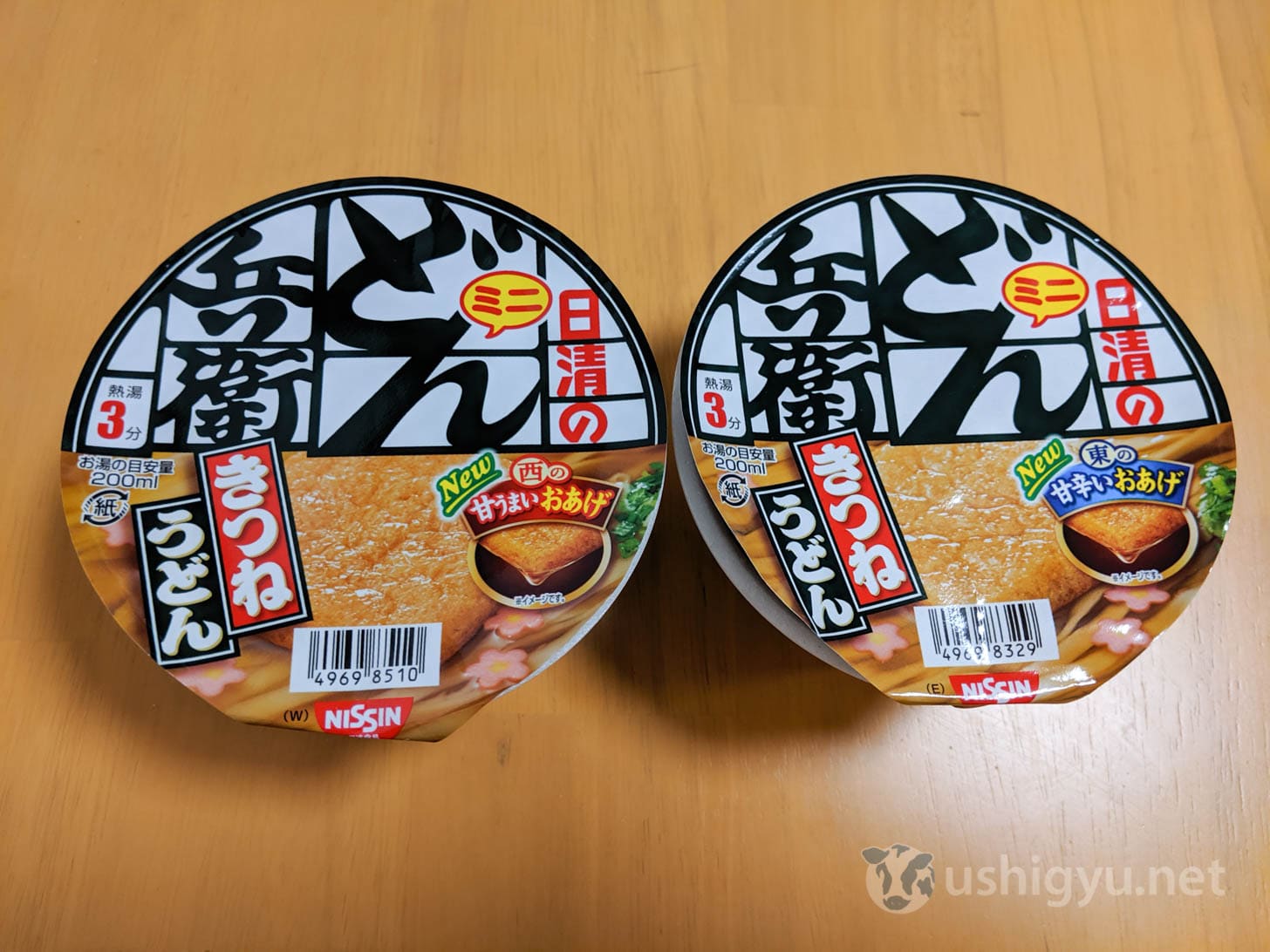
This is fairly well-known, but did you know that there are West Japan and East Japan versions of Donbei?
For example, if you search for Donbei on Amazon, you’ll see them labeled as (West) and (East).
While I knew there were two types of Donbei, I had never actually verified what differences existed in taste.
My impression was that West Japan has lighter-colored broth with kombu kelp-based dashi, while East Japan has darker-colored broth that’s bonito-based.
Since I had a business trip to Tokyo, I brought back East Japan Donbei and compared it with the West Japan version I bought in Fukuoka.
What differences are there, and which one tastes better…?
Comparing West and East Japan Donbei Kitsune Udon
On the left is West Japan, on the right is East Japan Donbei Kitsune Udon. Since eating two regular-size cups would be too much, I played it safe and got the mini size.
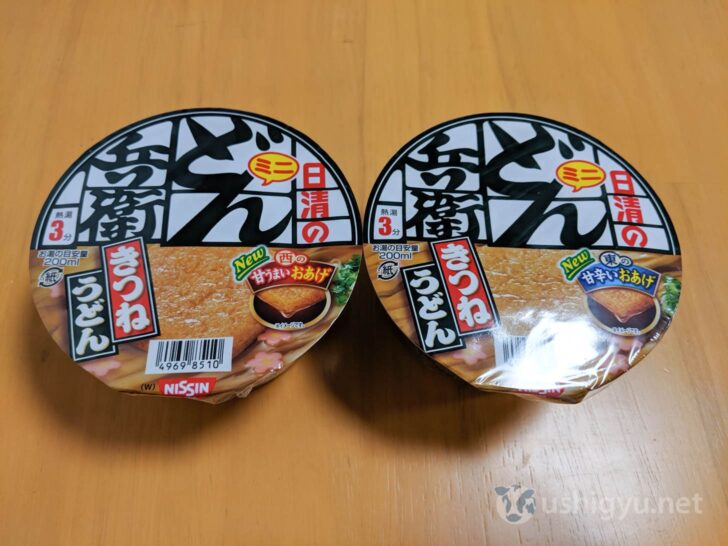
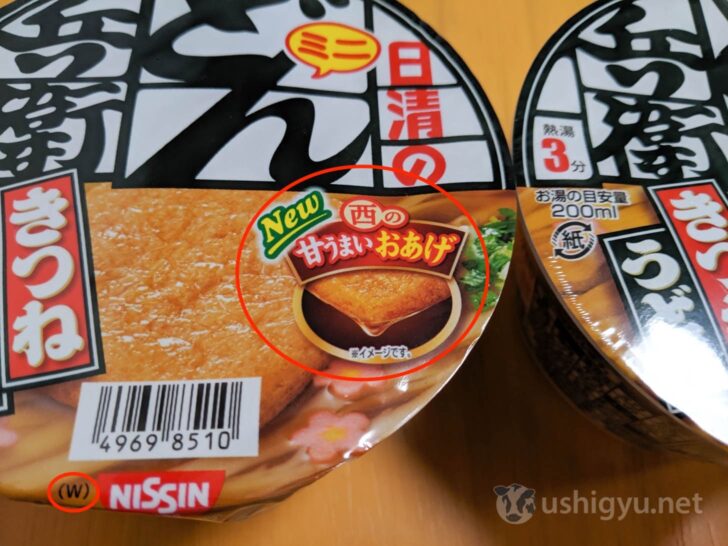
There are probably slight differences depending on the timing, but as of June 2019, the West Japan version has the text “West’s sweet and delicious fried tofu.” You can also see the “W” for West below the barcode.
The East Japan version has different wording: “East’s sweet and spicy fried tofu.” Below the barcode is an “E” for East.
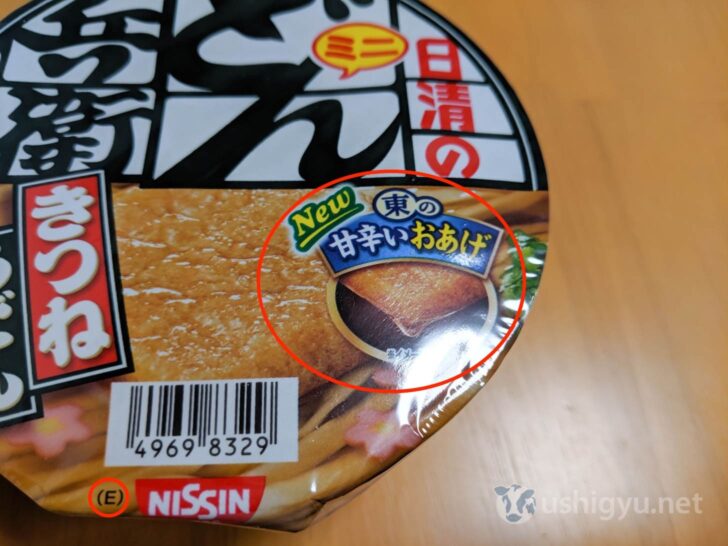
It’s trivial, but I wonder where the commonly seen color scheme of West Japan = red and East Japan = blue came from.
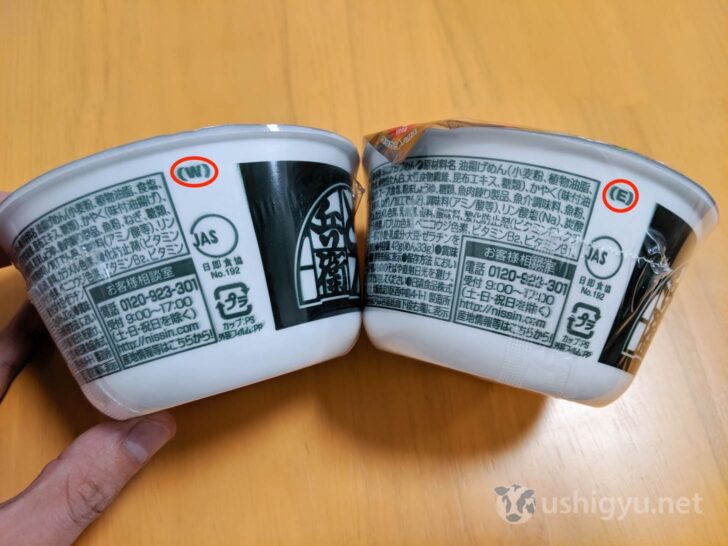
The package sides also show “W” and “E,” so you can distinguish them there as well.
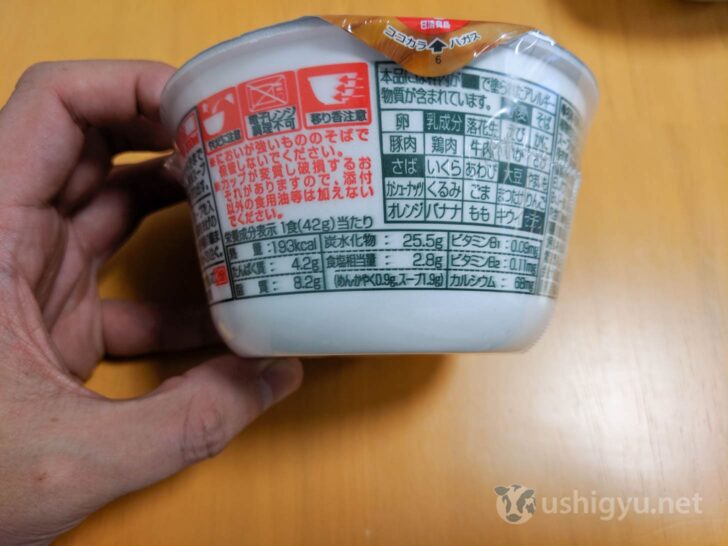
Checking the nutrition facts. This is West Japan.
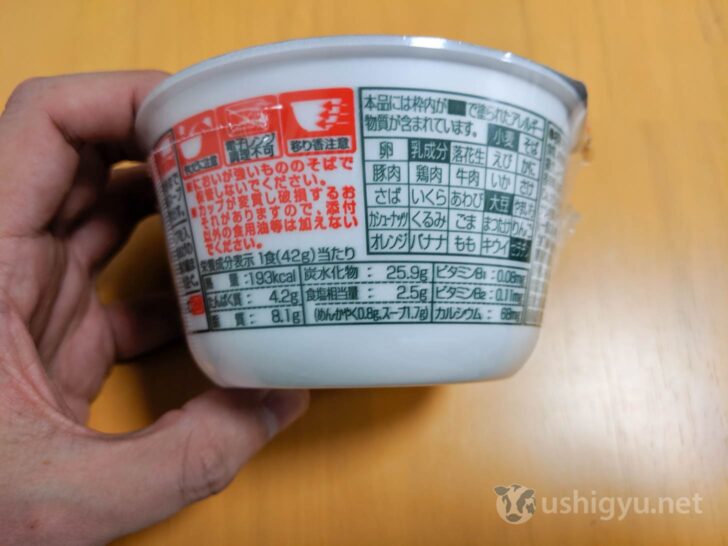
This is East Japan. Calories and protein are the same, but the others are:
– Fat: West 8.2g > East 8.1g
– Carbohydrates: West 25.5g < East 25.9g
- Sodium equivalent: West 2.8g > East 2.5g
Some people might have the image that “West Japan is lighter-flavored,” but that’s actually not true at all. It’s probably just influenced by Kyoto’s image – in reality, it’s simply a difference in soy sauce color.
(Setting aside the fact that West and East Japan are overly broad categories)
It’s also noteworthy that West Japan contains mackerel as an allergen, while East Japan doesn’t.
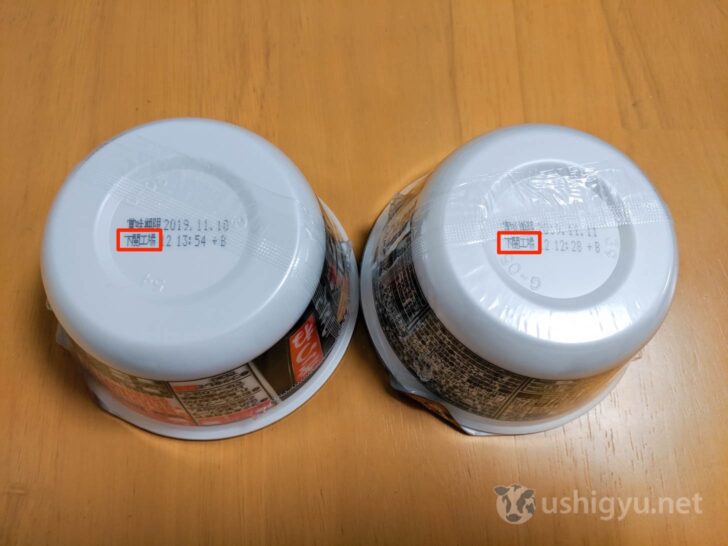
What was quite surprising was that both products are made at the same Shimonoseki factory (in Yamaguchi Prefecture). I assumed they were manufactured in their respective regions, but they’re made at the same factory.
Making and Comparing Both. Which Tastes Better?
Let’s make both the West and East Japan Donbei together and compare them.
The West Japan powdered soup packet is green, while East Japan is blue.
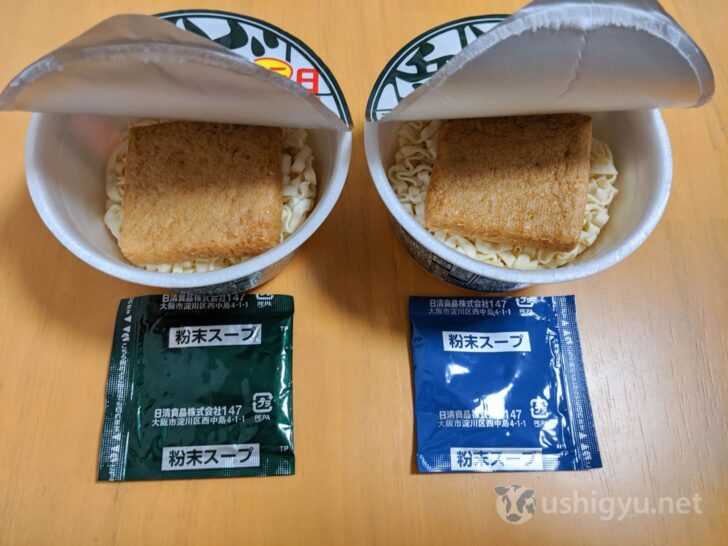
I checked the color of the fried tofu and noodles from each, but couldn’t see any difference visually.
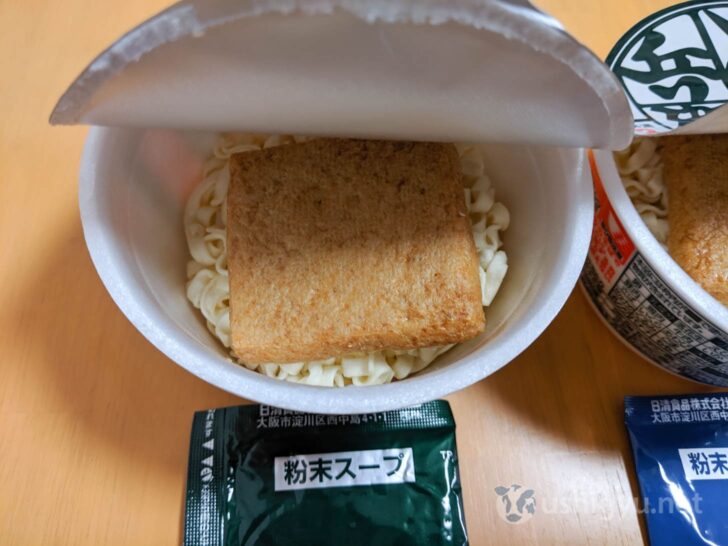
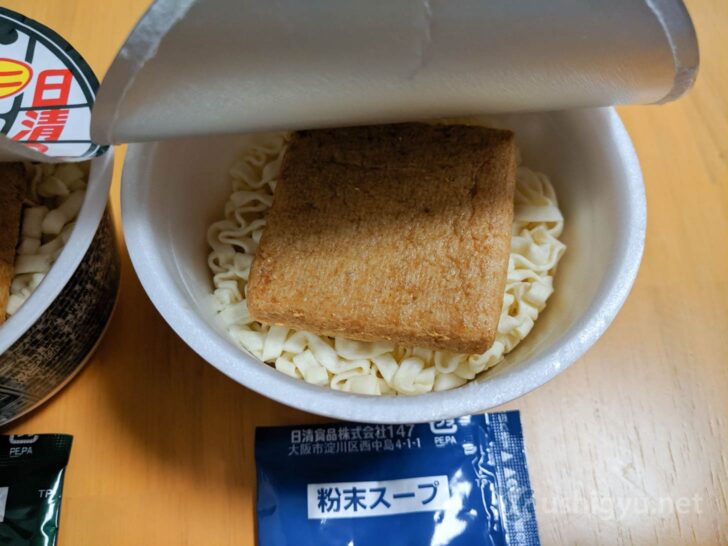
I couldn’t find any noticeable differences in the powdered soup either. Will there be a difference in the final product?
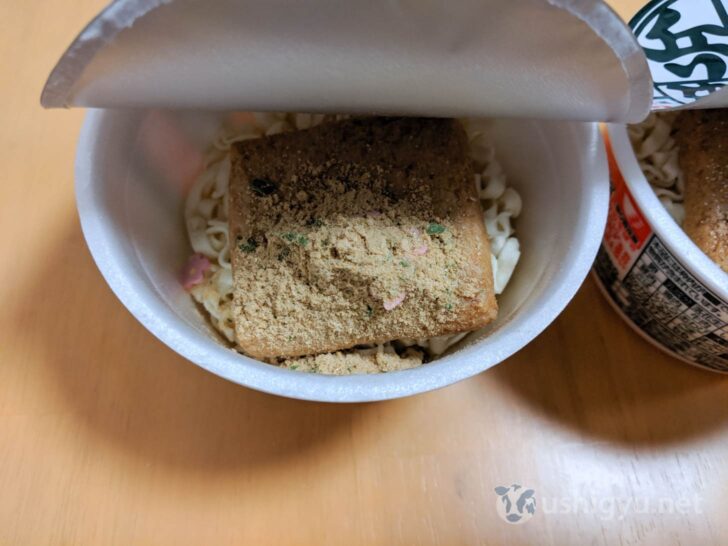
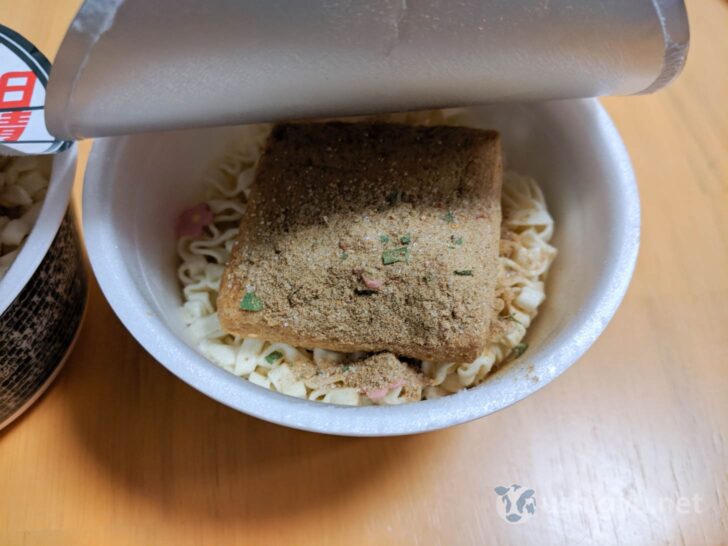
I boiled water with my Russell Hobbs electric café kettle that I’ve been using for over 13 years, poured it in, waited 3 minutes, and opened them up.
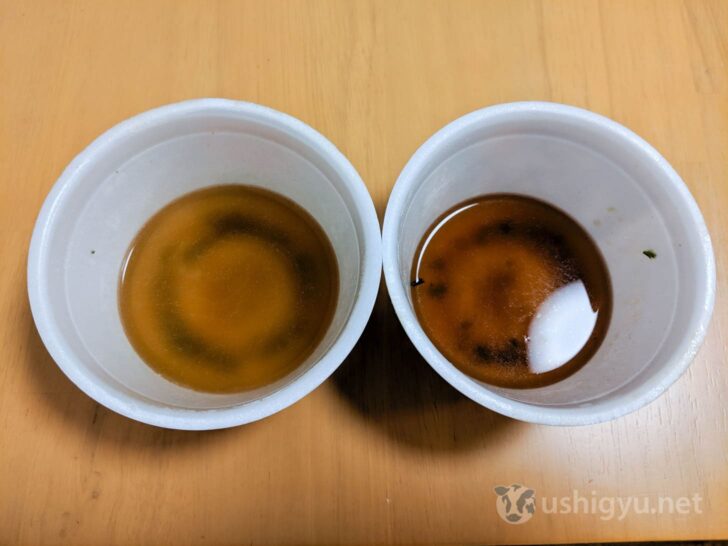
Ah, the soup colors are completely different…!
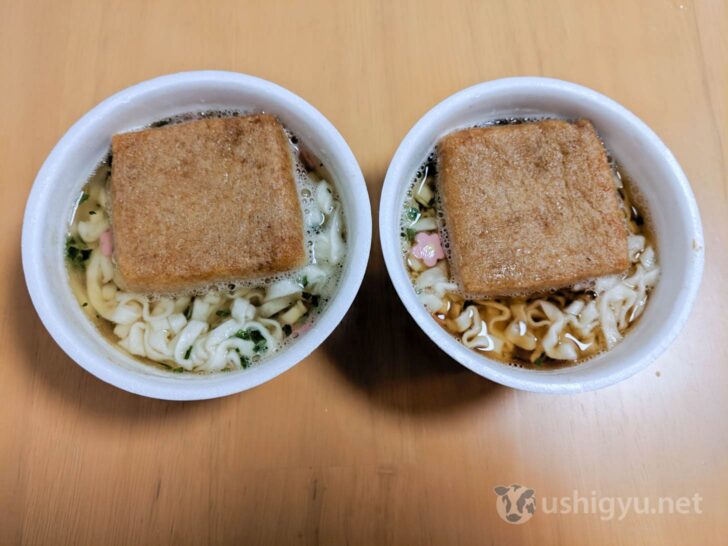
This is West Japan. It’s lightly colored with light soy sauce base.
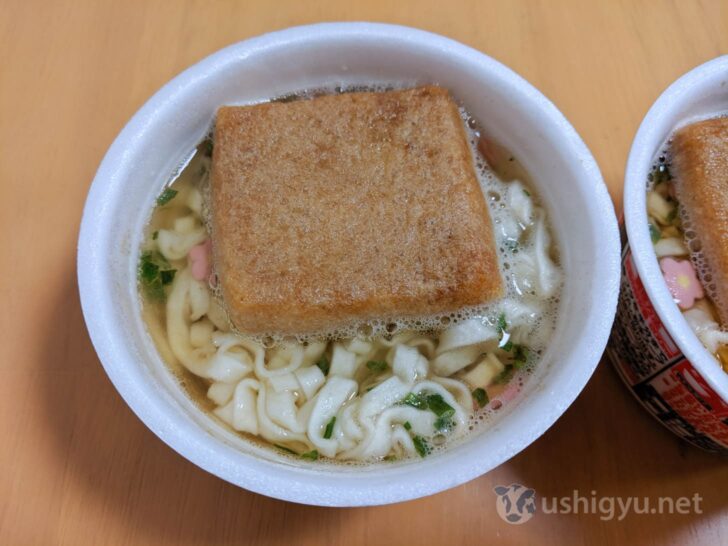
In contrast, East Japan has a darker color, probably due to dark soy sauce. It’s still lighter than what you’d get at Tokyo soba/udon shops (that don’t have West Japan roots), but it’s somewhat blackish.
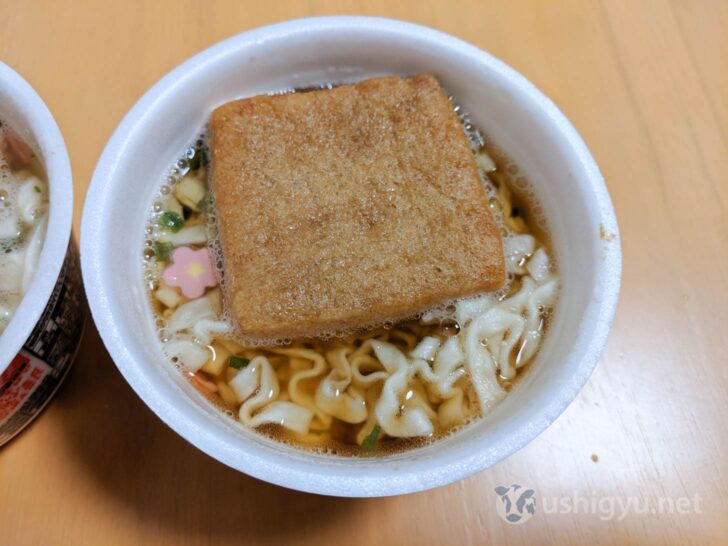
The color difference is especially clear after eating the noodles and fried tofu.
Here are my impressions of the taste differences:
- East Japan dashi is clean but somehow unsatisfying. It feels like drinking soba broth
- West Japan dashi is full-flavored and tastes better to me. For me as a Kyushu person, this is the familiar taste
- Honestly, I couldn’t really tell the difference in the fried tofu taste mentioned on the package. Maybe slightly different if I really think about it…? That level
- I felt there was absolutely no difference in the noodles
Note that I’m from Nagasaki and live in Fukuoka – a thorough West Japan person. So maybe I find the familiar flavor more delicious.
I’d love to hear if someone raised in East Japan would have a different impression when comparing them.
Final Thoughts
While it’s normal to buy local souvenirs when traveling or on business trips, it might be fun to bring back something like Donbei that’s “available nationwide but actually different between West and East.”
We did a blind taste test guessing West/East for fun, and it was really interesting!

Comments