The final day of my first trip to northeastern Tohoku, after visiting Yamagata and Akita. On this day, I decided to ride the Akita Nairiku Jukan Railway, a third-sector railway running through inland Akita Prefecture, and head to Matagi no Yu in Ani Nakamura, the birthplace of the Matagi hunters.
- From Kakunodate Station on the Akita Nairiku Jukan Railway to Even Snowier Northern Akita
- Staying at Uchiate Onsen “Matagi no Yu” in the Birthplace of Matagi
- Cuisine Befitting the Matagi Village and Hot Springs Surrounded by Snowy Scenery
- Unmanned Station Standing in Pure White Scenery Surrounded by Snowy Mountains – Beautiful
- Final Thoughts
From Kakunodate Station on the Akita Nairiku Jukan Railway to Even Snowier Northern Akita
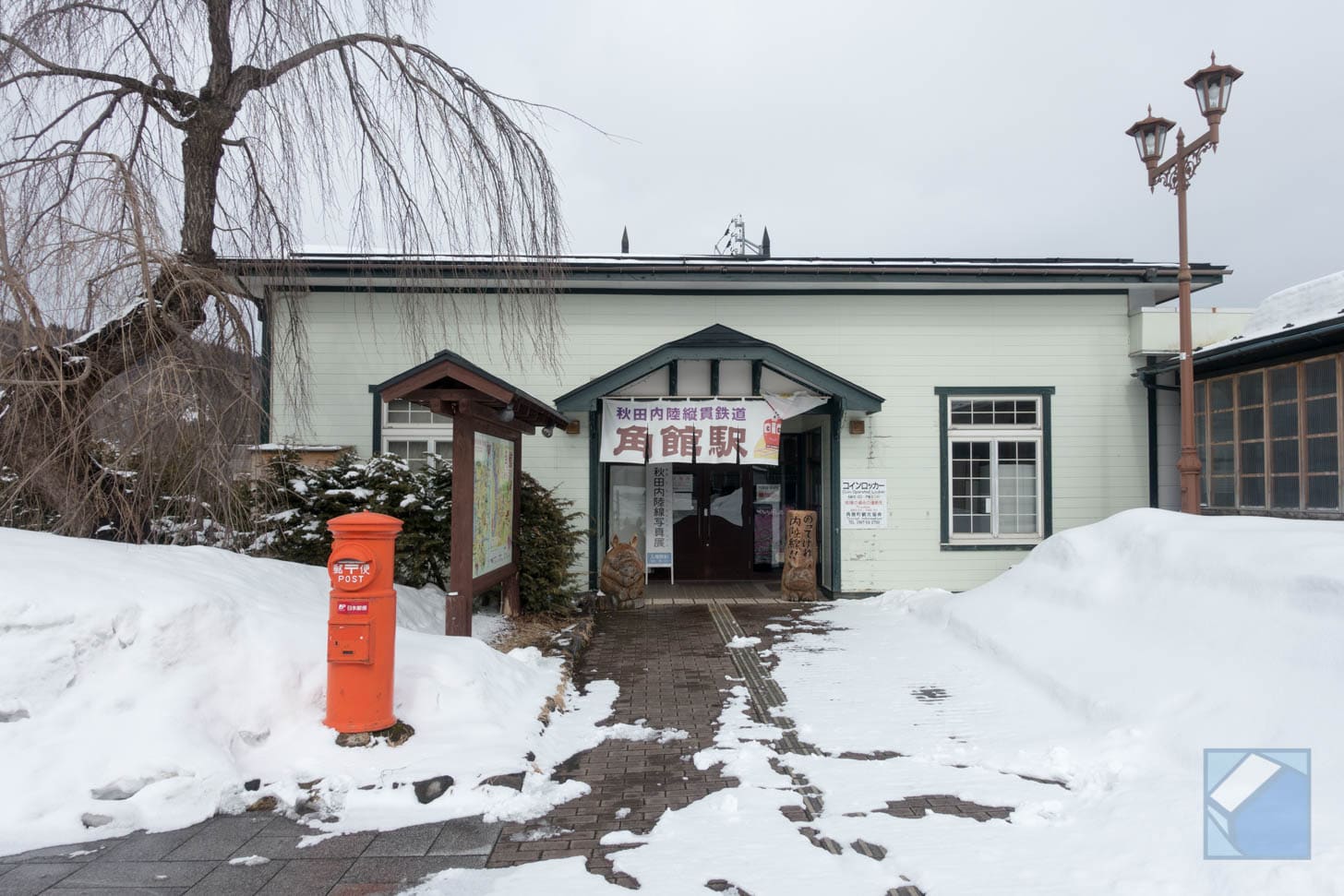
Starting from Kakunodate, the old capital of Akita Prefecture. The Akita Nairiku Jukan Railway runs from here to Takanosu Station in Kitaakita City, where you can connect to JR lines and travel to Hirosaki in Aomori Prefecture.
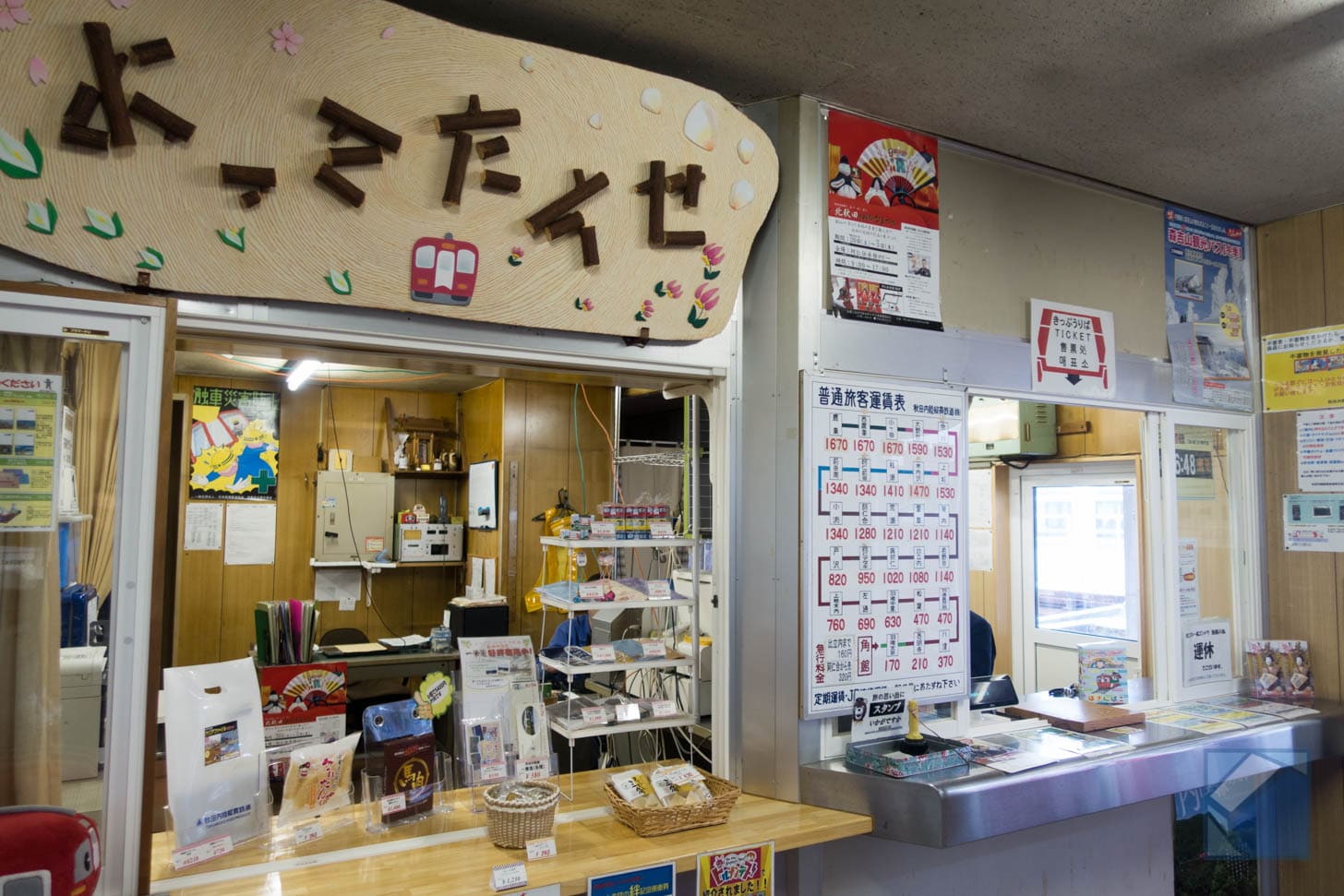
Inside the characterful station building is a handmade-feeling ticket counter.
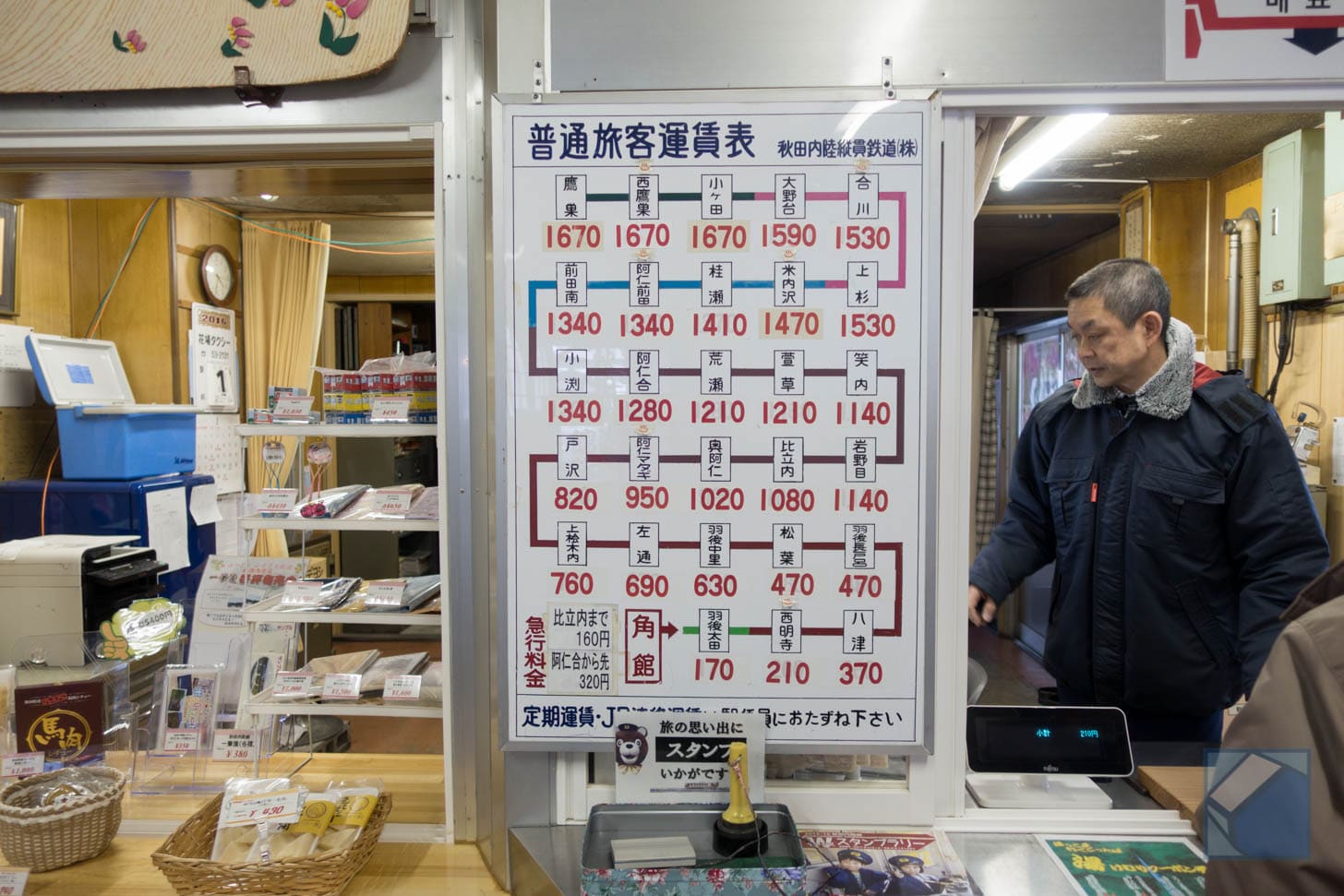
The nearest station to “Matagi no Yu” that we’re visiting today is aptly named “Ani Matagi” station. 950 yen it is.
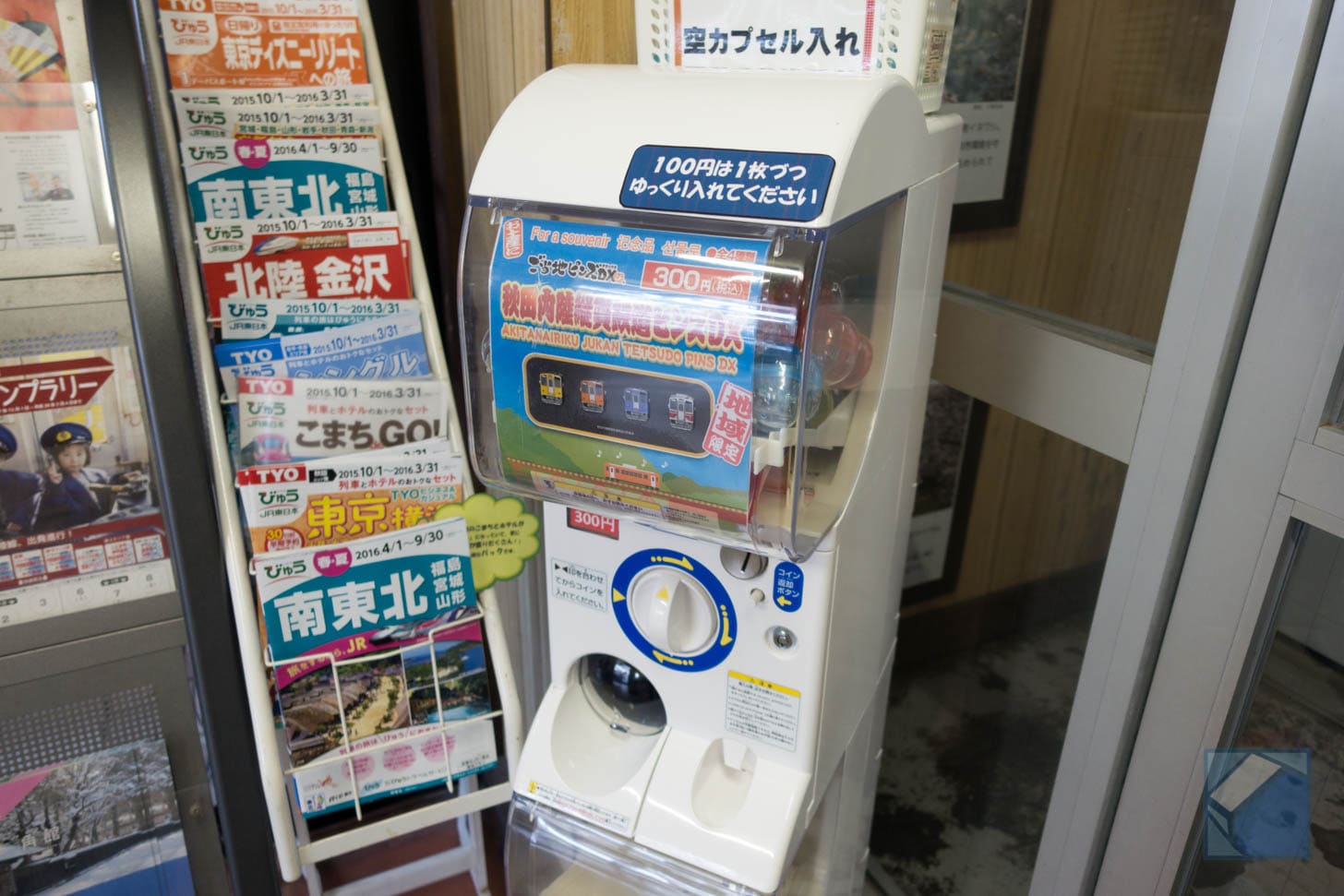
For some reason, there were capsule toy machines. For railway fans, perhaps?
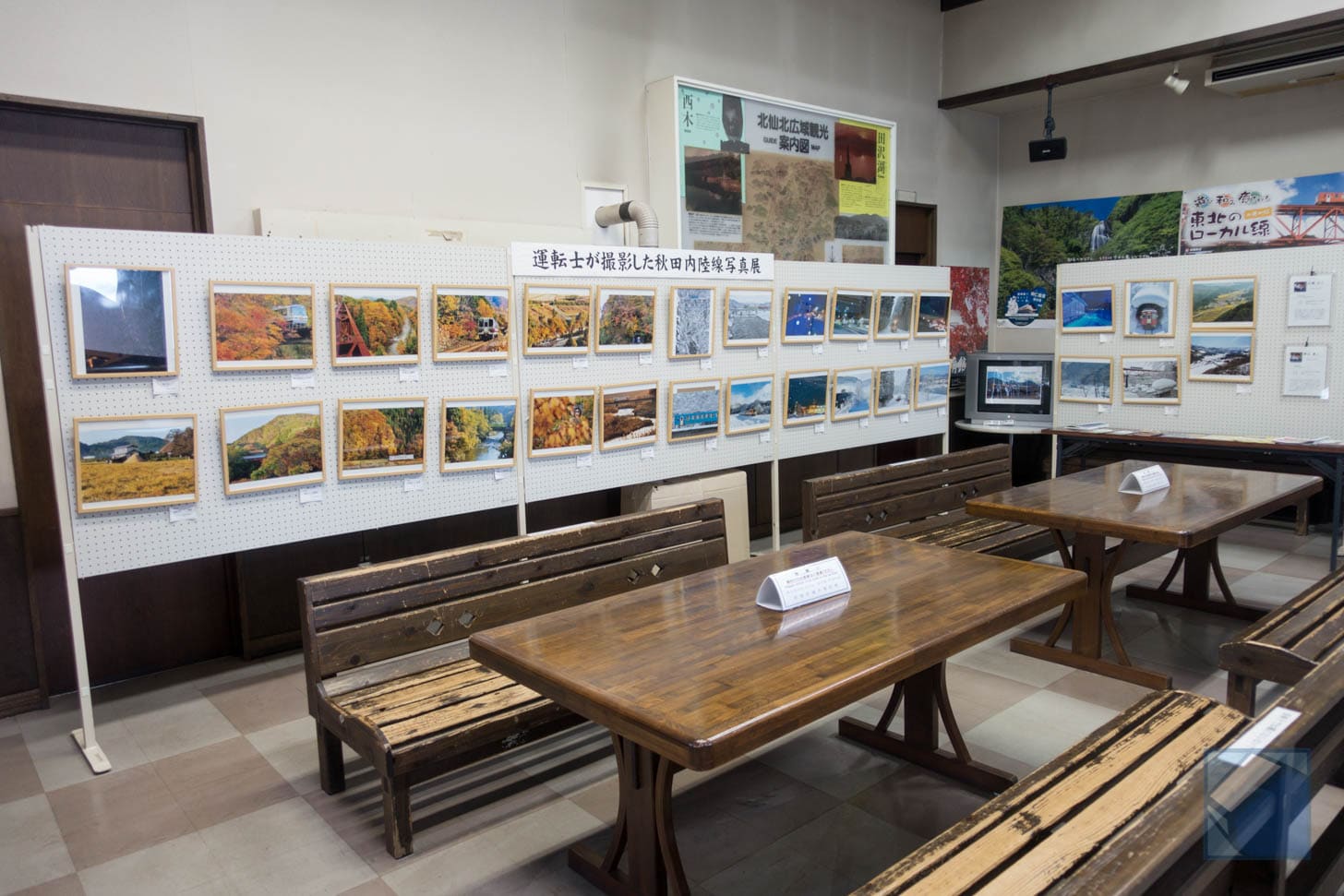
Since trains run only once every 1-2 hours, I recommend timing your visit carefully. I had checked in advance, but arrived several tens of minutes early, so I leisurely looked at the photo exhibition in the adjacent room. The beautiful photos displayed here were apparently taken by two train drivers who love photography.
When the time came, I boarded the train.
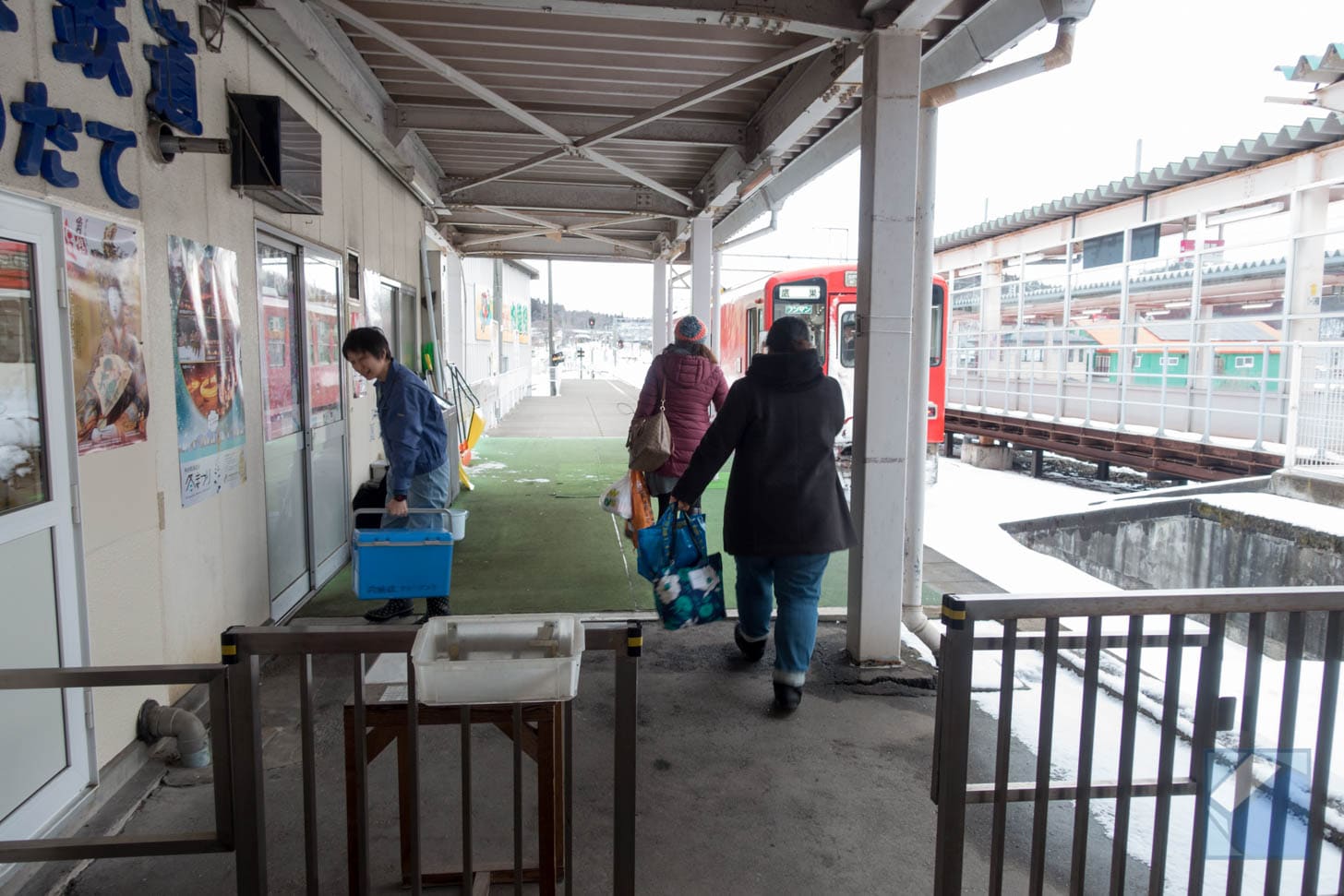
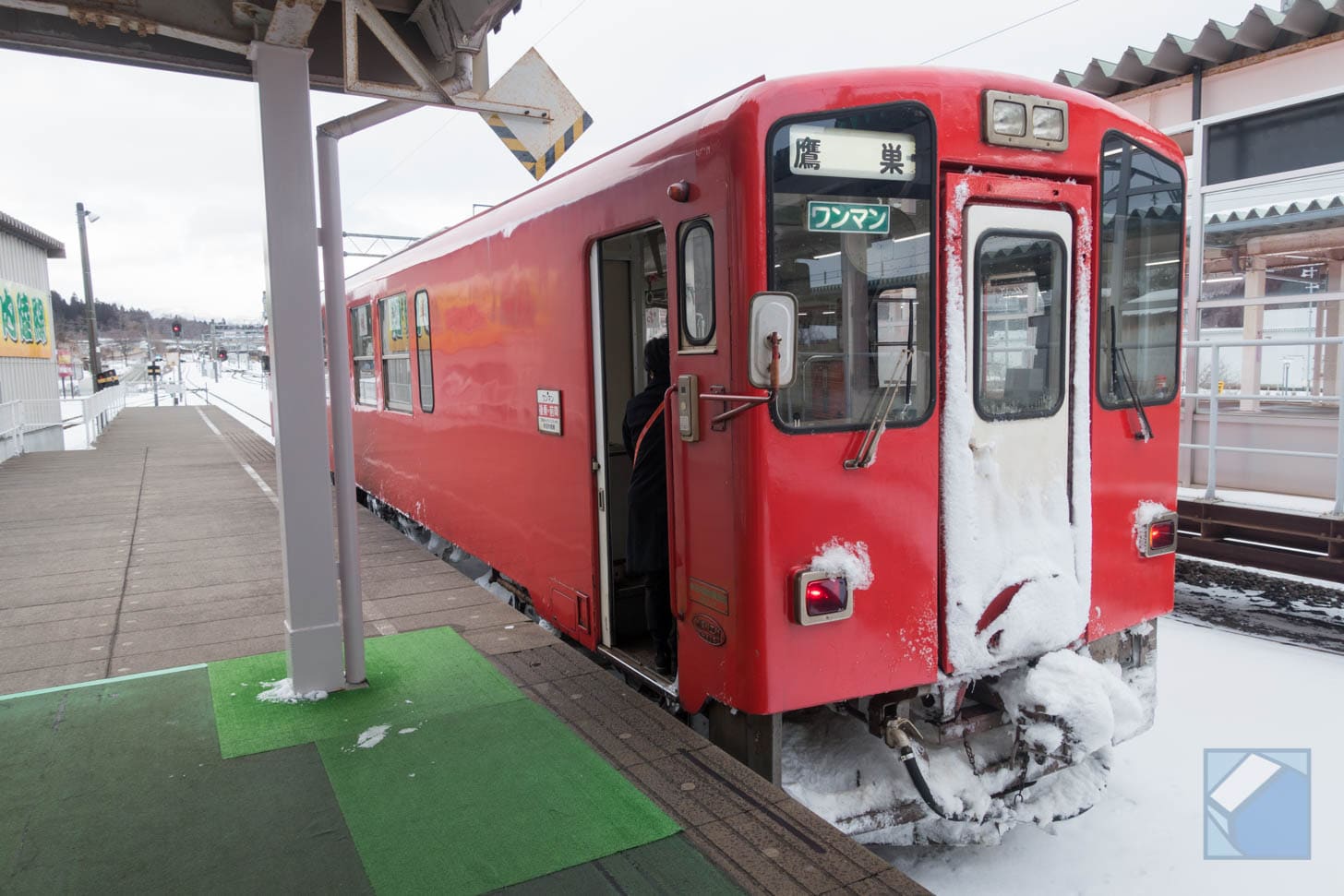
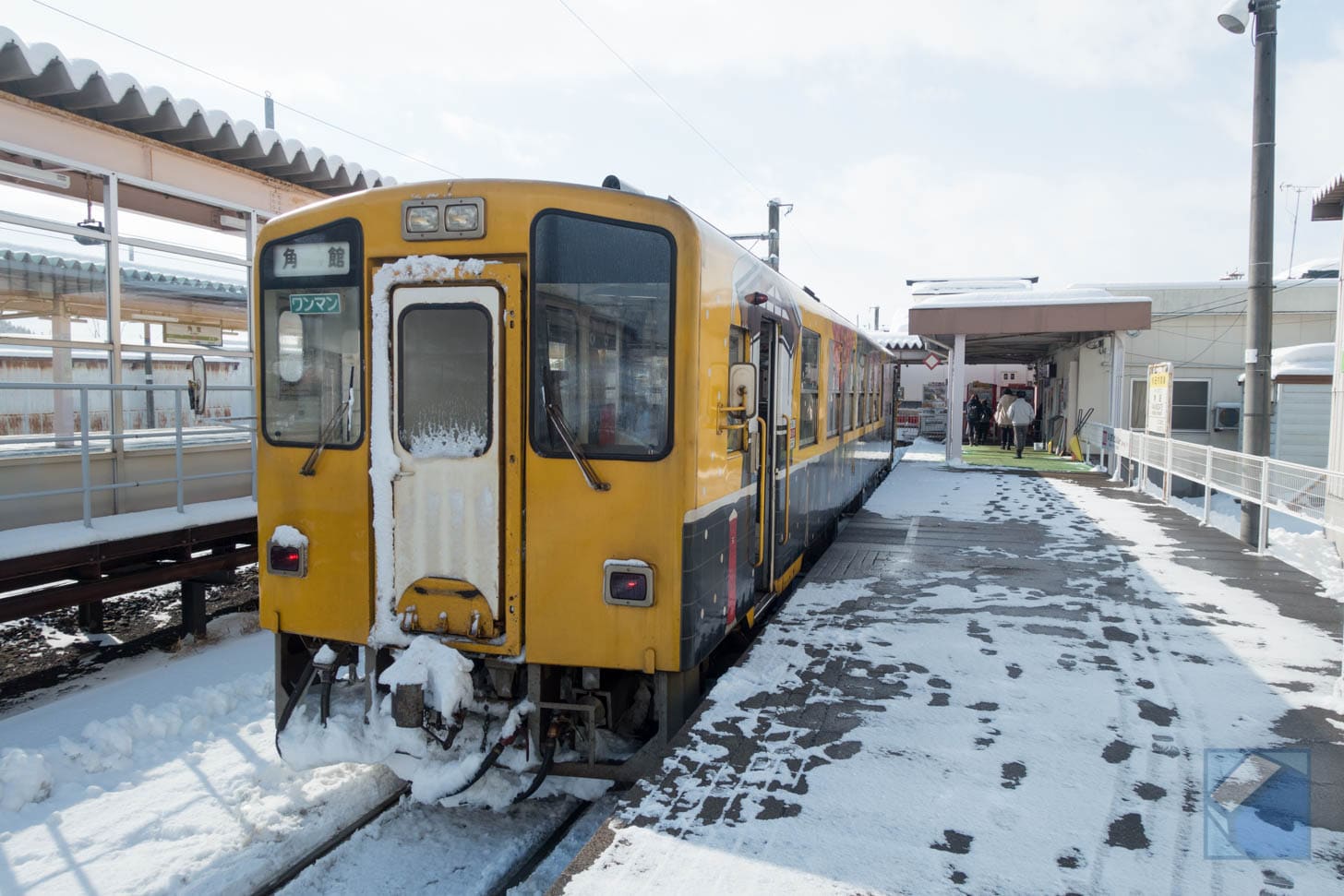
Even though I’m not particularly a railway enthusiast, this appearance gets me excited.
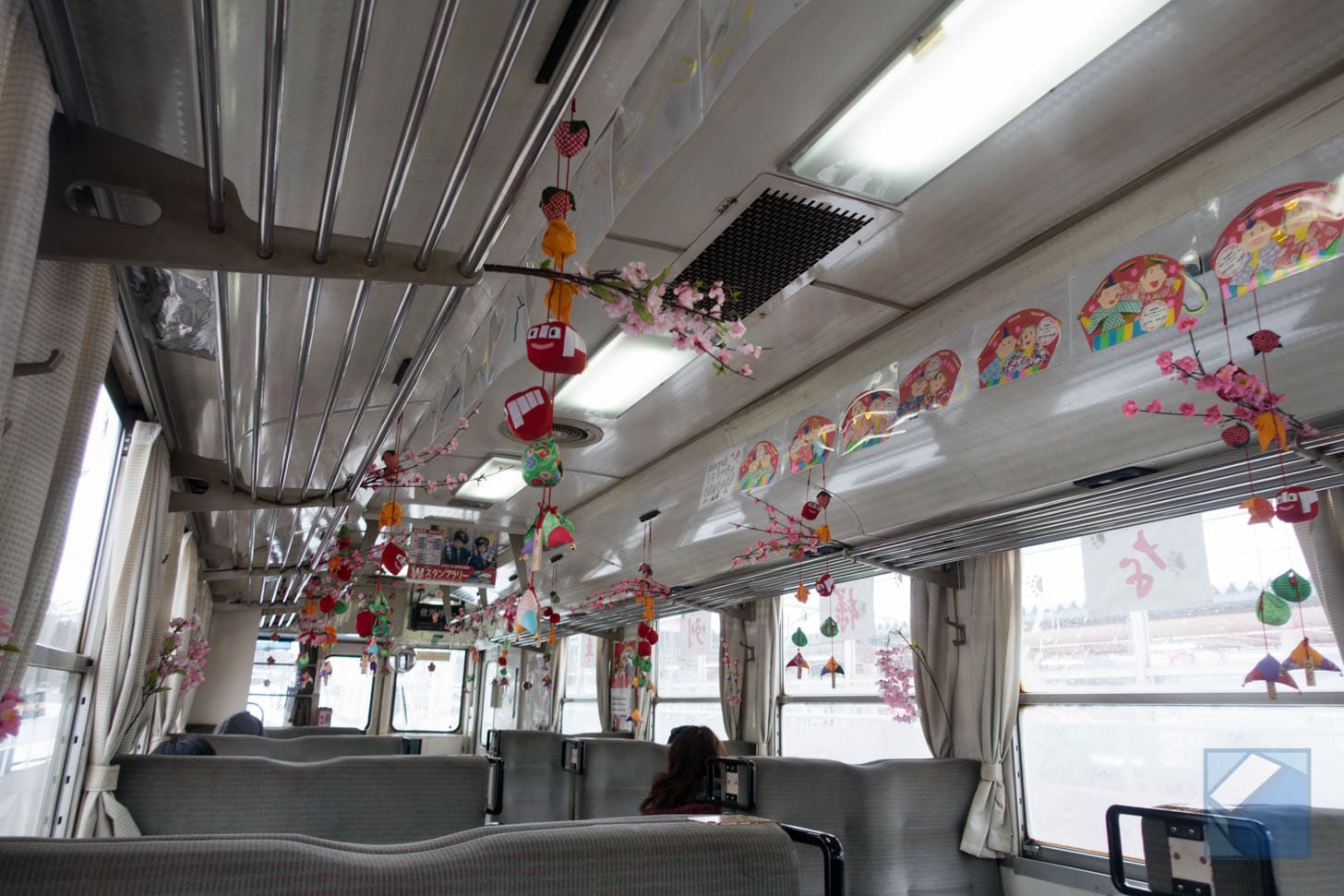
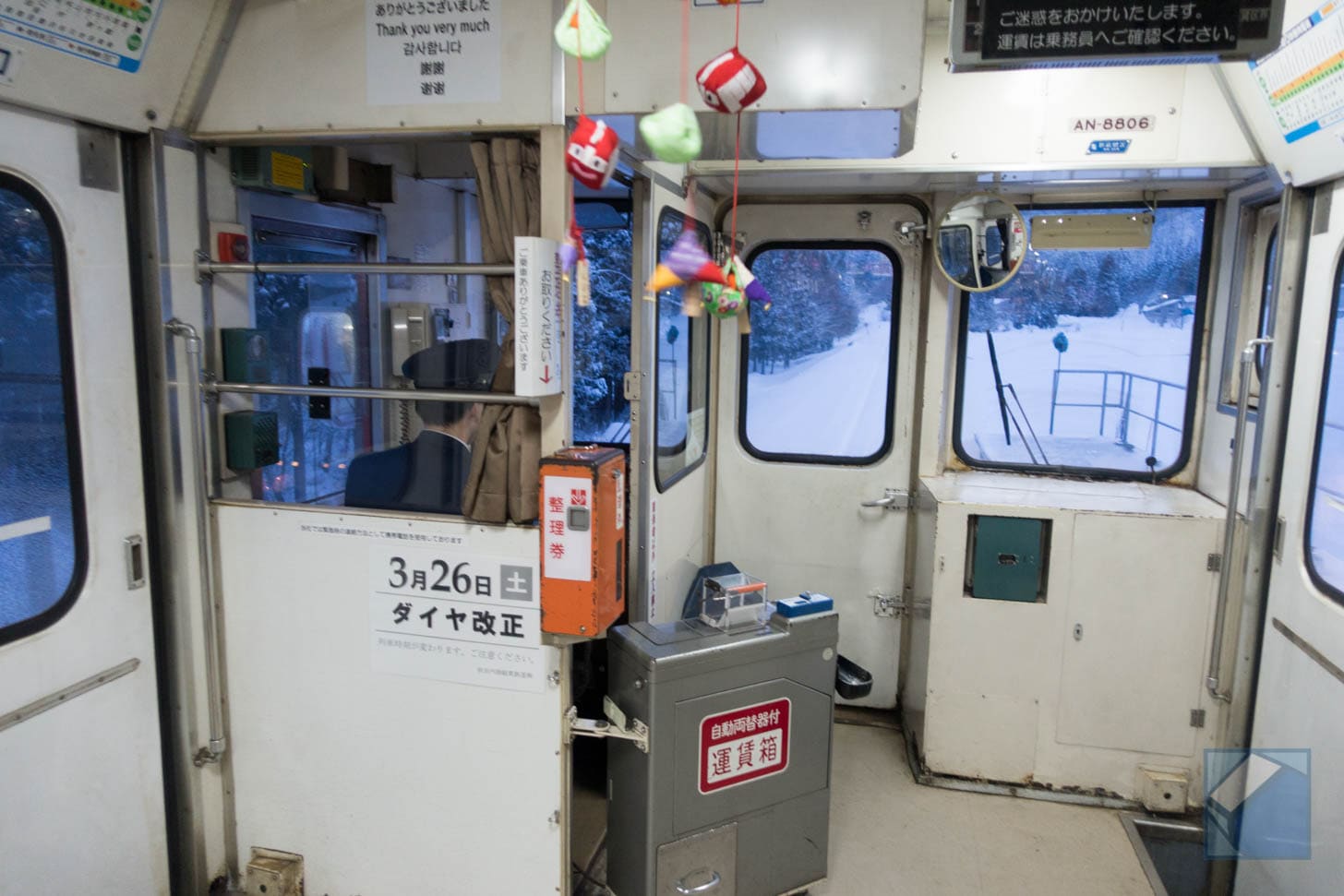
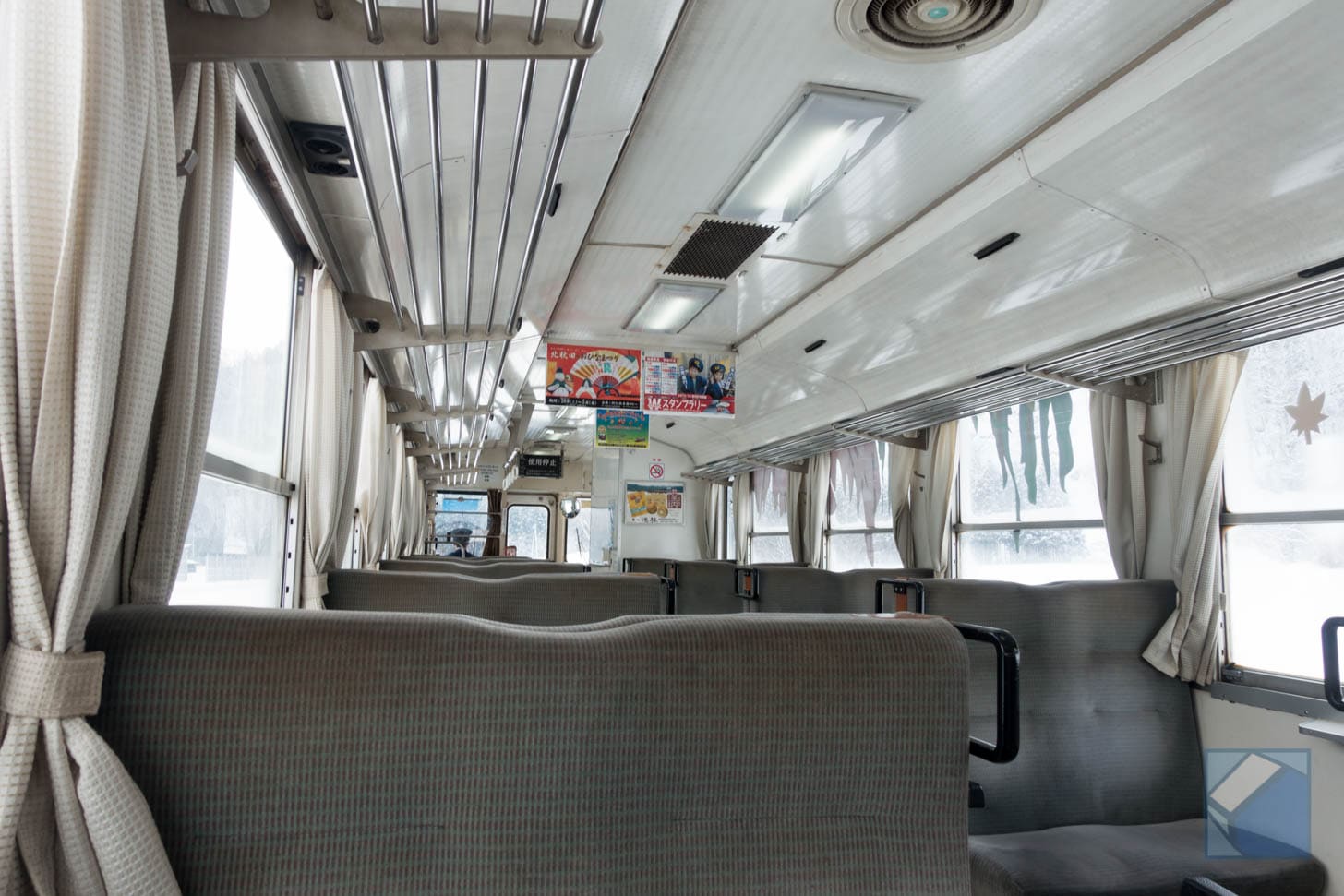
The train car interior has an atmosphere you don’t find on city trains. It was beautifully decorated since spring was approaching. I wonder if they change it with each season.
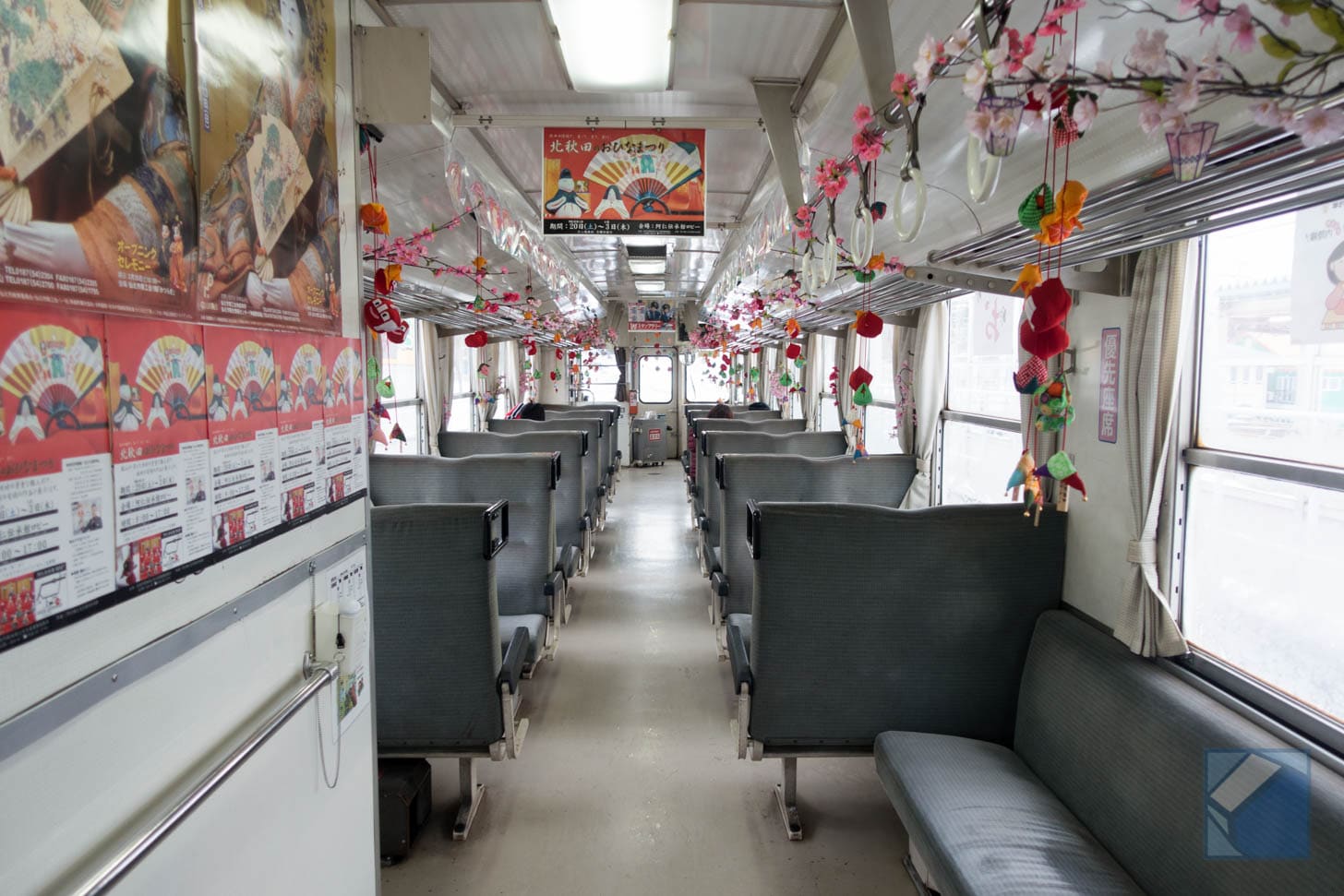
Looking closely, there are also drawings of Hina dolls and Emperor dolls drawn by children. It’s truly a community-based operation.
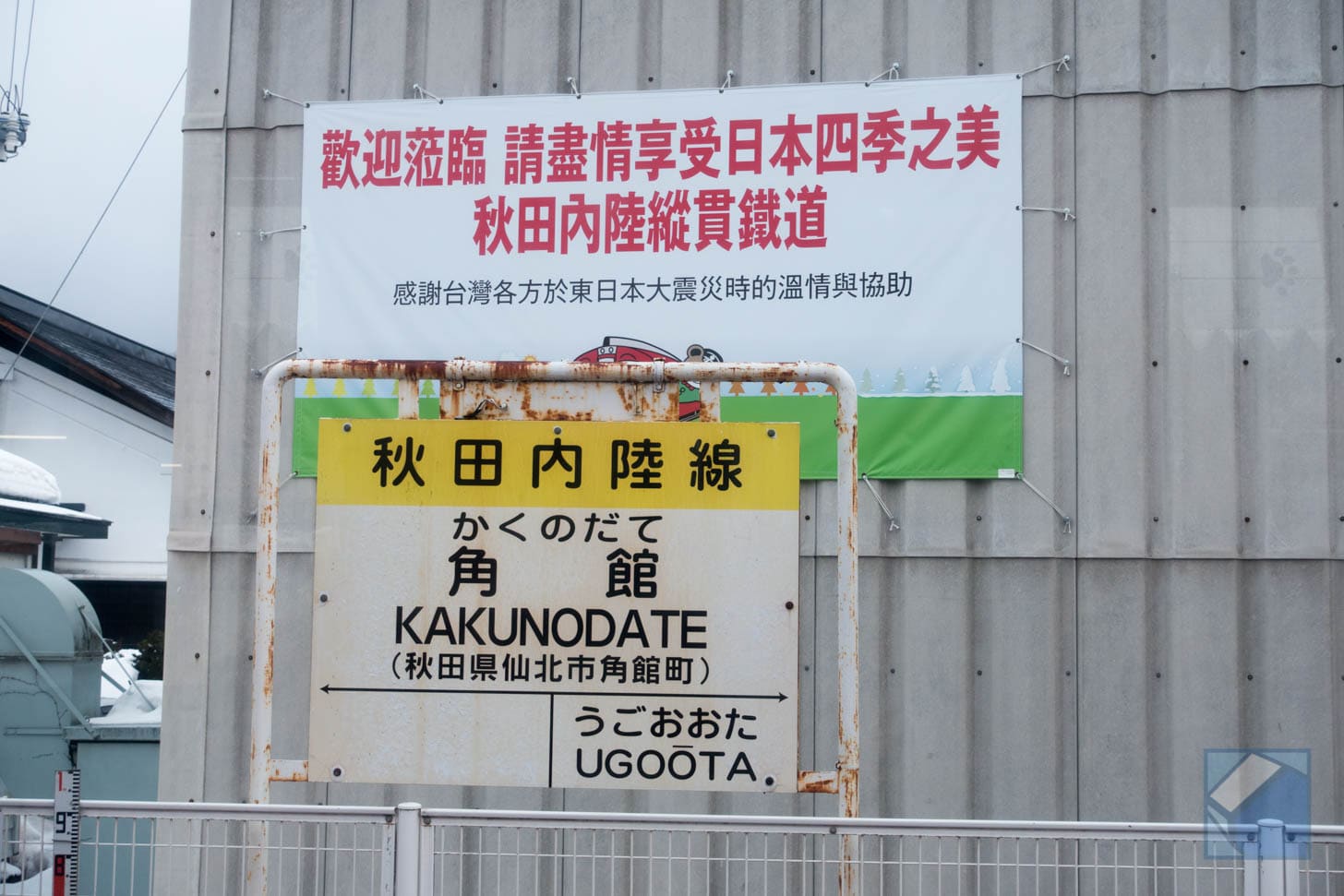
Finally departing! There was also something expressing gratitude for Taiwan’s great assistance during the Great East Japan Earthquake. Nice.
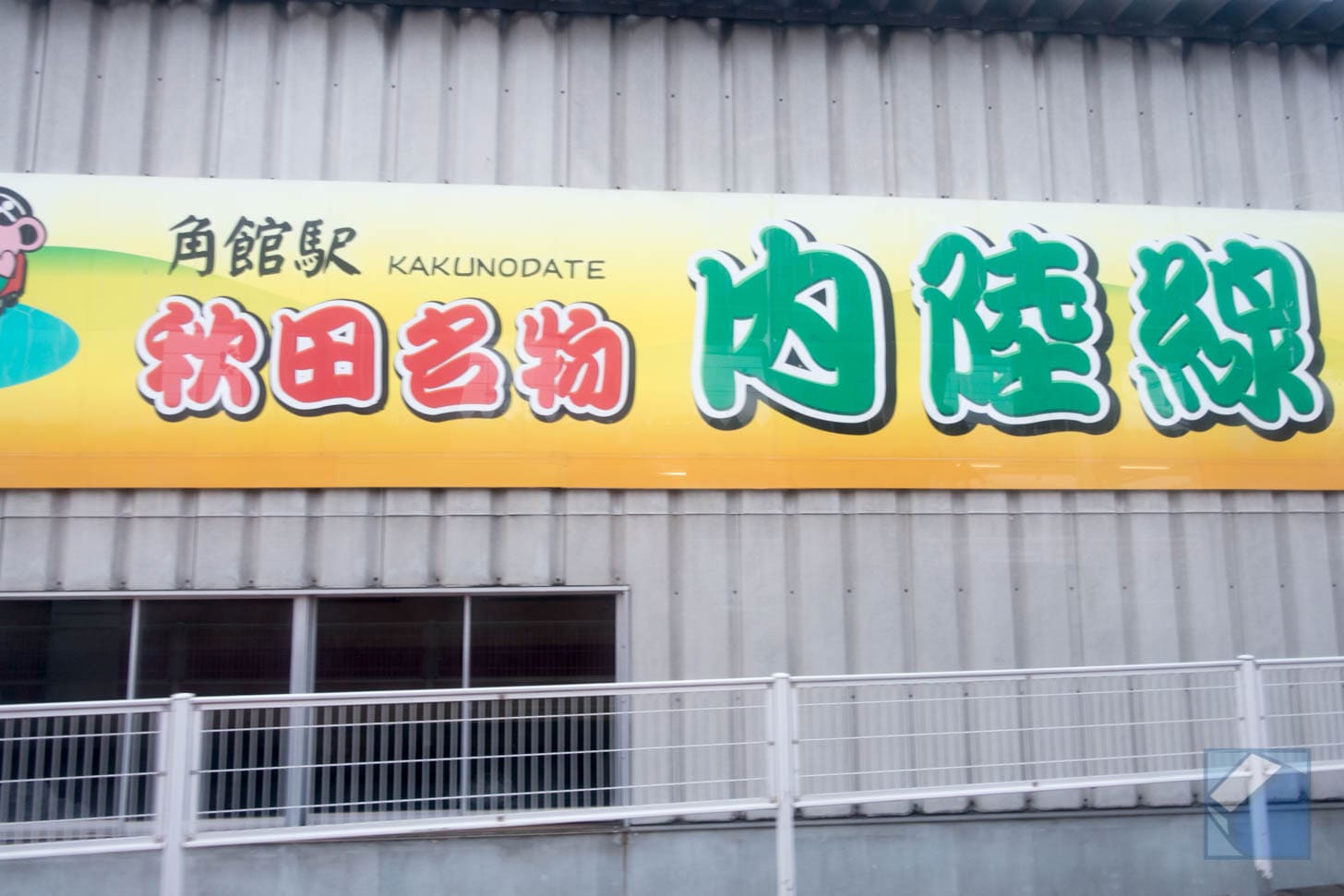
And this font!
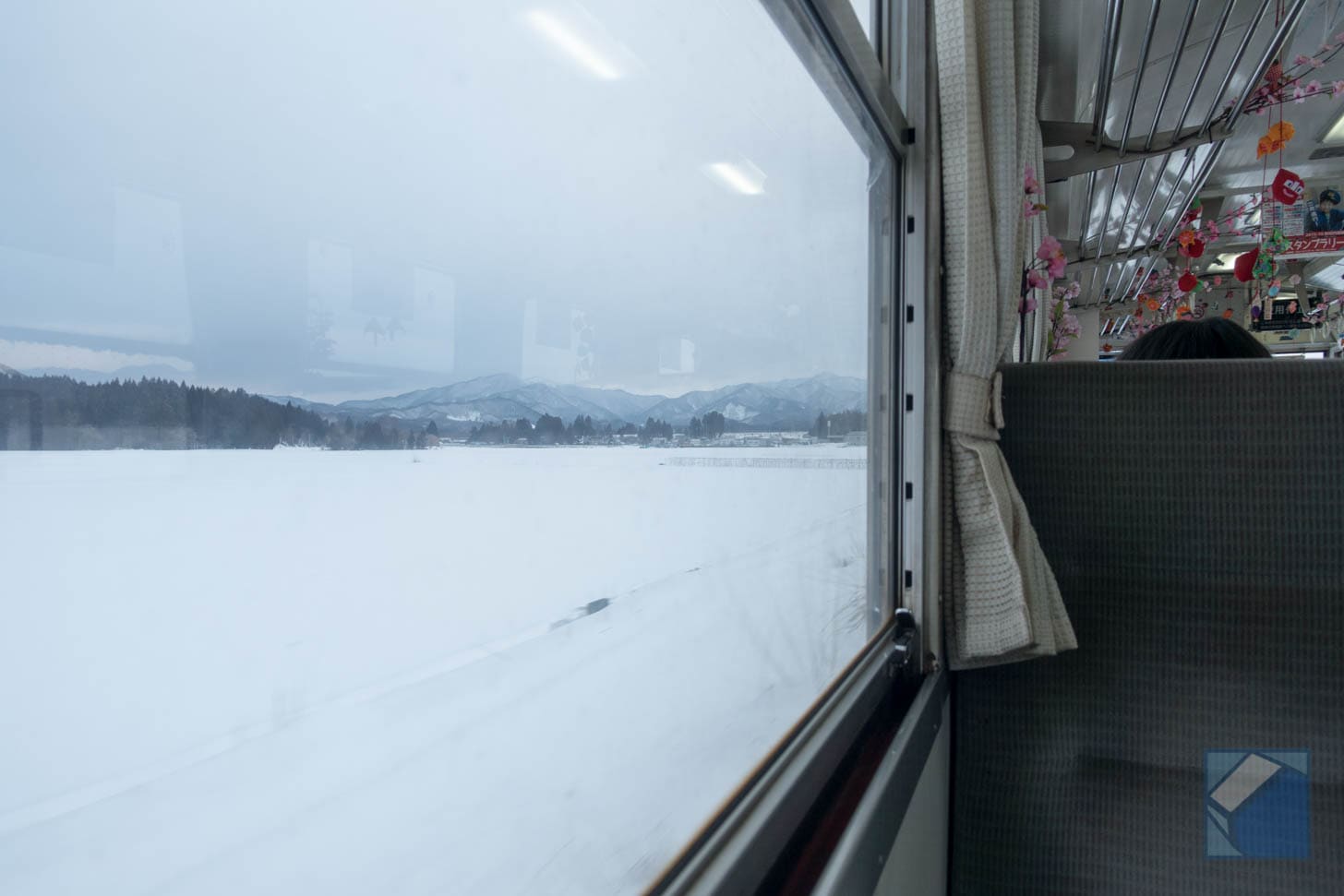
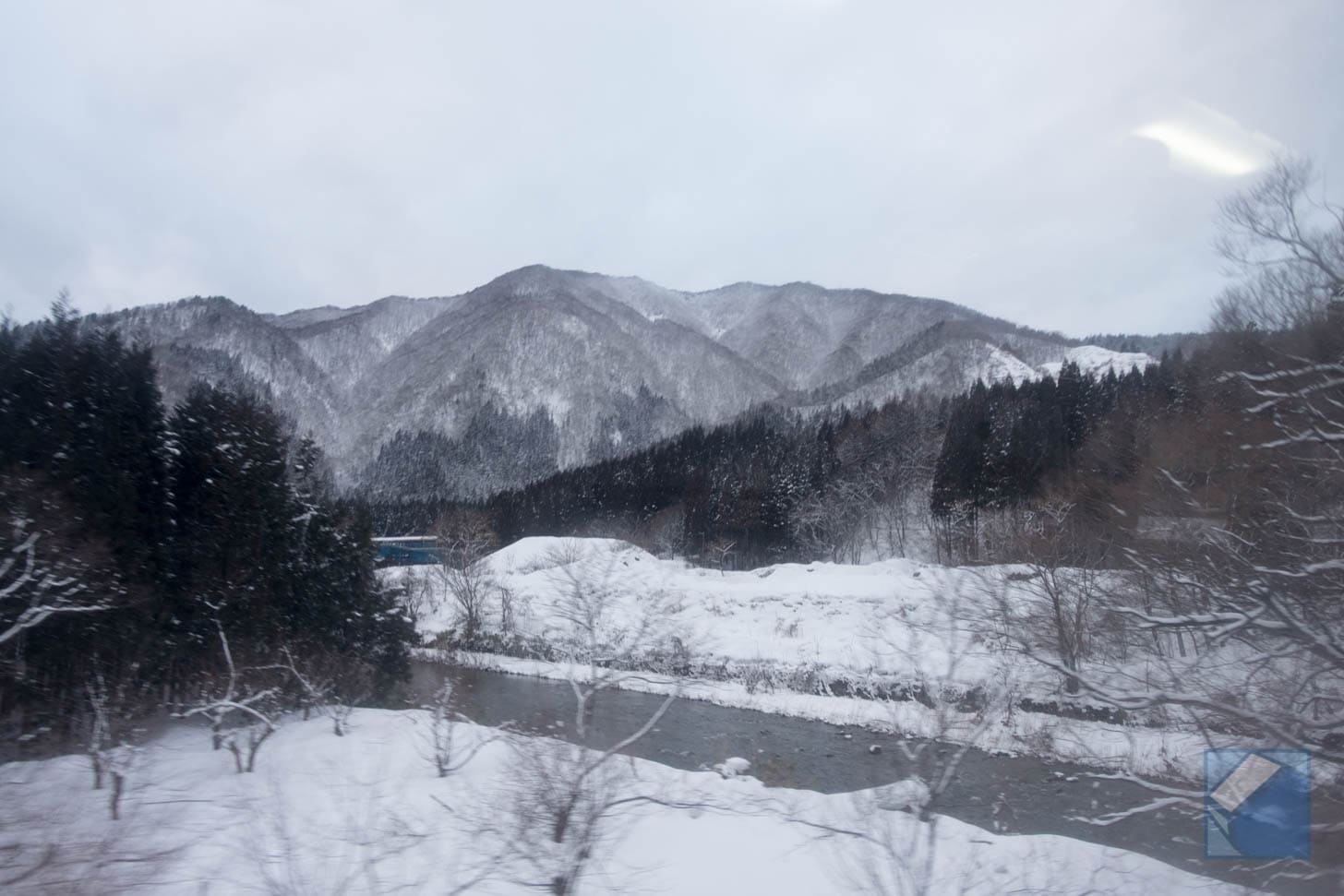
North from the relatively prosperous Kakunodate, further north. Gradually buildings decrease and snow gets deeper.
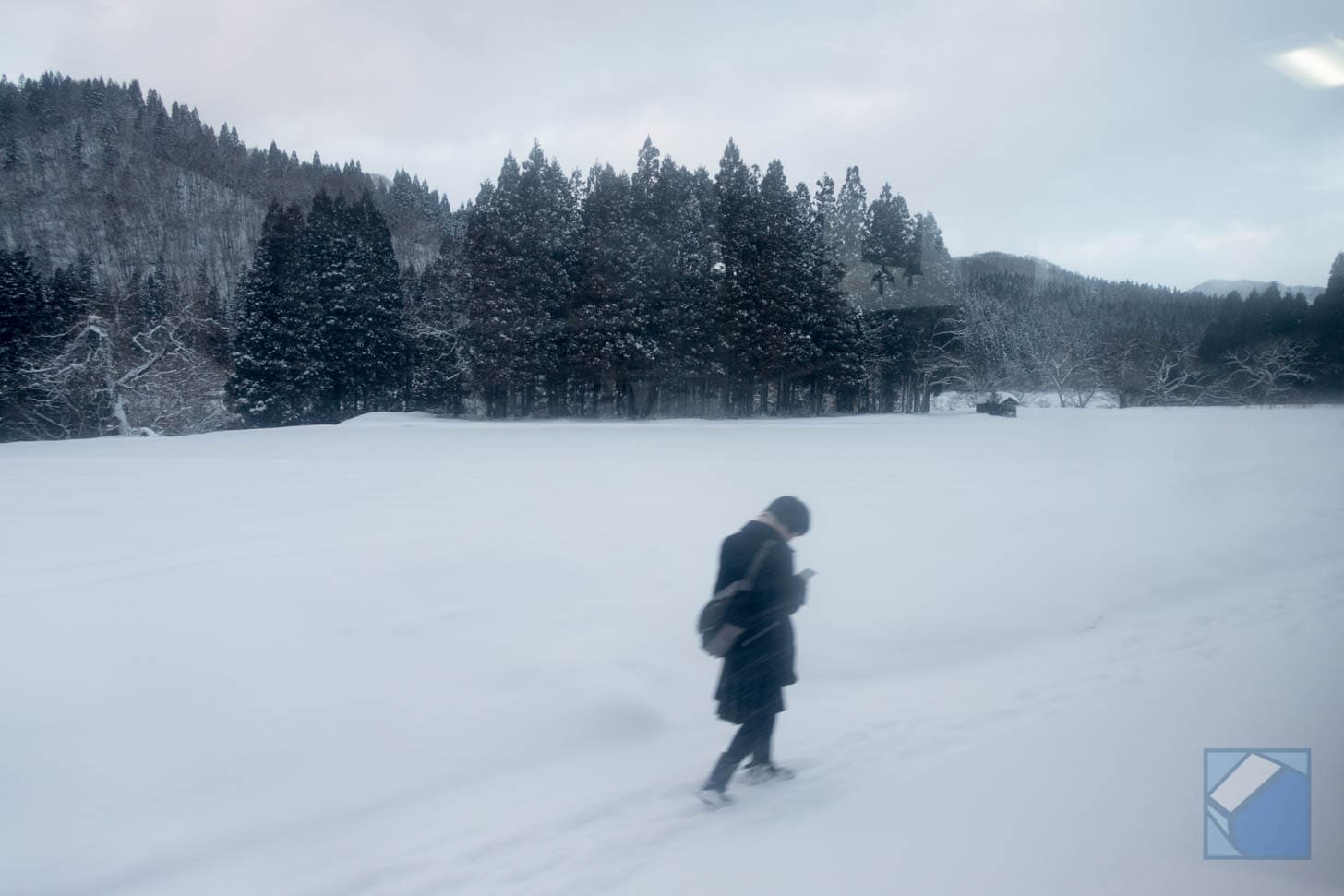
Perhaps because it was around school dismissal time, high school girls boarded midway and then got off. So high school girls in snowy regions aren’t an urban legend. Growing up in Tokyo versus growing up in countryside like this must give fundamentally different sensibilities. Neither is better or worse.
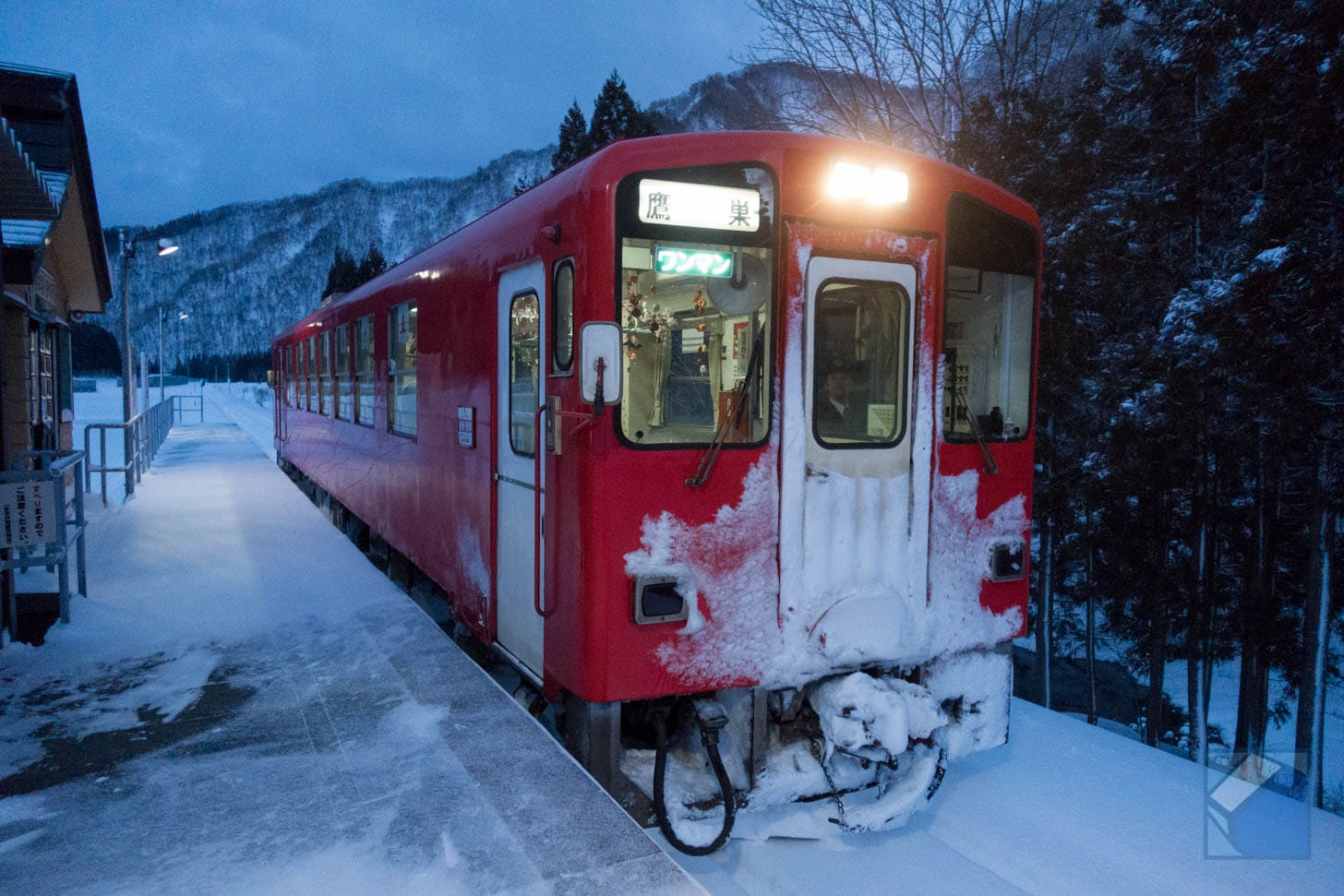
After about 40 minutes on the train, we arrived at our destination, Ani Matagi Station.
It has even more atmosphere in the darkness.
Staying at Uchiate Onsen “Matagi no Yu” in the Birthplace of Matagi
This is an unmanned station. I’m the only passenger, and there’s literally no one around.
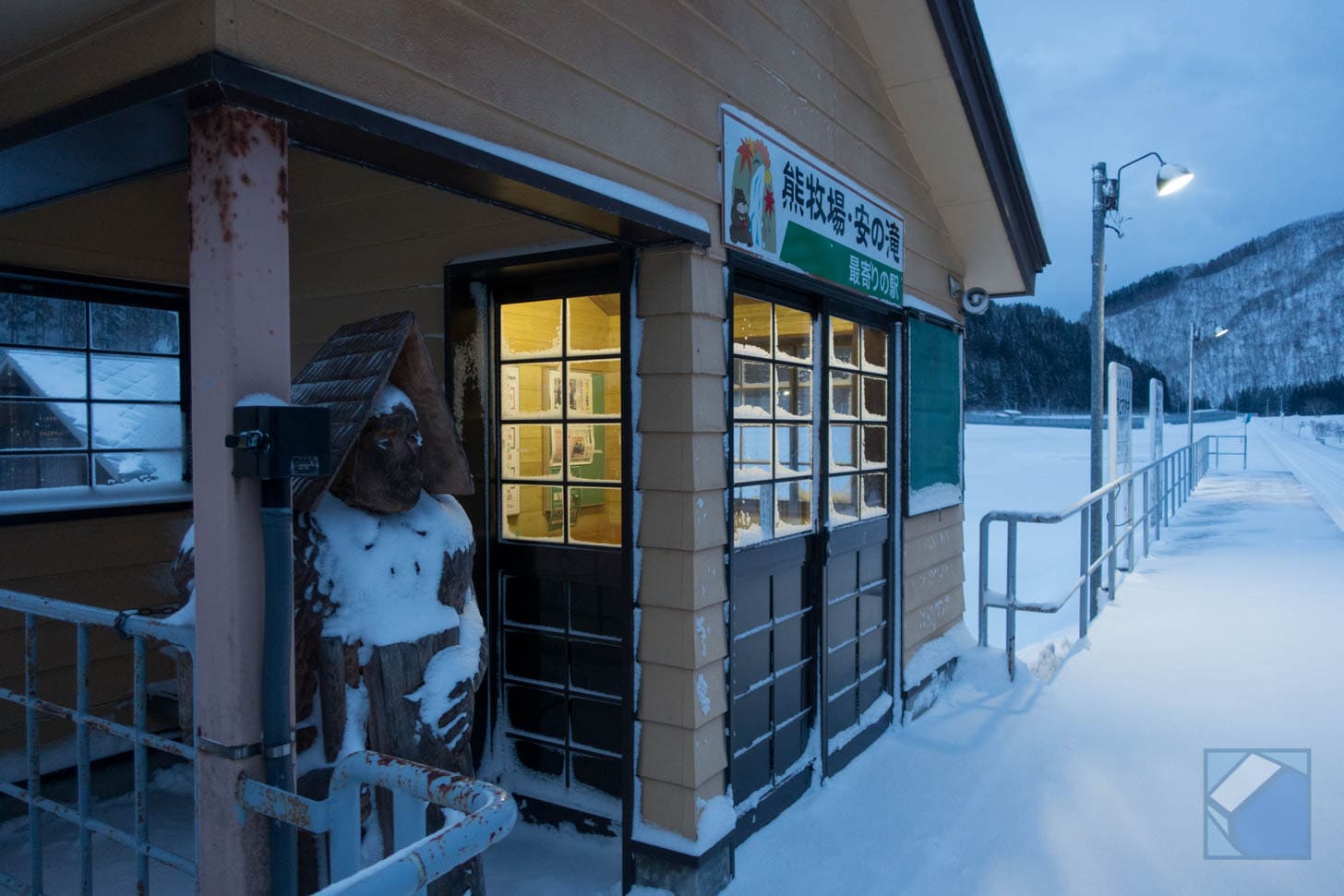
Wow, snow scenery everywhere.
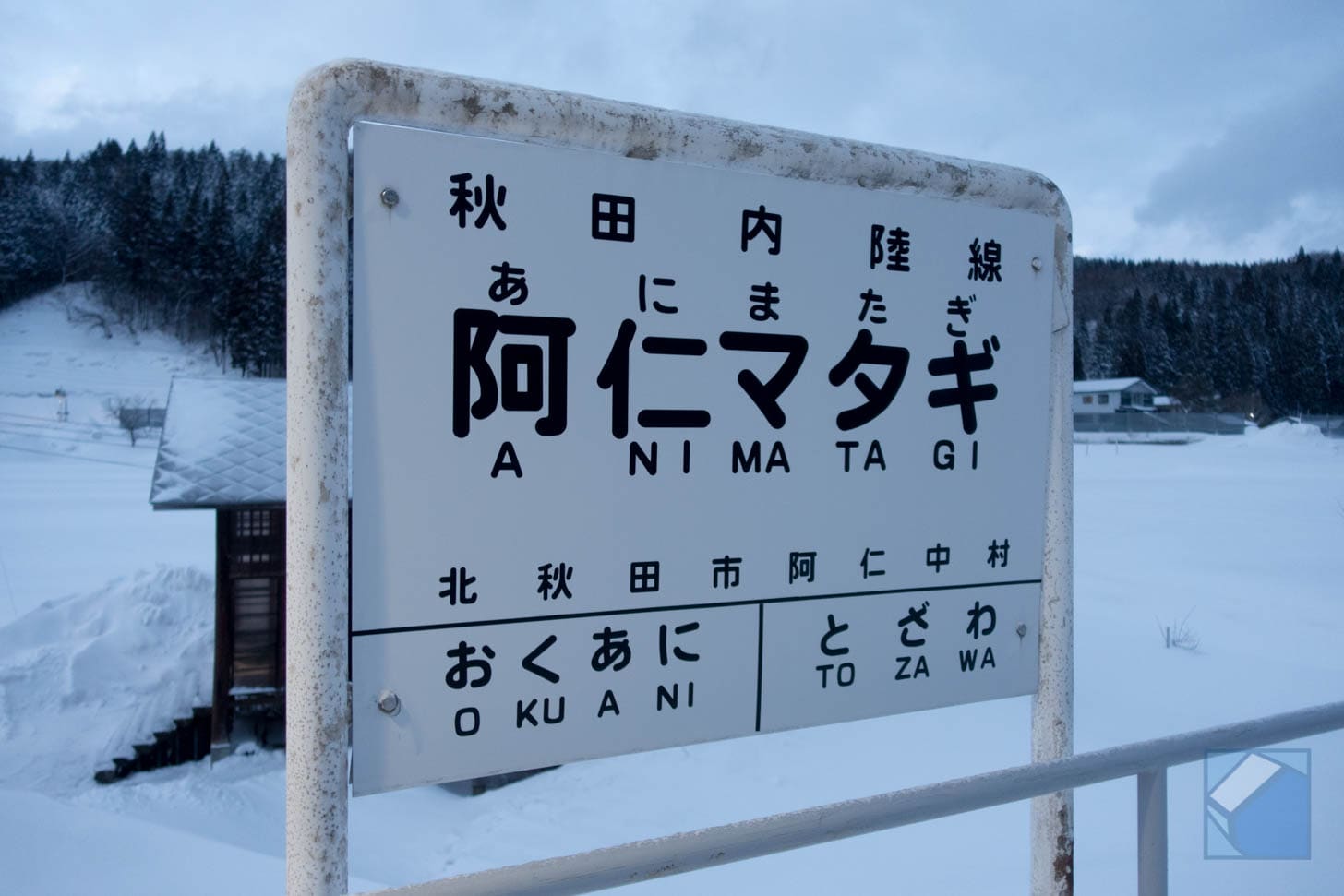
Characterful station sign. Quite an impressive station name.
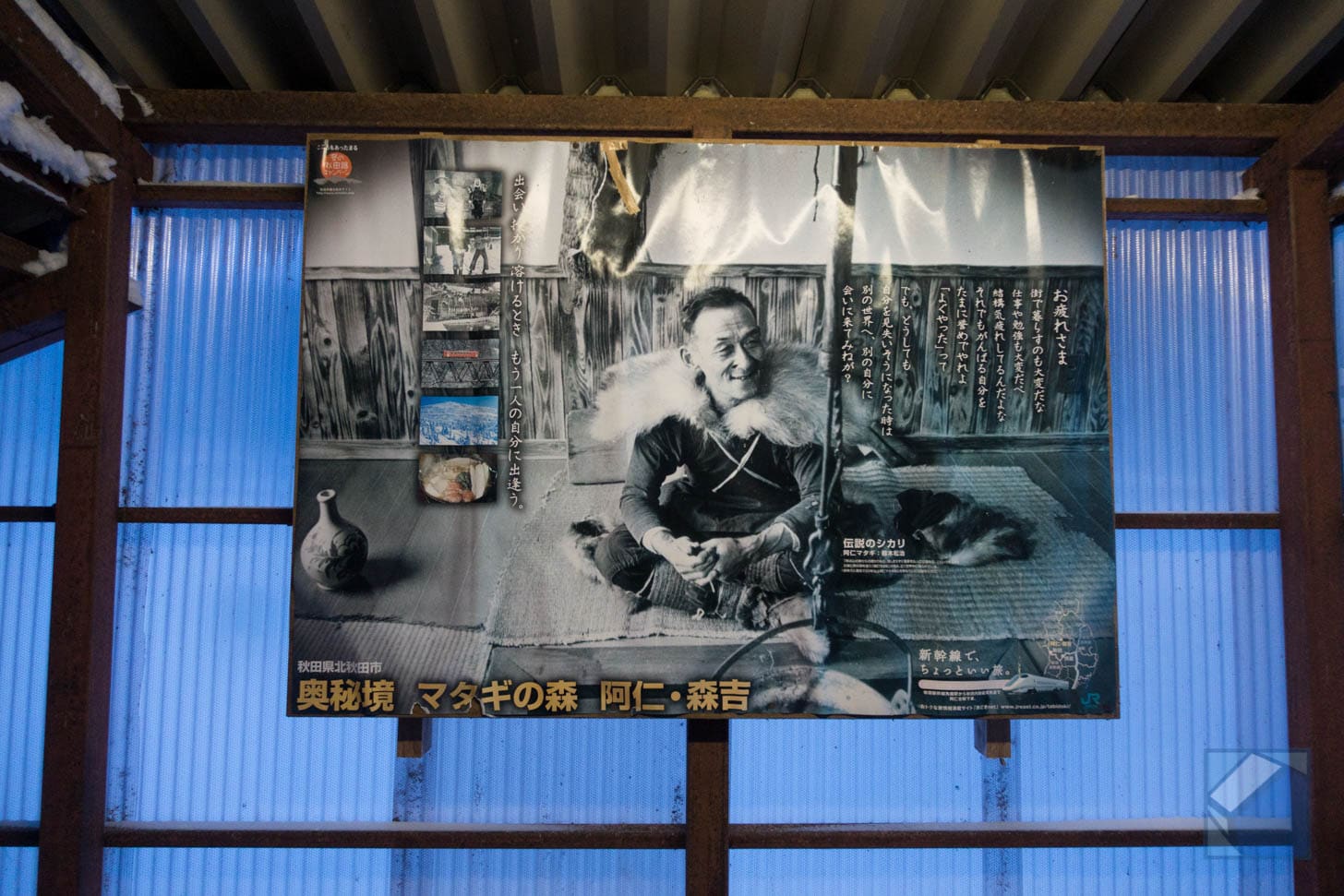
Kitaakita City Ani Nakamura, where Ani Matagi Station is located, is known as the birthplace of Matagi, as the name suggests. Matagi refers to people in Tohoku and Hokkaido who make their living through hunting. (Not this)
If you tell “Uchiate Onsen Matagi no Yu” in advance which train you’re taking, they’ll come pick you up.
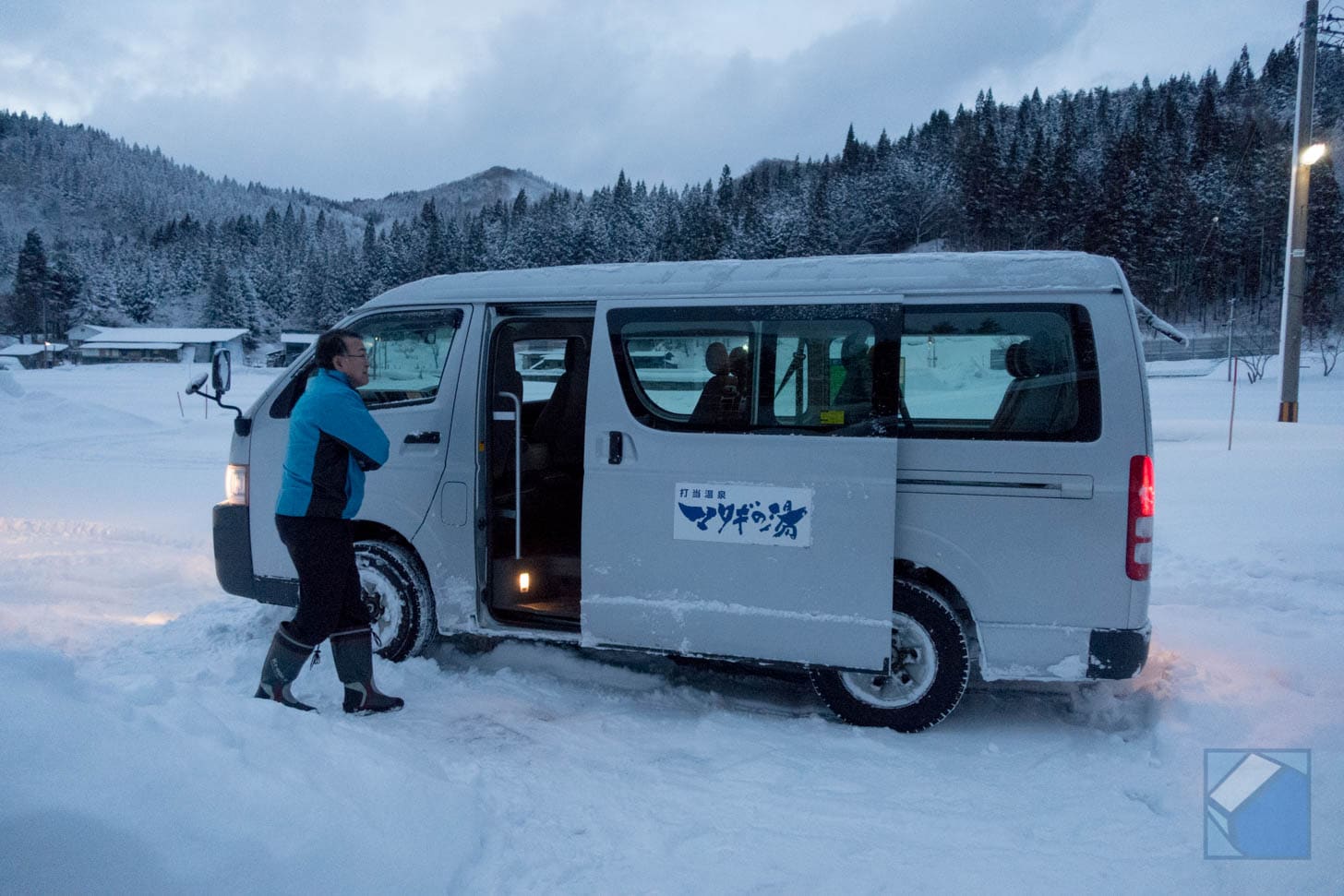

Arrived at Matagi no Yu in a few minutes. From the name, I had arbitrarily imagined an old-fashioned building, but it’s an incredibly clean building.
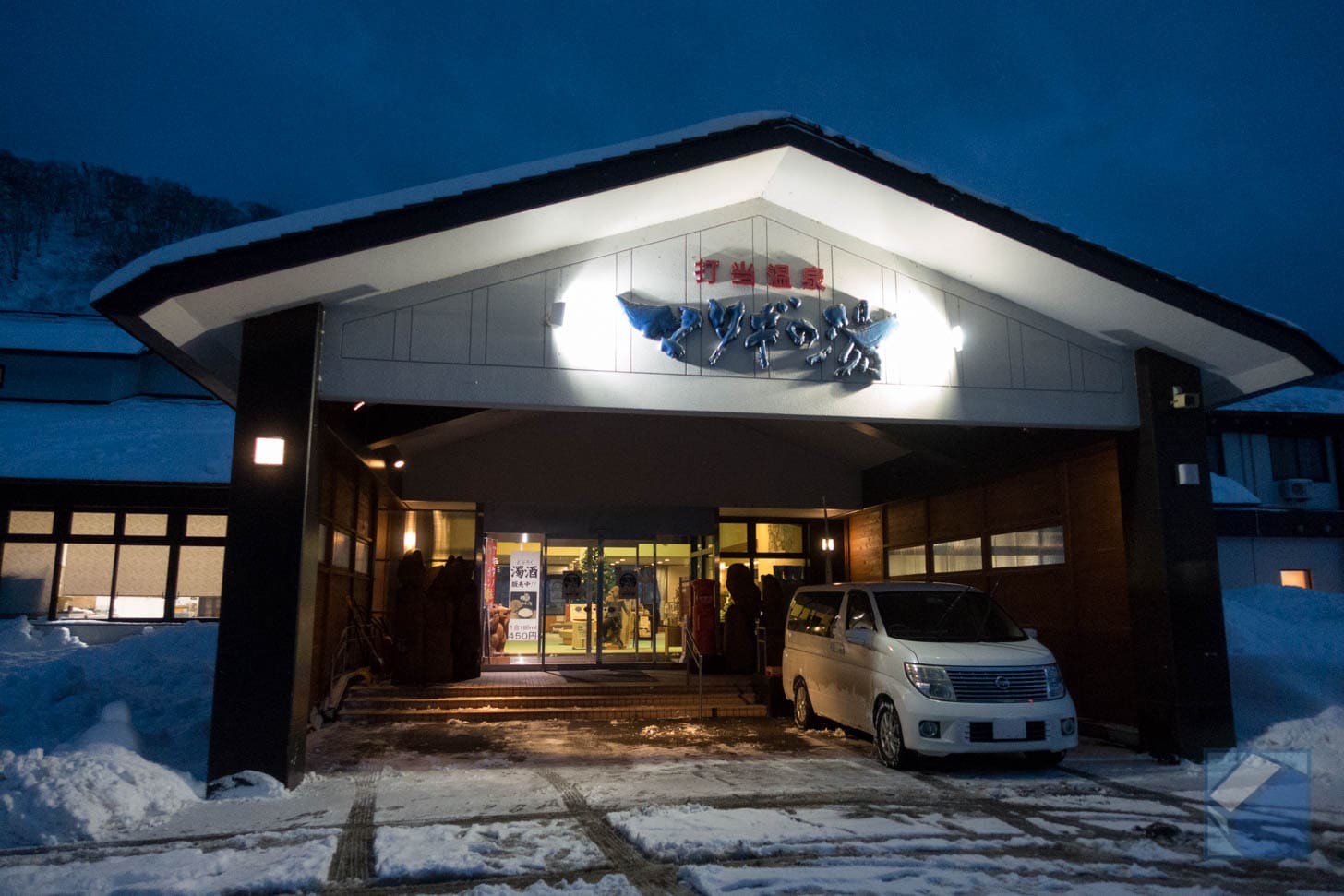
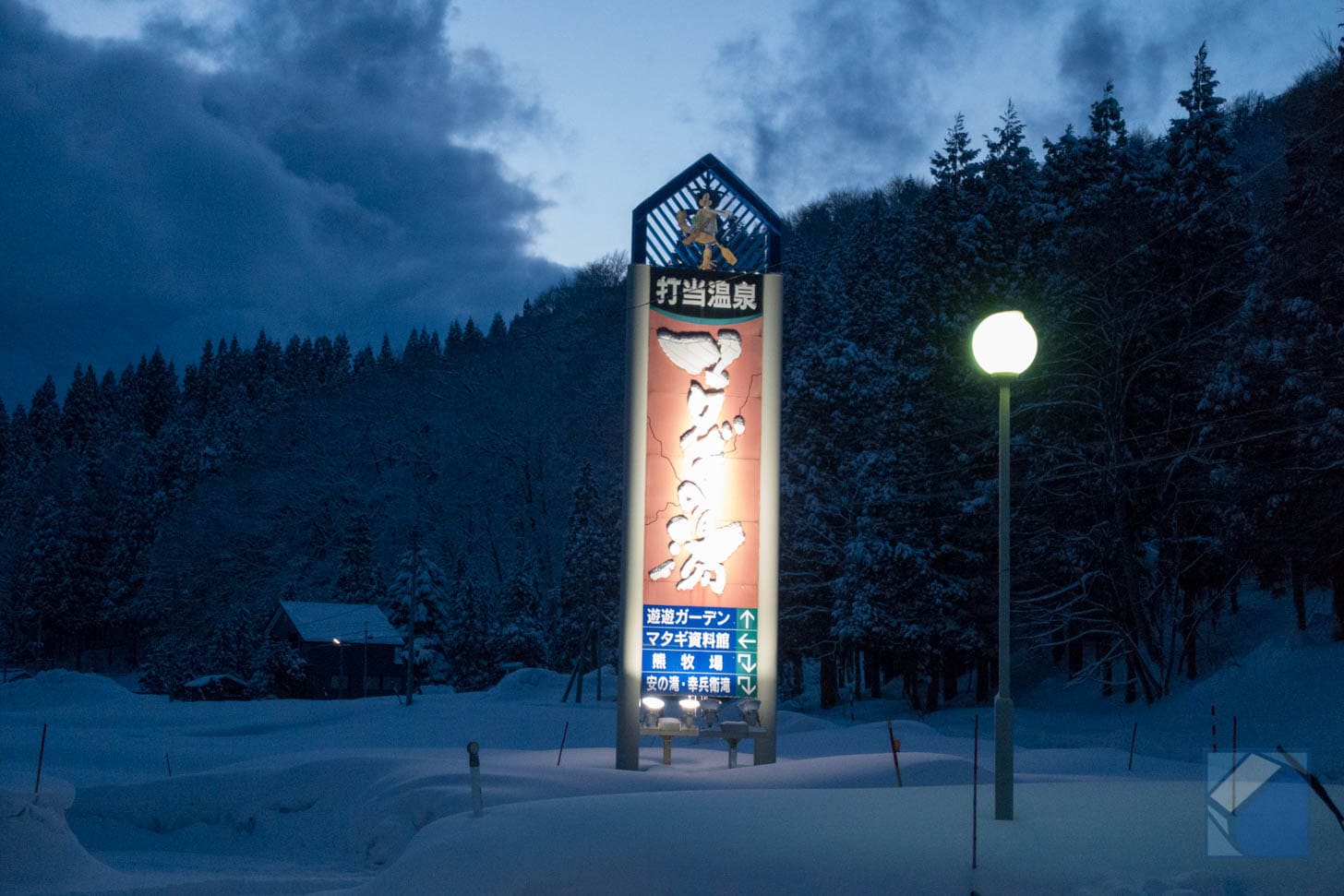
The surroundings have only scattered houses here and there – otherwise only snow and mountains are visible.
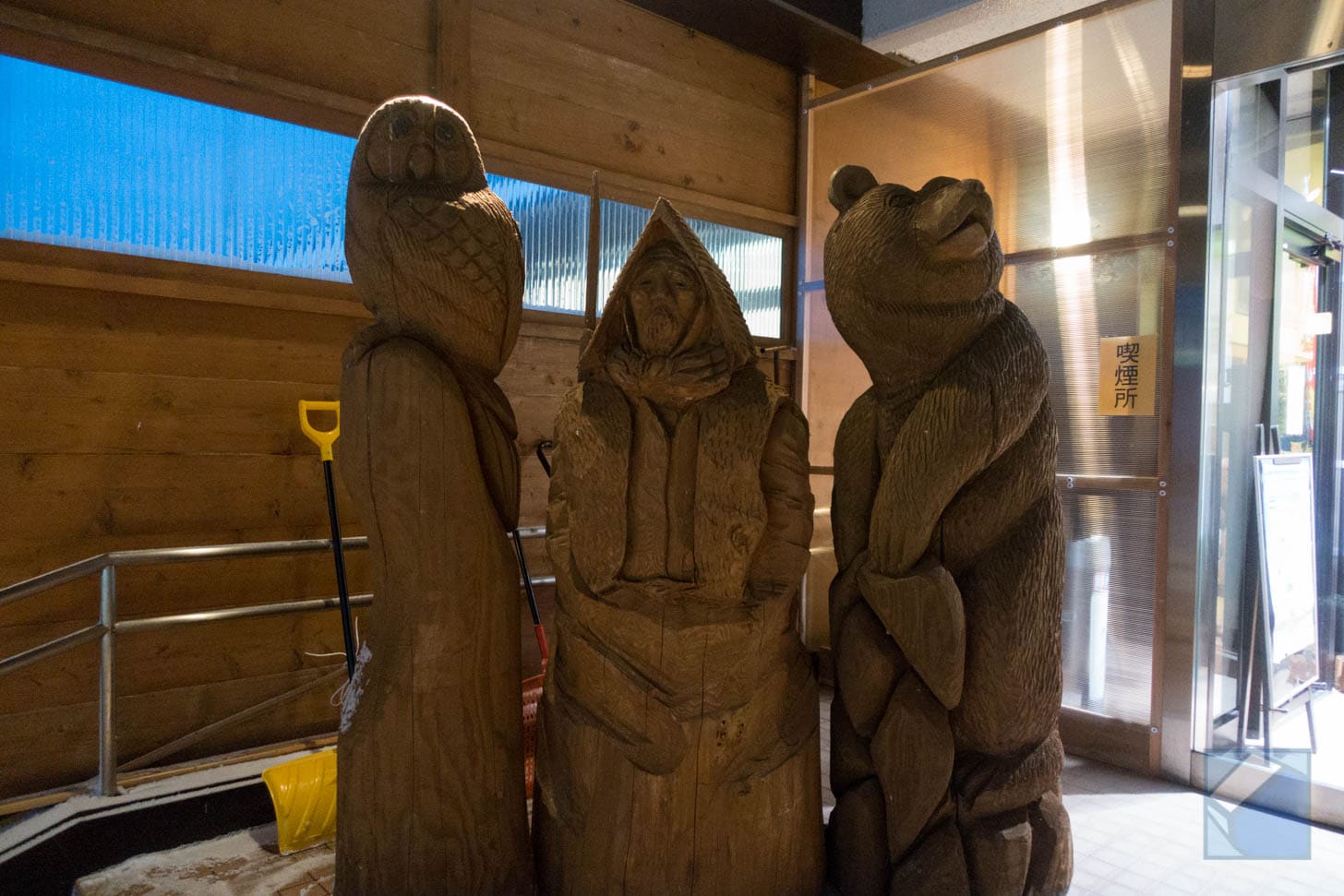
At the entrance are characterful carvings. Matagi, owl, and bear, perhaps?
There was also a cute baby bear trying its best to look scary.
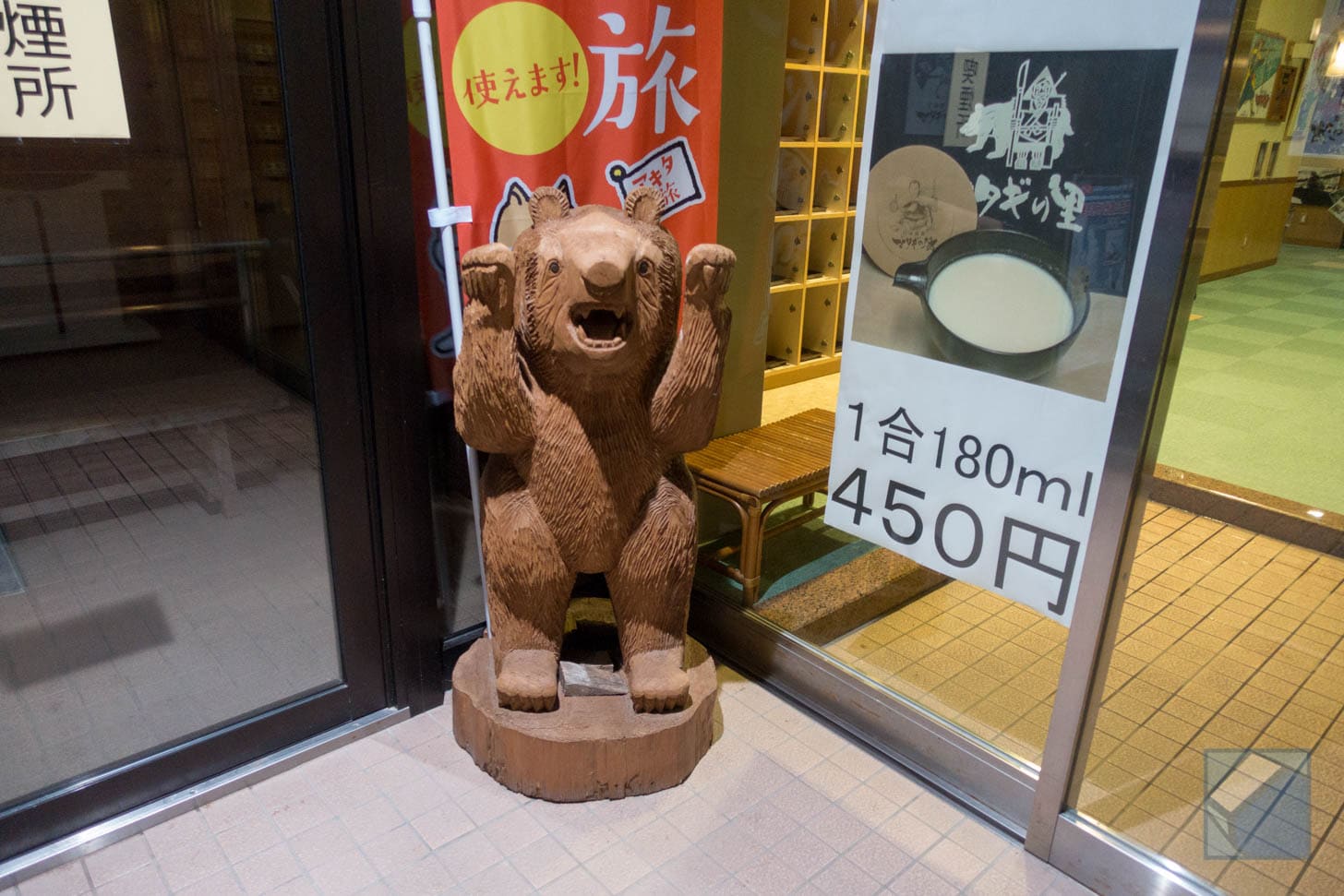
Upon entering, a Matagi panel and baby bear greet you.
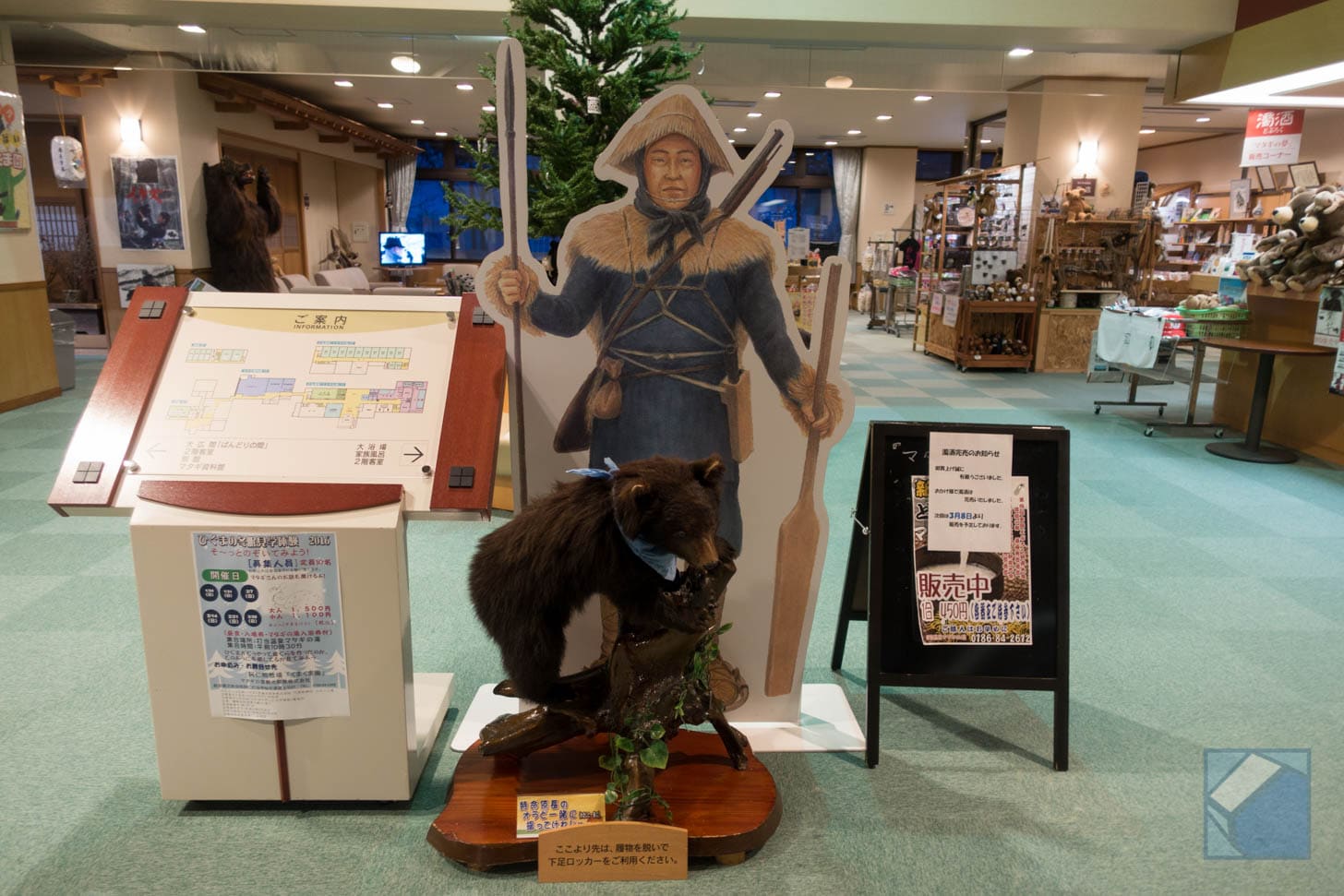
After checking in, heading to the room. Gonta, a brown bear that’s presumably a taxidermy mount. Introduced in cute font, but…
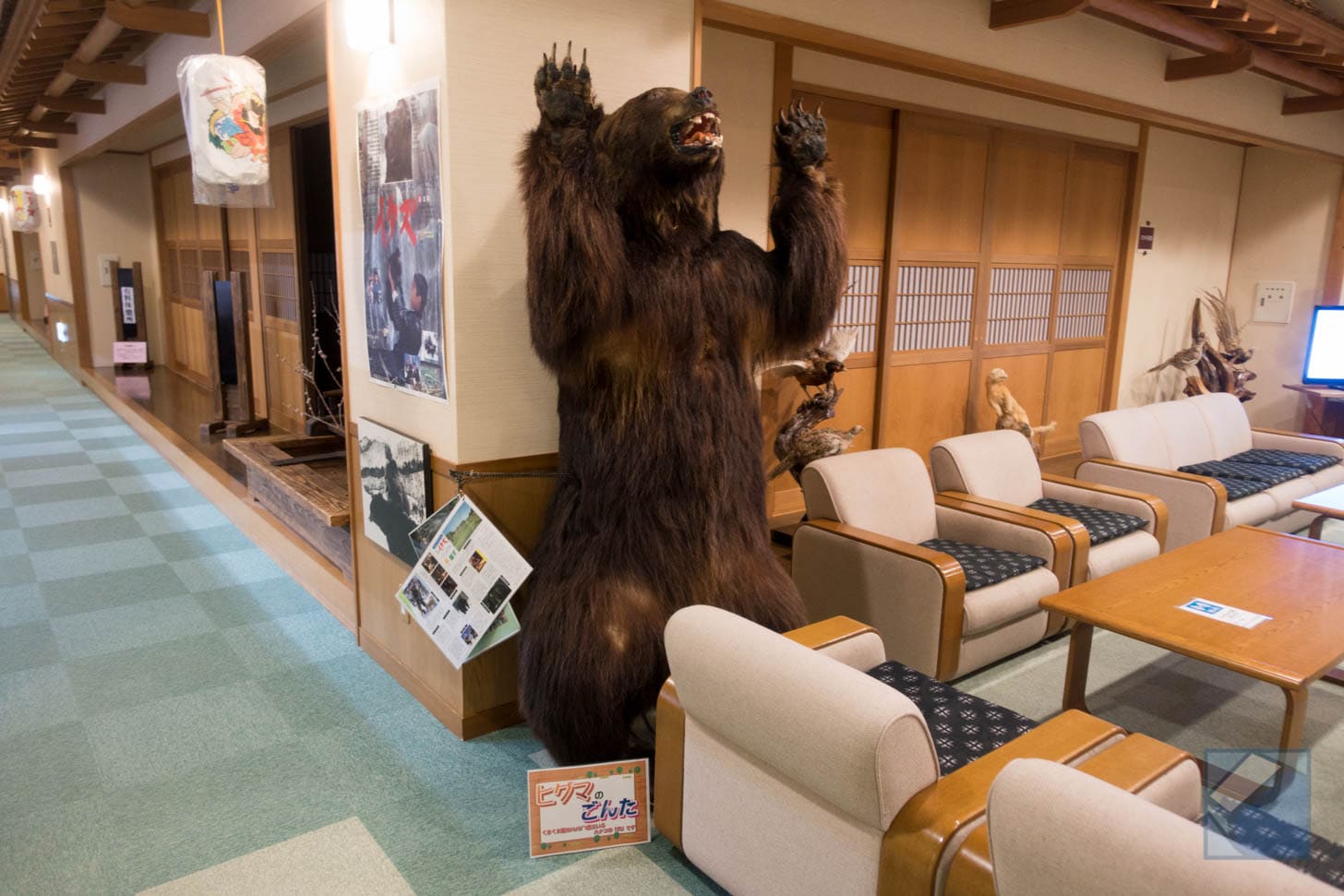
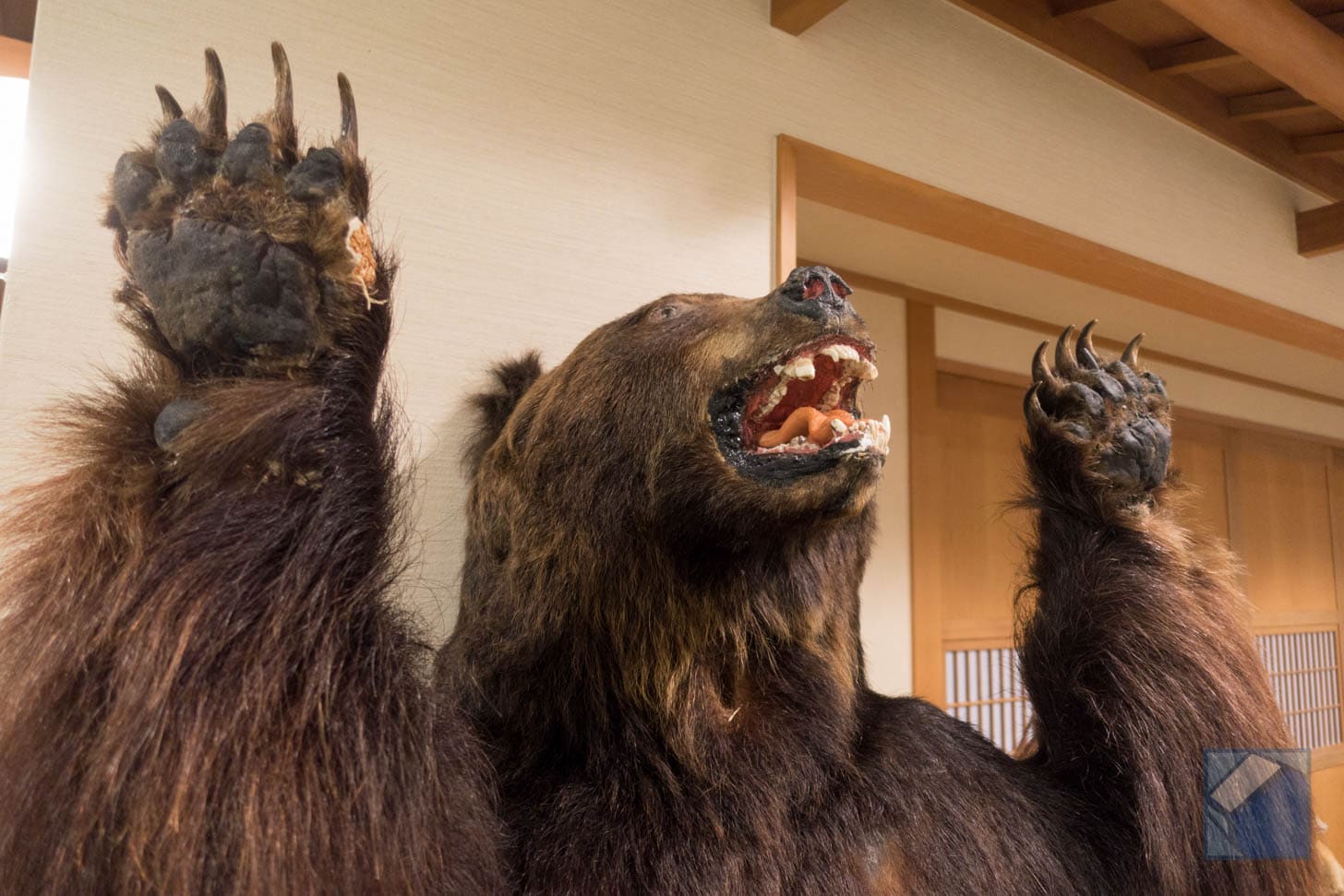
Incredibly scary. If I encountered this, my legs would give out…
There’s also a Matagi museum inside that I wanted to explore, but it was already closed at check-in time, and in the morning I couldn’t wake up early and didn’t have time, which is my one regret. Coming all the way to the Matagi village… Next time for sure.
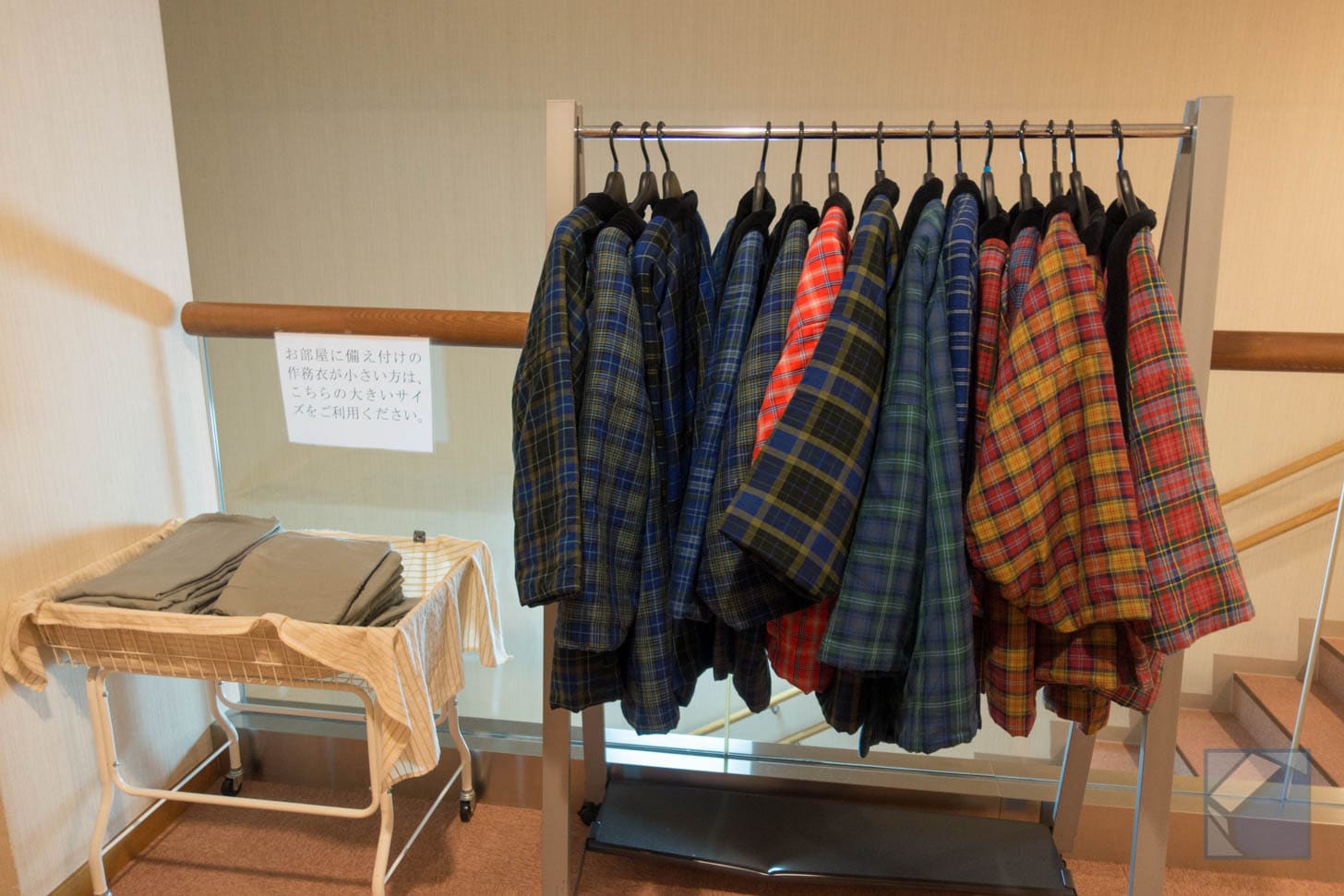
There are samue work clothes as room wear, but for those who want to be warmer, there are also hanten jackets. Very northern country feeling – nice. However, the building itself is too clean to have any traditional atmosphere. Though it is comfortable because of that.
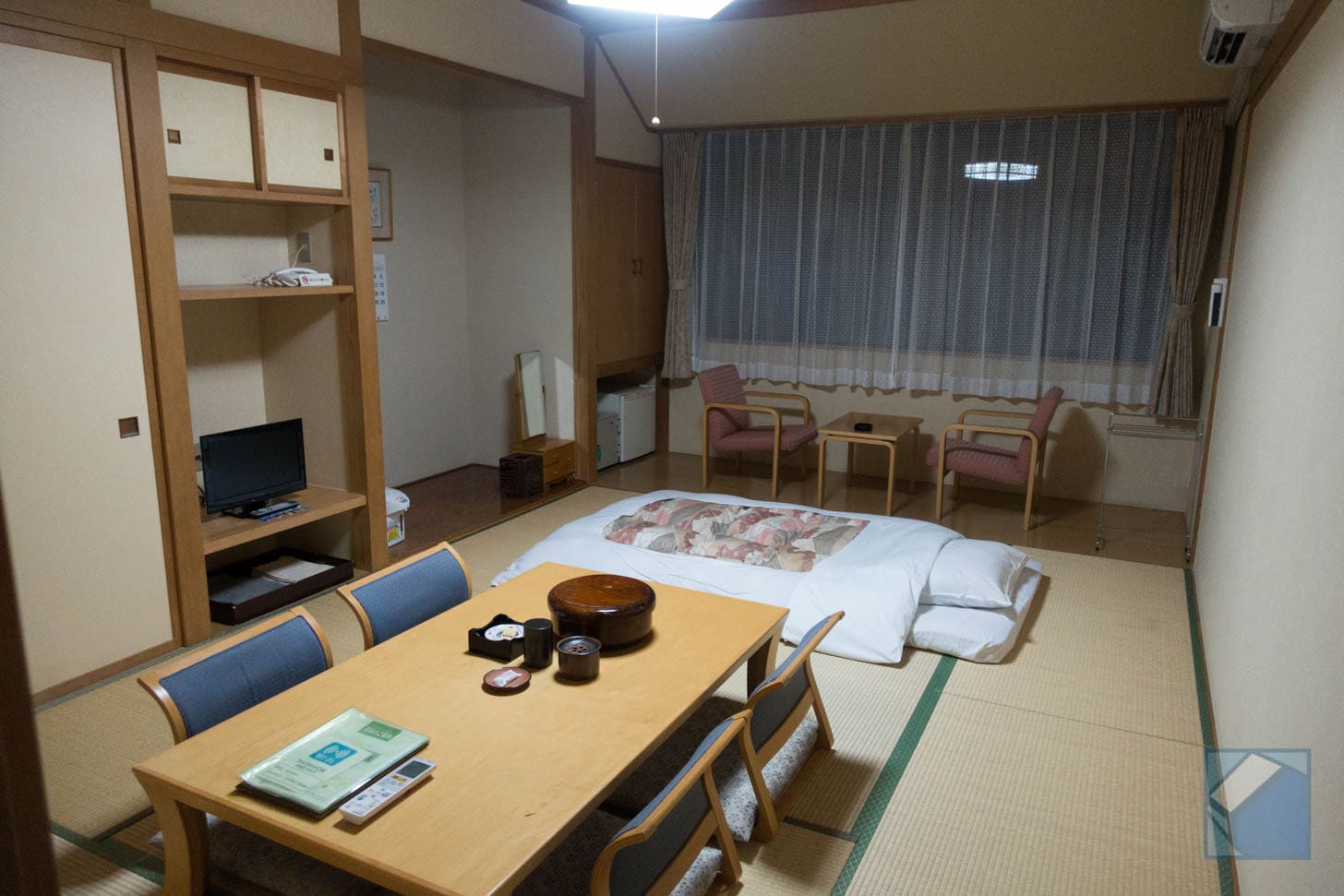
The room is solidly built with no inconveniences. Even Wi-Fi available – no complaints.
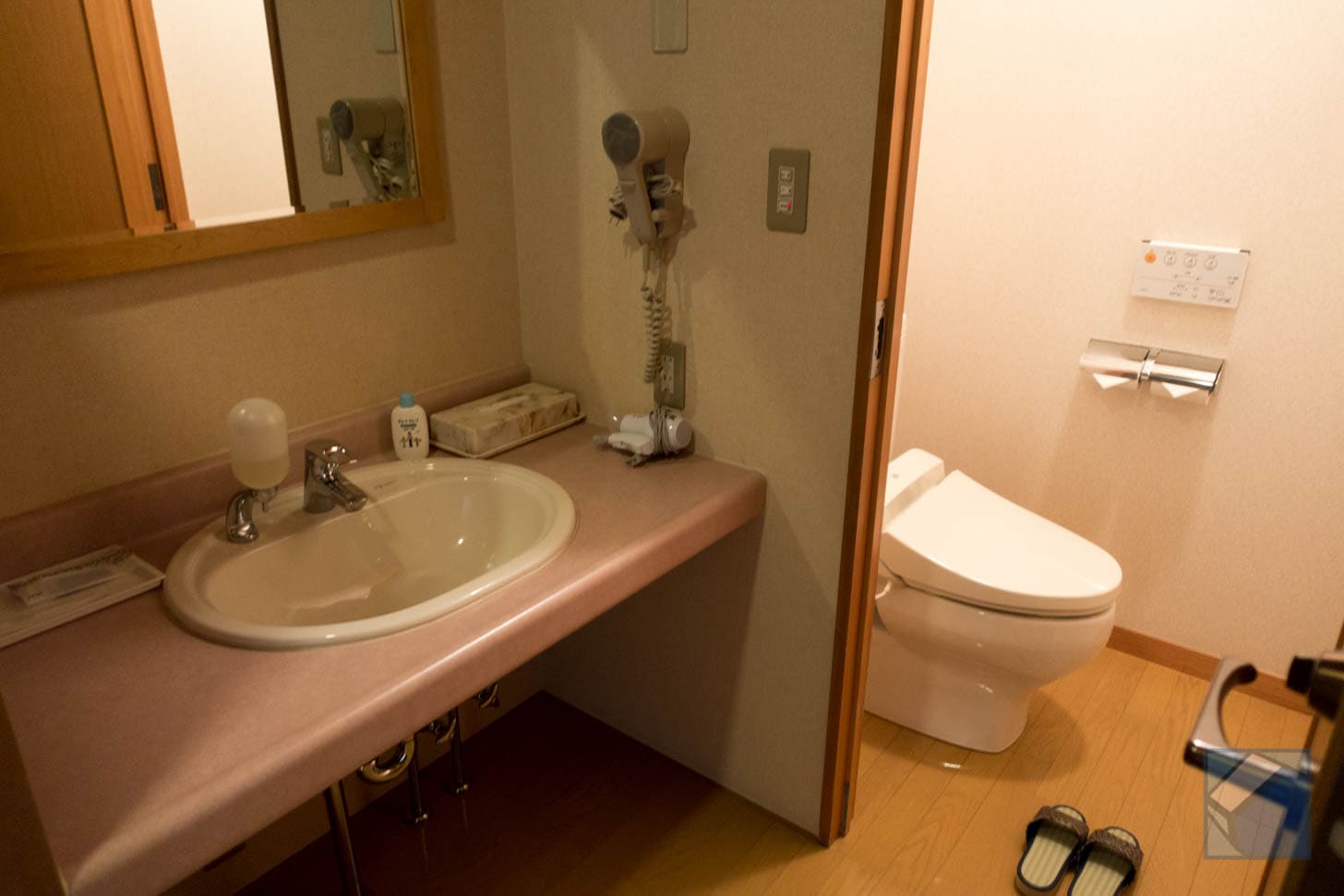
Washlet toilet equipped too.
Cuisine Befitting the Matagi Village and Hot Springs Surrounded by Snowy Scenery
Dinner time arrived. On this day, I was the only guest staying! Judging from reviews, it seems to be a popular inn, but perhaps that’s how it is on a winter weekday.
There are various menu items befitting the Matagi village, making for an enjoyable meal.
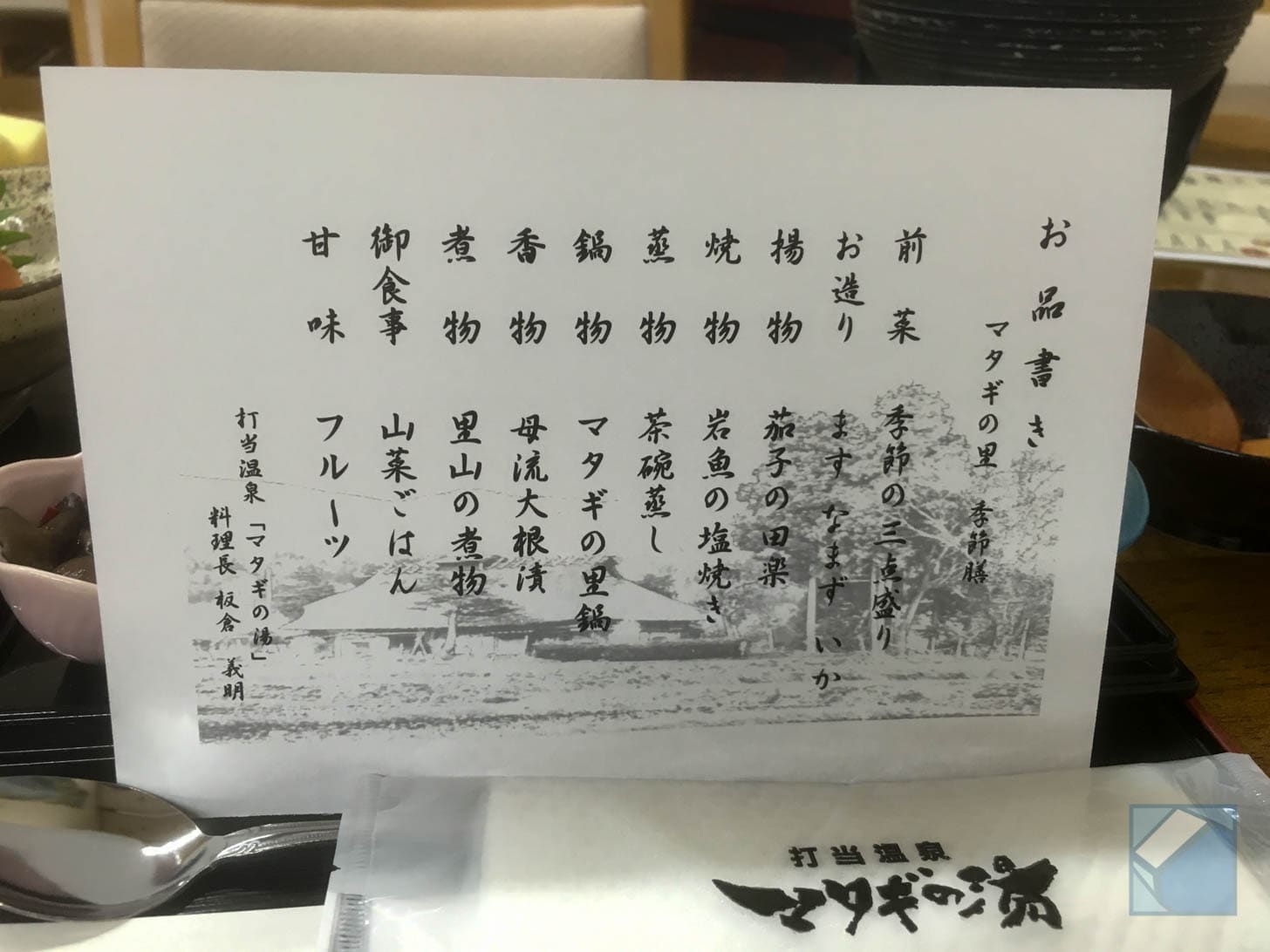
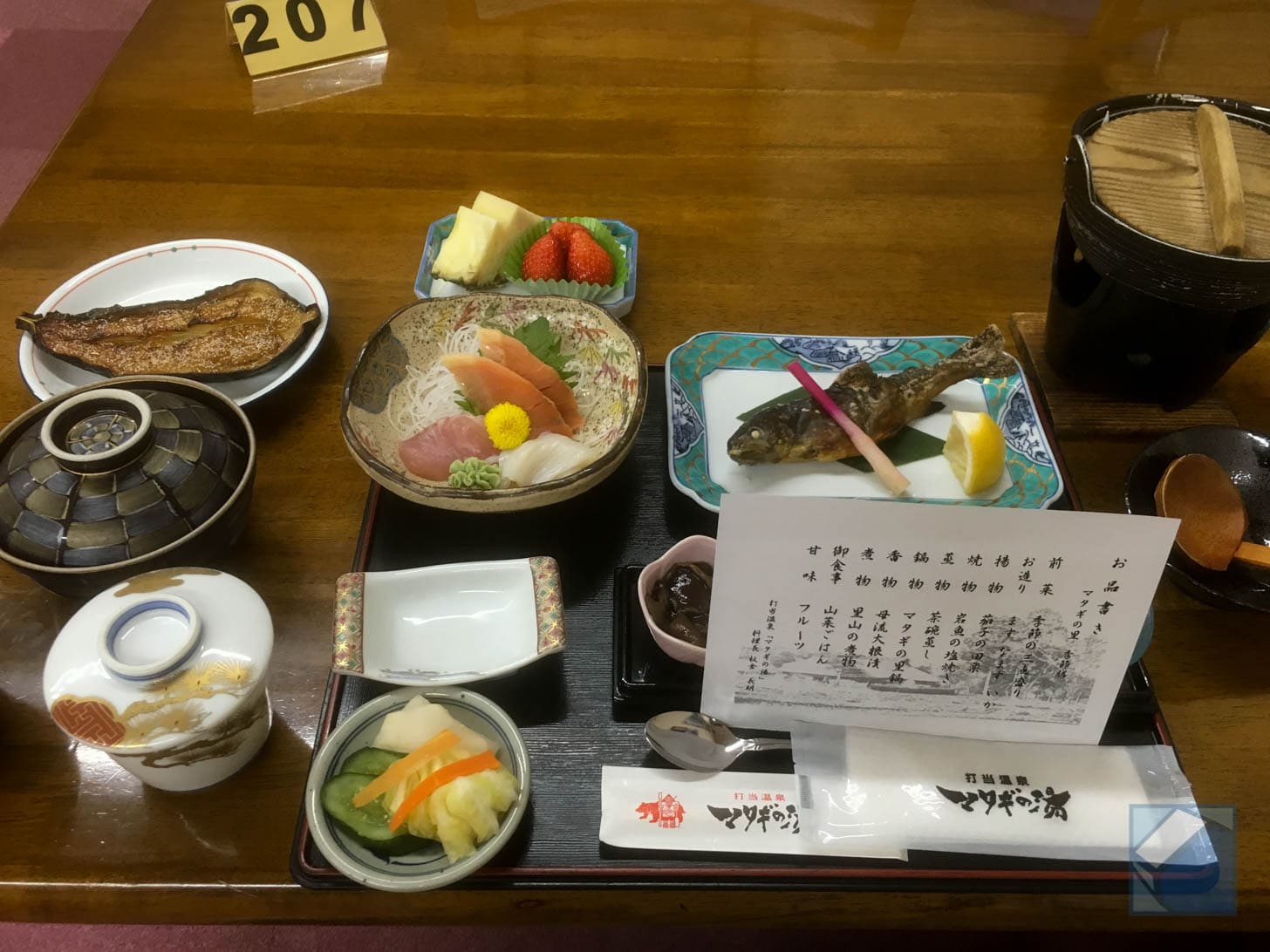
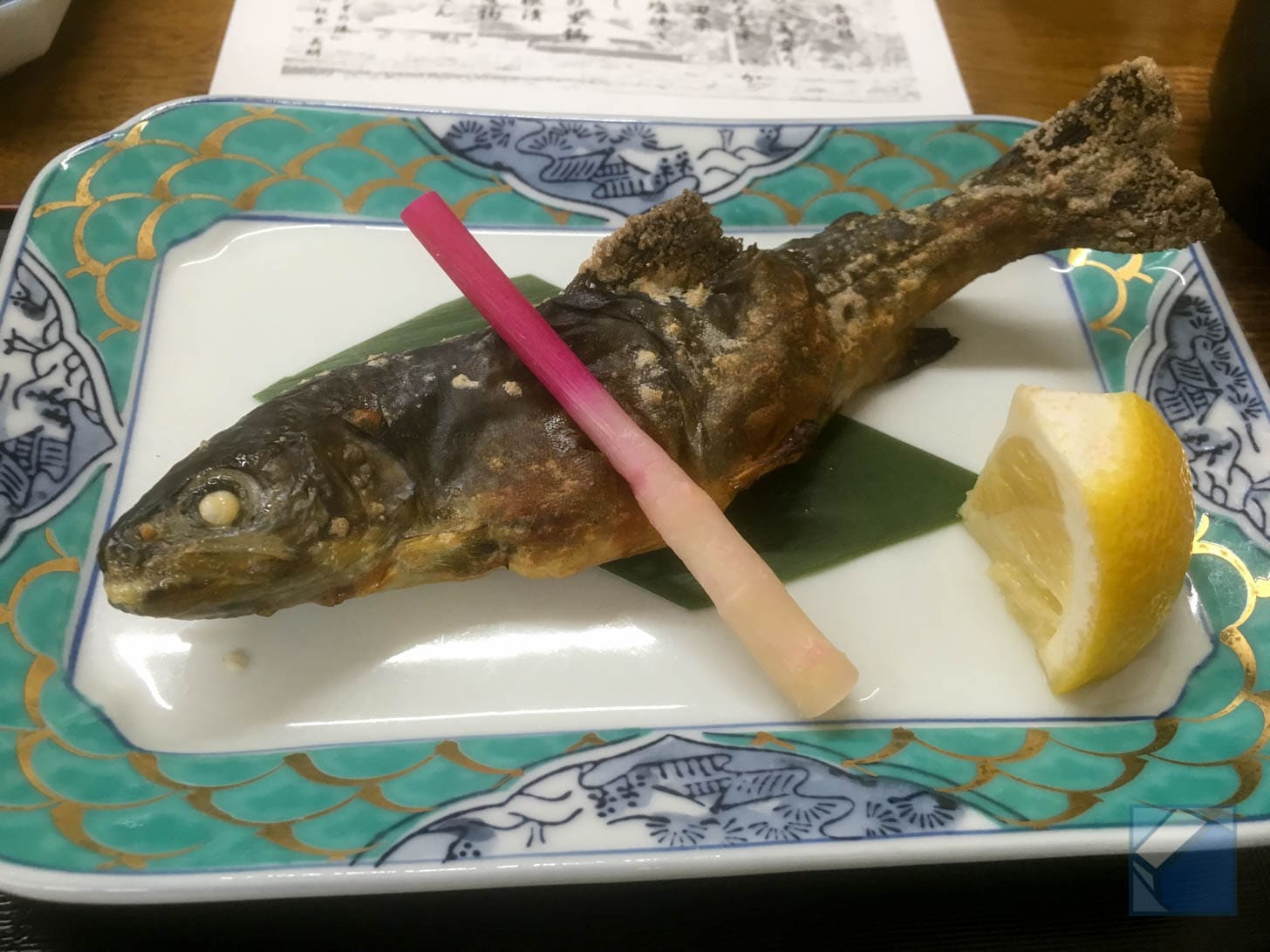
Salt-grilled iwana char. I also ate this at Toyama’s Ainokura Gassho Village before, but it has a different flavor from ocean fish.
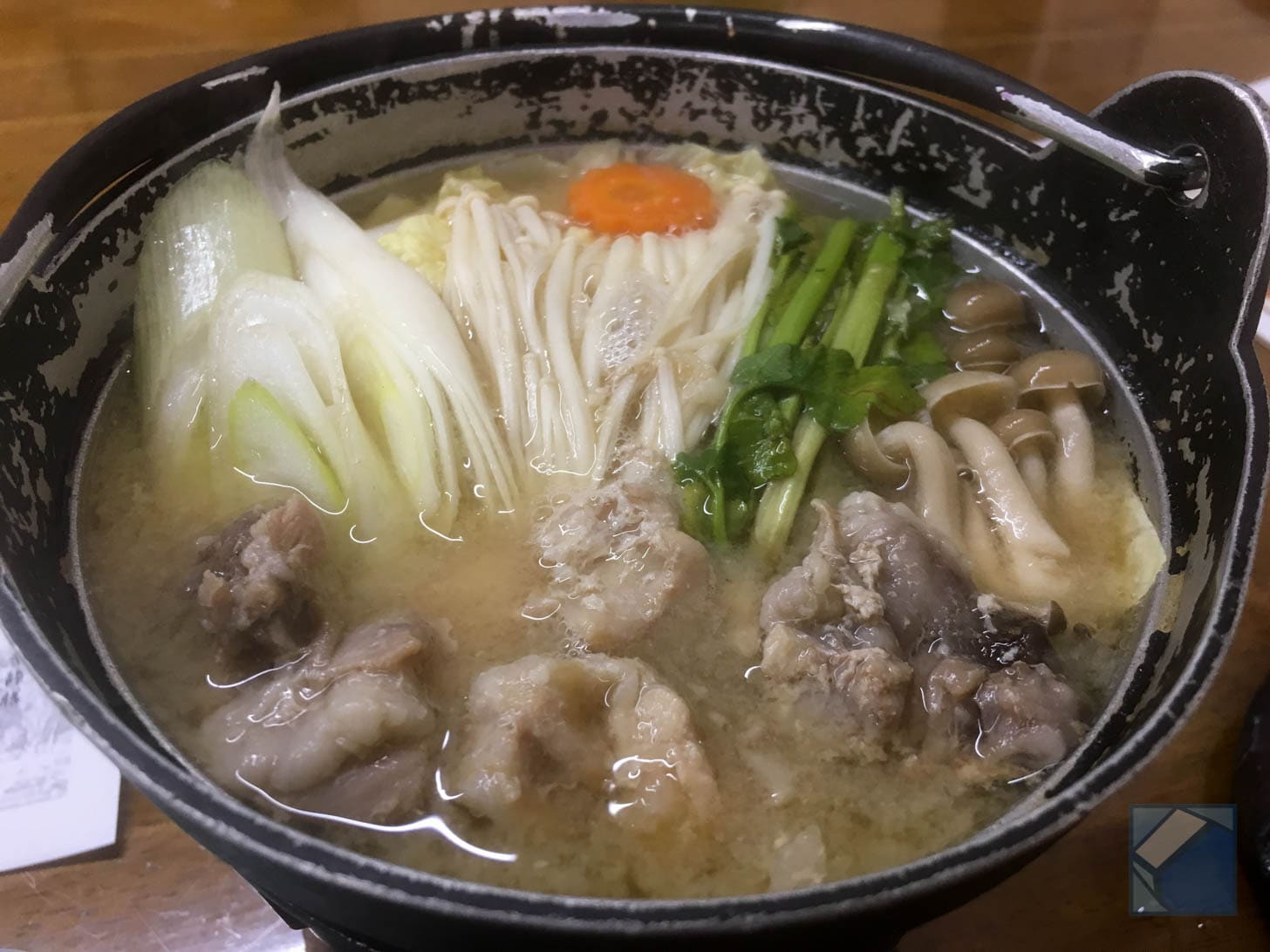
This is a hot pot containing rabbit meat. I’ve heard it’s served in places like Europe, but you can eat it in Japan too. It’s like fatty, tender chicken and quite delicious. I don’t think it’s readily available nearby, but this is worth trying once.
There was even catfish sashimi (not sure if this relates to Matagi), and I thoroughly enjoyed these rare and delicious ingredients.
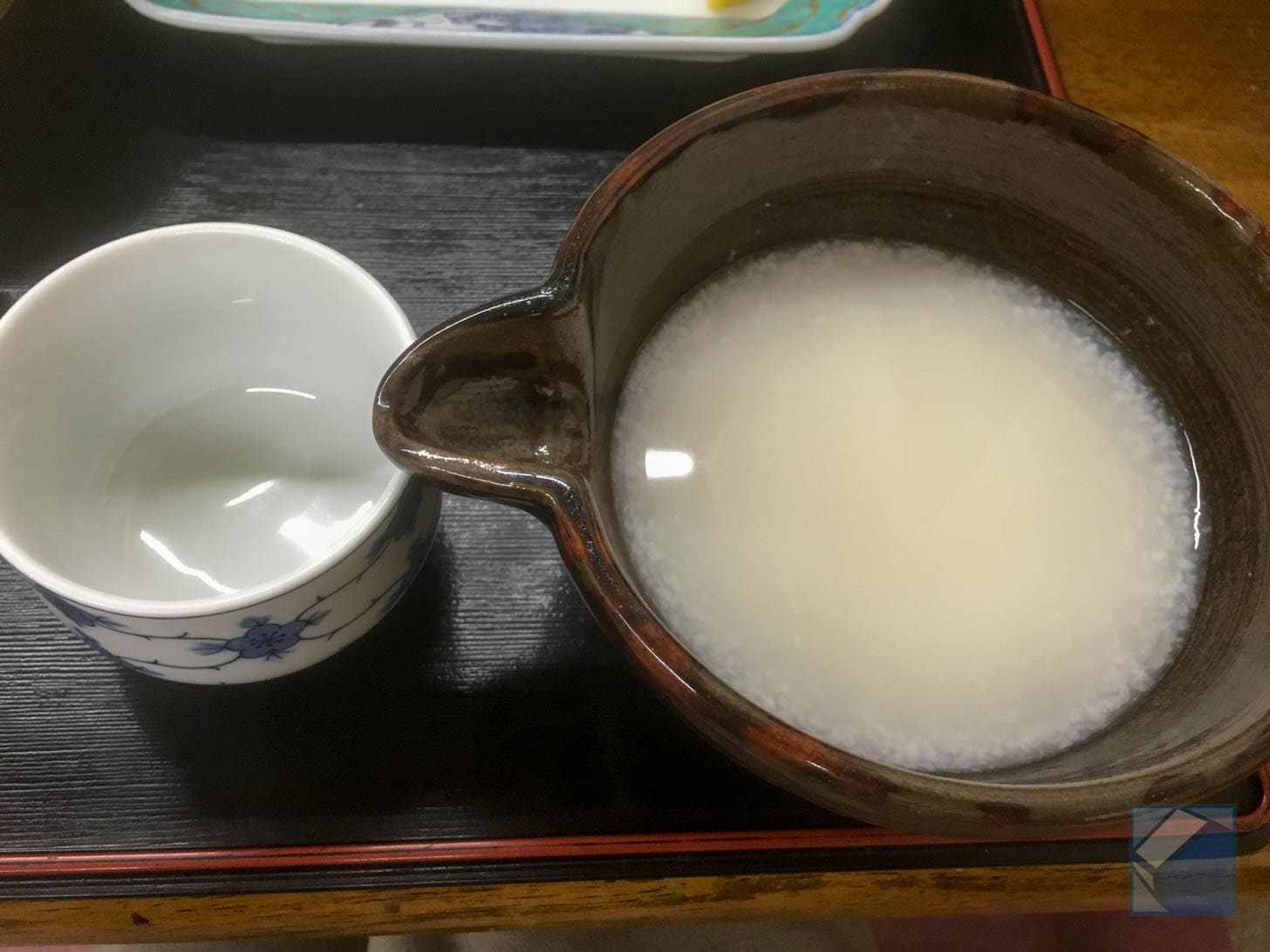
I also had doburoku, the prototype of sake. It contains what appears to be fermented rice (moromi?), making it thick, with a sweet taste that’s surprisingly easy to drink.
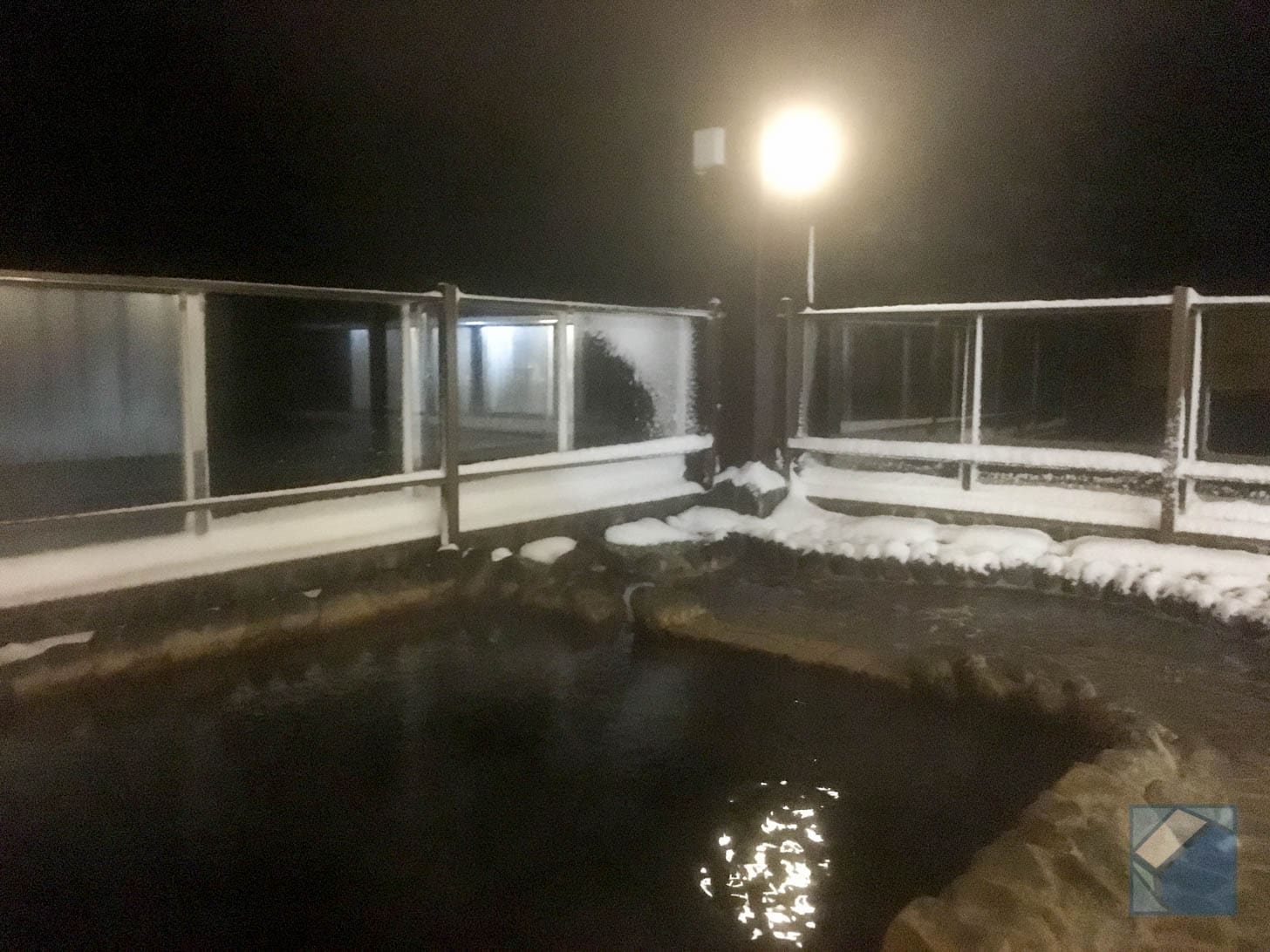
Of course, there’s a hot spring too! Facilities-wise it feels like a super sento, but the water is truly good. Though completely dark, the hot spring in the harsh cold with glimpses of snowy scenery is the best.
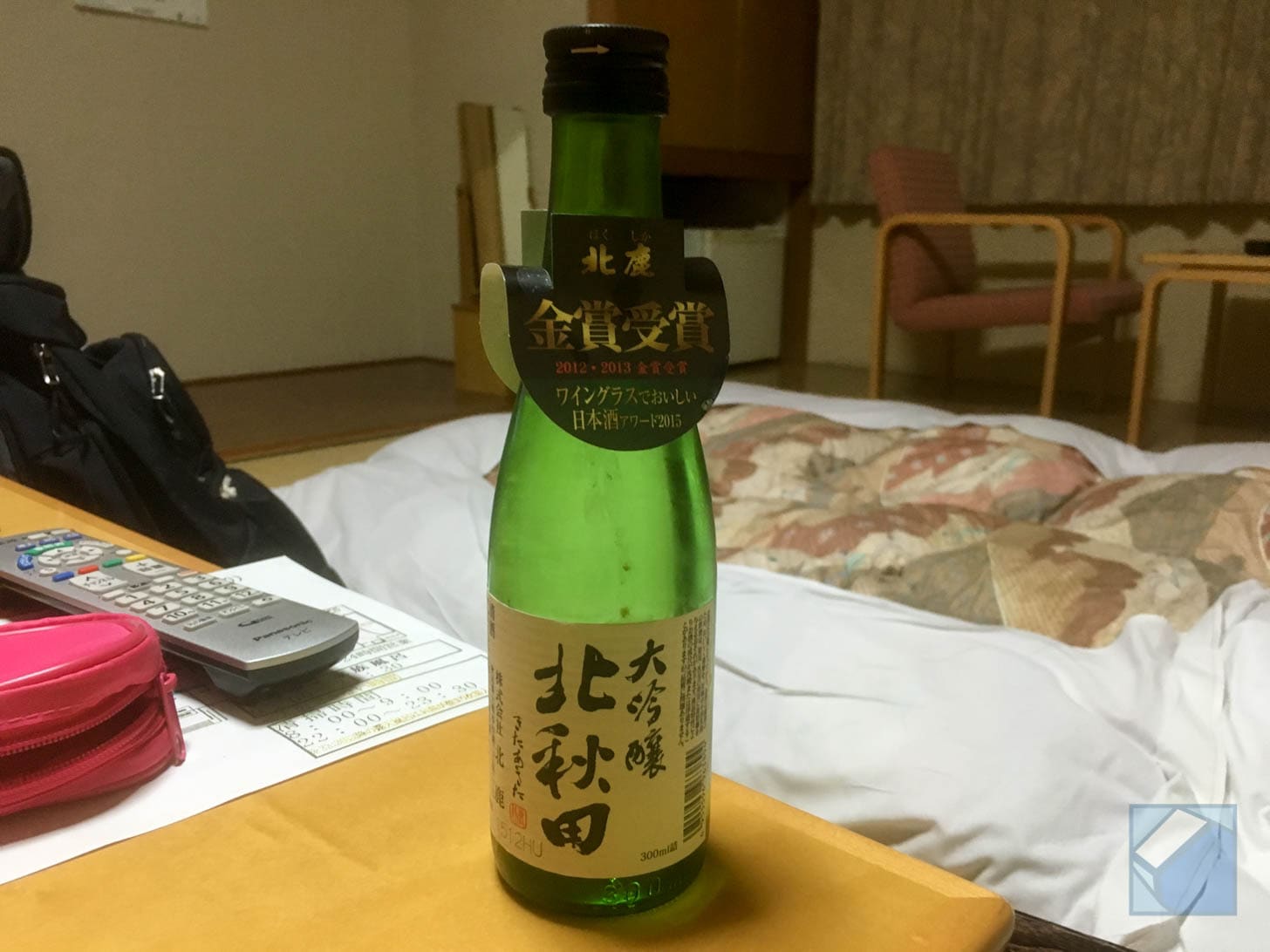
Bought alcohol at the inn’s shop and relaxed in the room. As expected from a rice-producing region, there’s plenty of cheap and delicious sake.
Unmanned Station Standing in Pure White Scenery Surrounded by Snowy Mountains – Beautiful
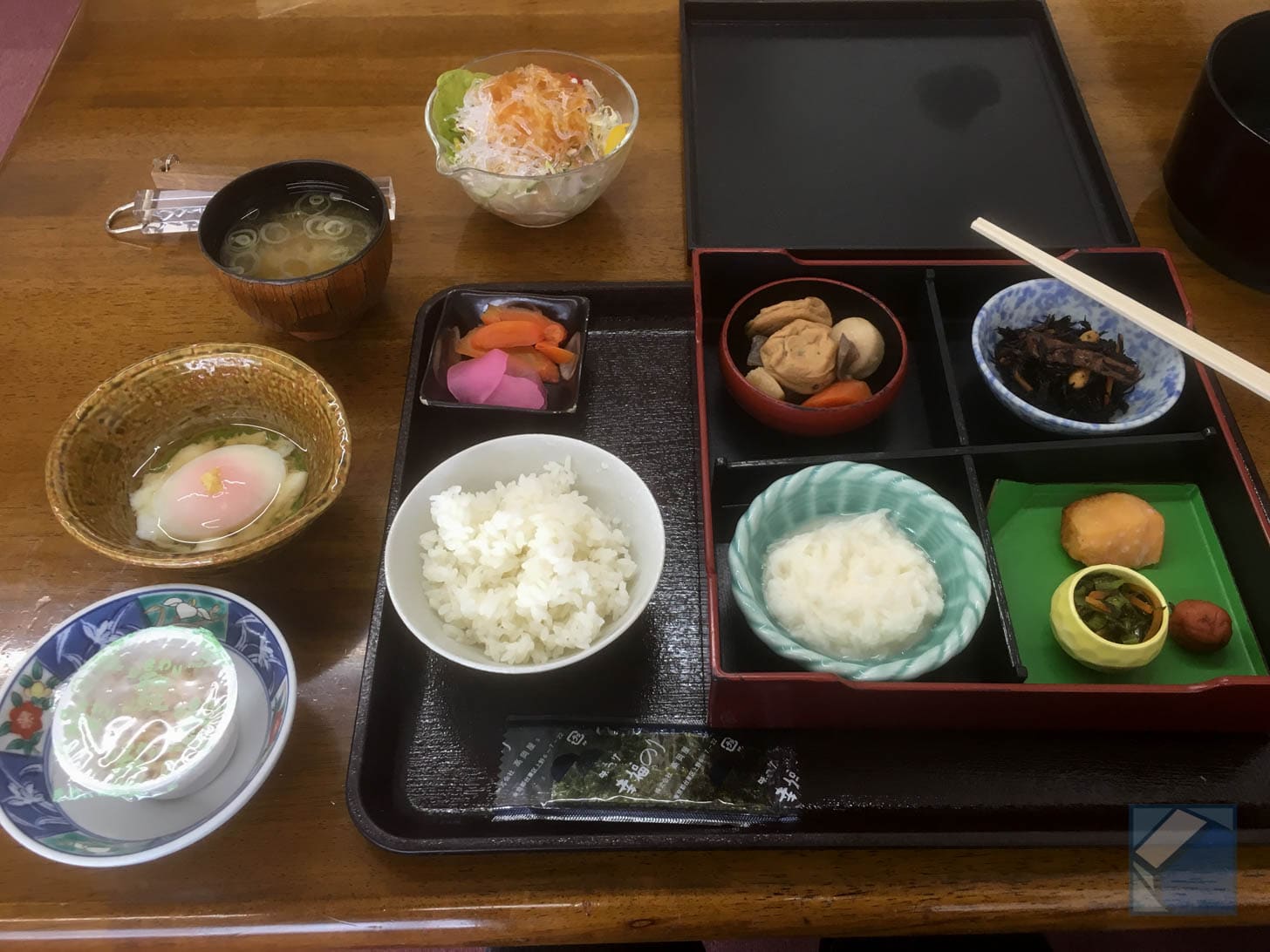
Morning. Woke up and immediately hit the hot spring, then had a simple breakfast.
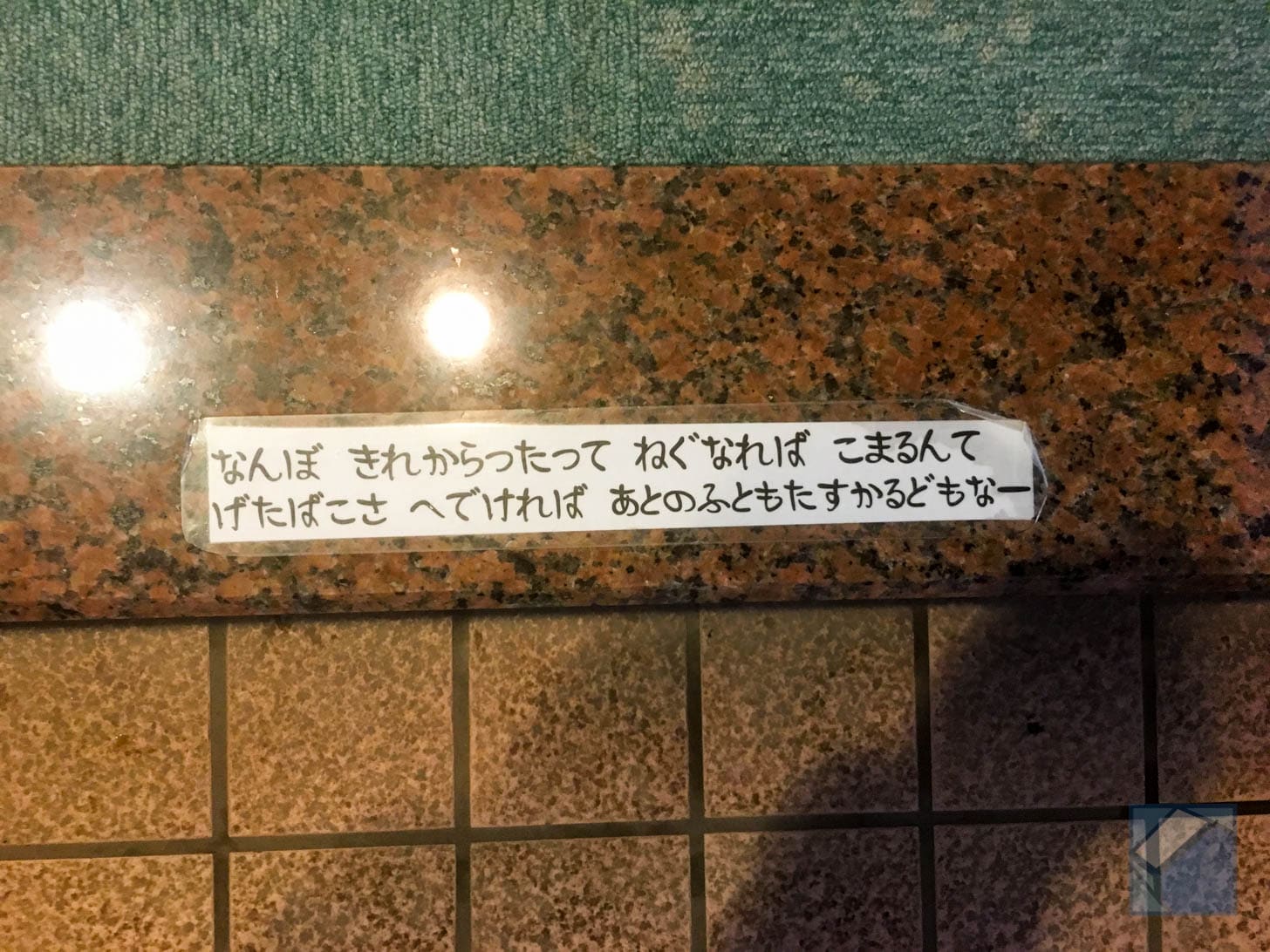
Since I had a little time before the train’s departure, I looked around the lobby. Found a notice in Akita dialect! I don’t understand the details, but it seems to say if you wear slippers outside you’ll be laughed at, so leave them here. I wonder what “futome no warii koto” means.
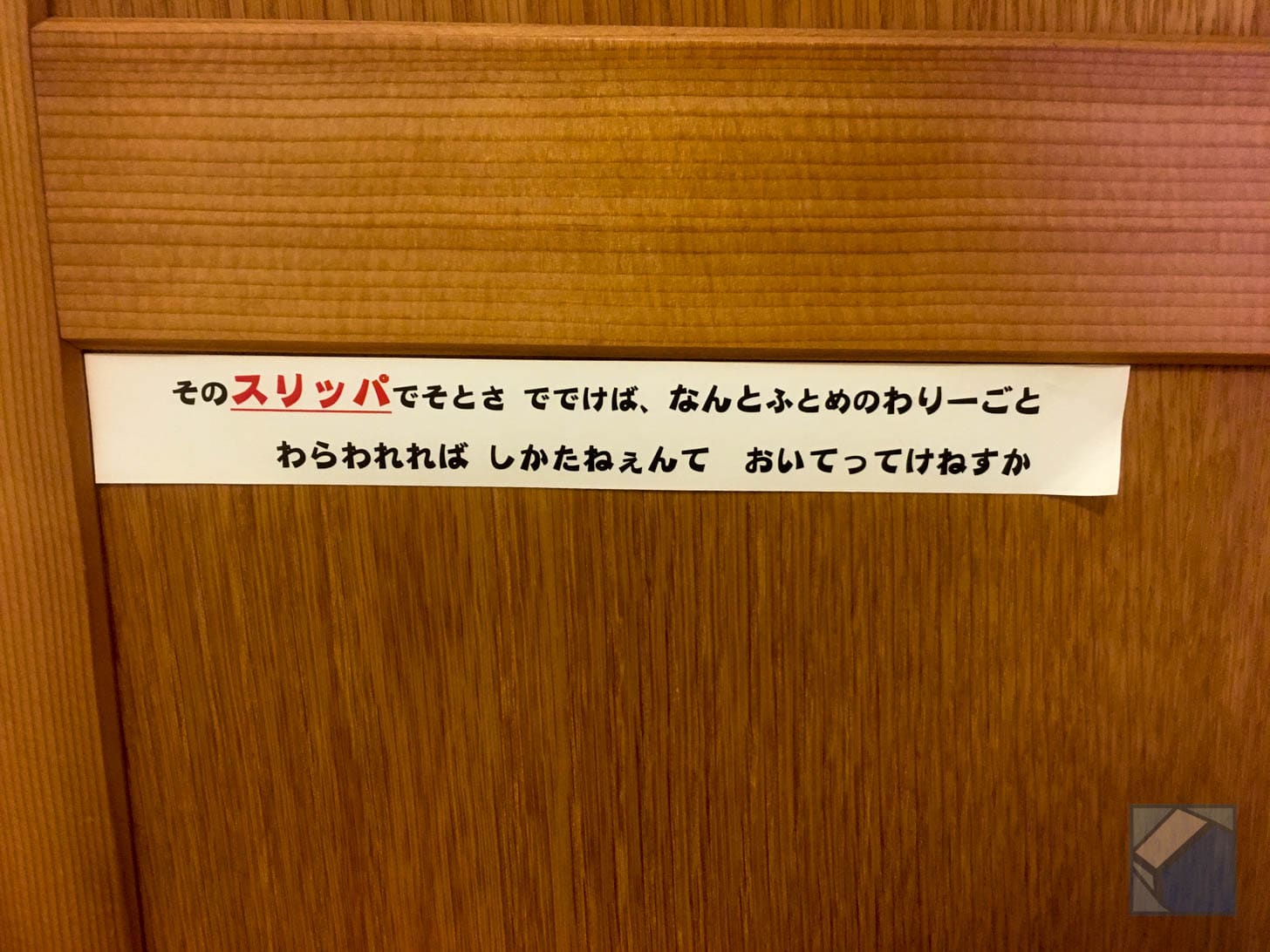
Genuine Tohoku dialects are difficult…
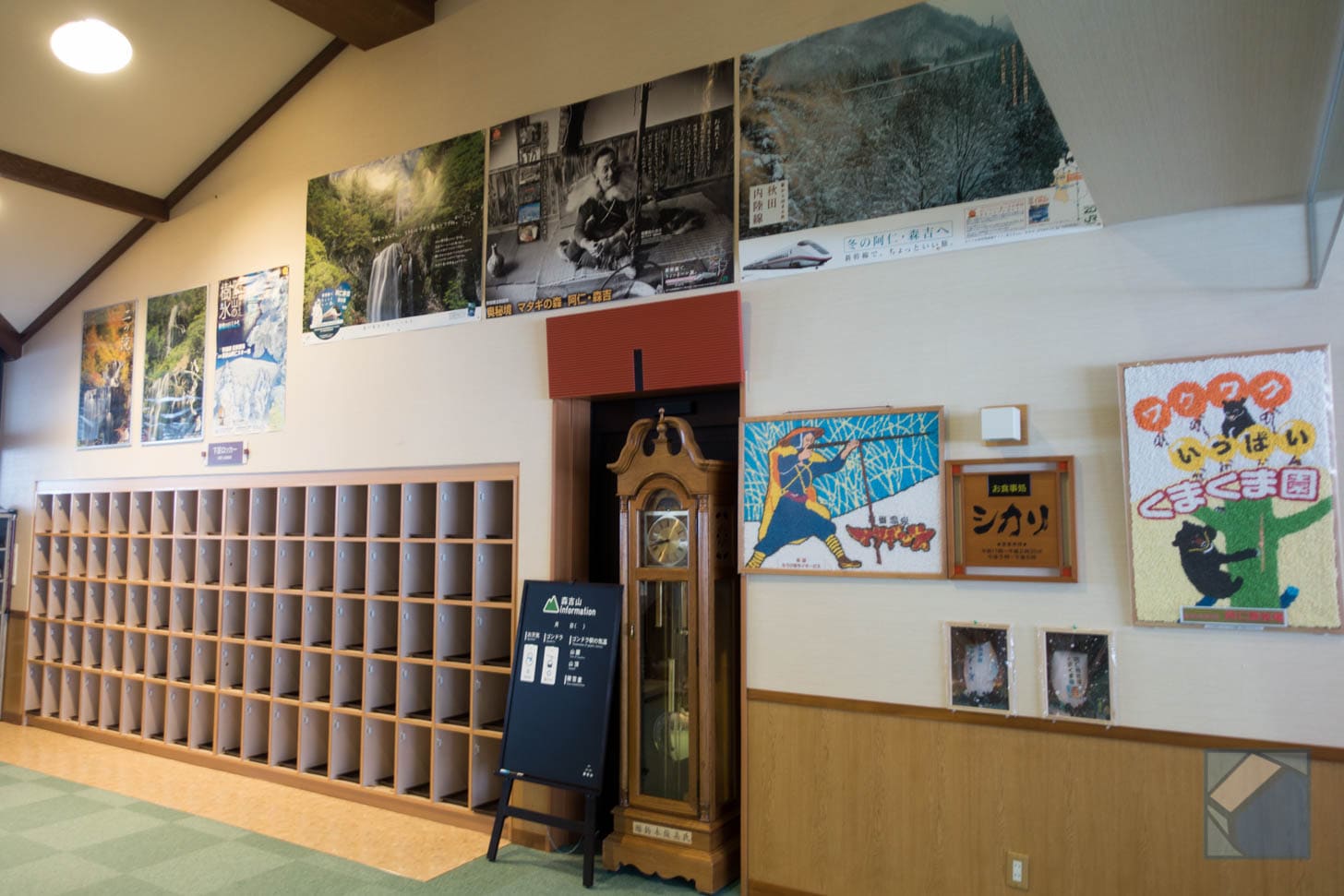
Various exhibits related to Matagi. Thinking about it now, I should have quickly looked at the museum during this time. By the way, there’s a bear farm nearby, but unfortunately it was closed for winter.
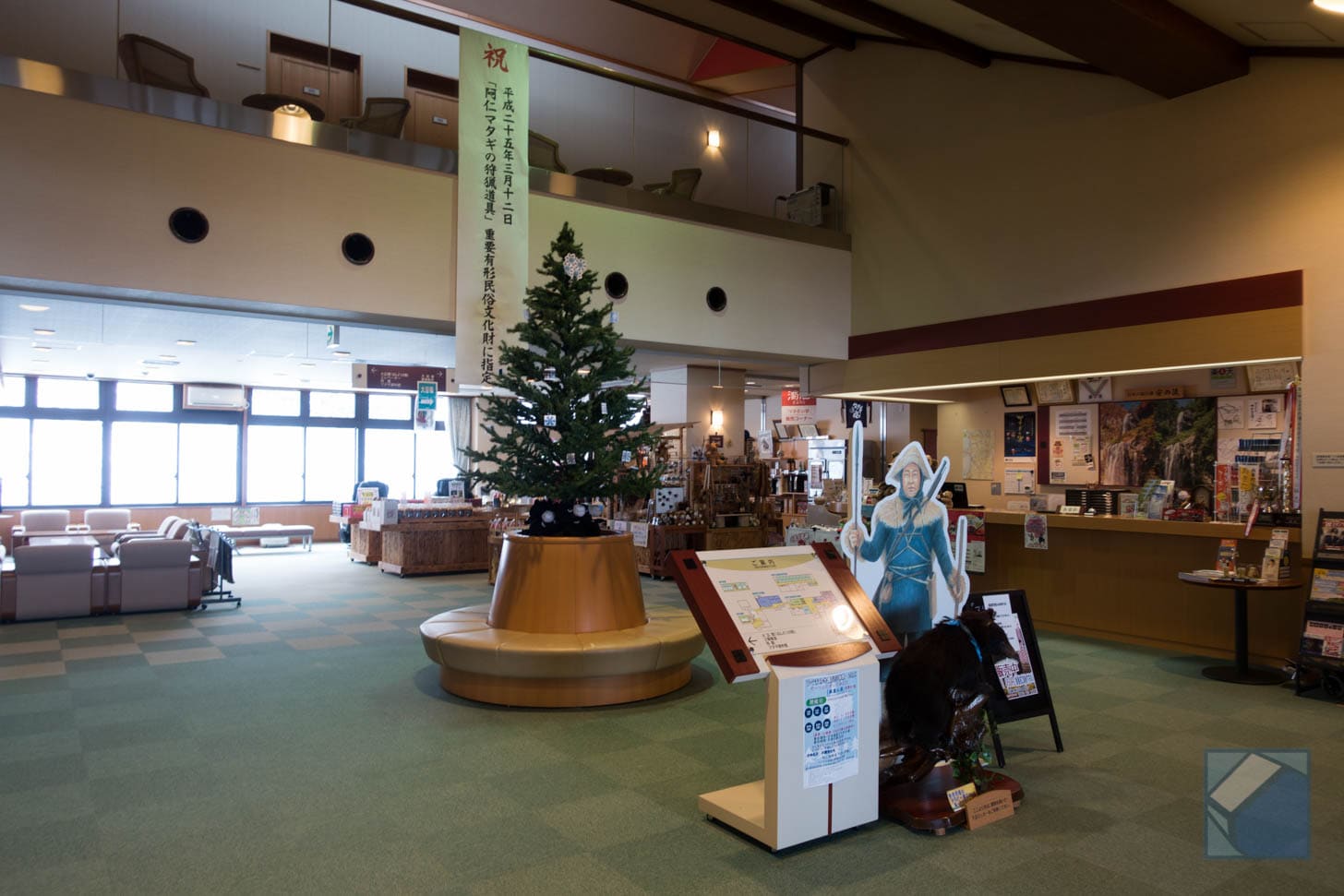
Thank you for everything. Looking closely, there’s a Christmas tree!
They took me to Ani Matagi Station by microbus.
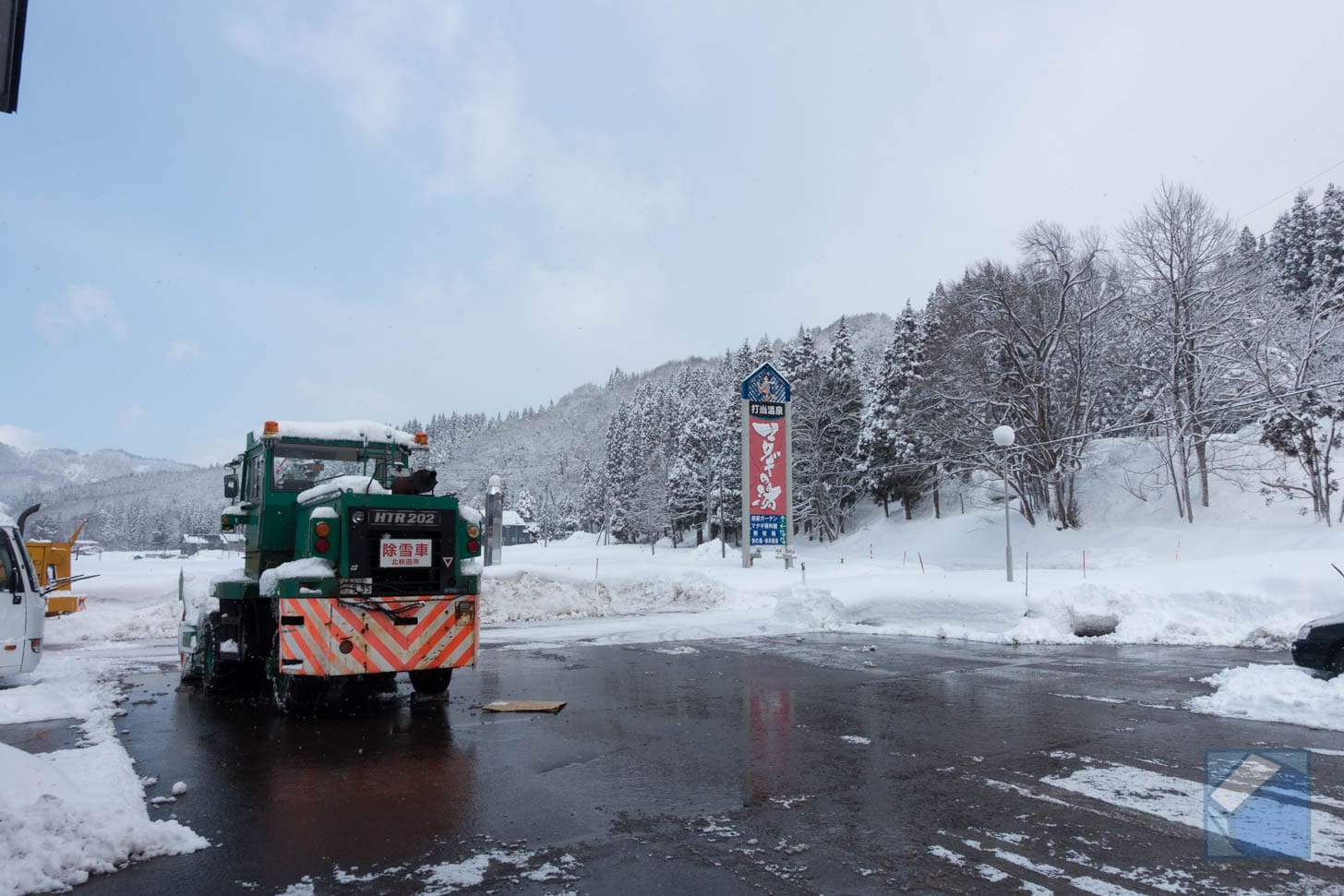
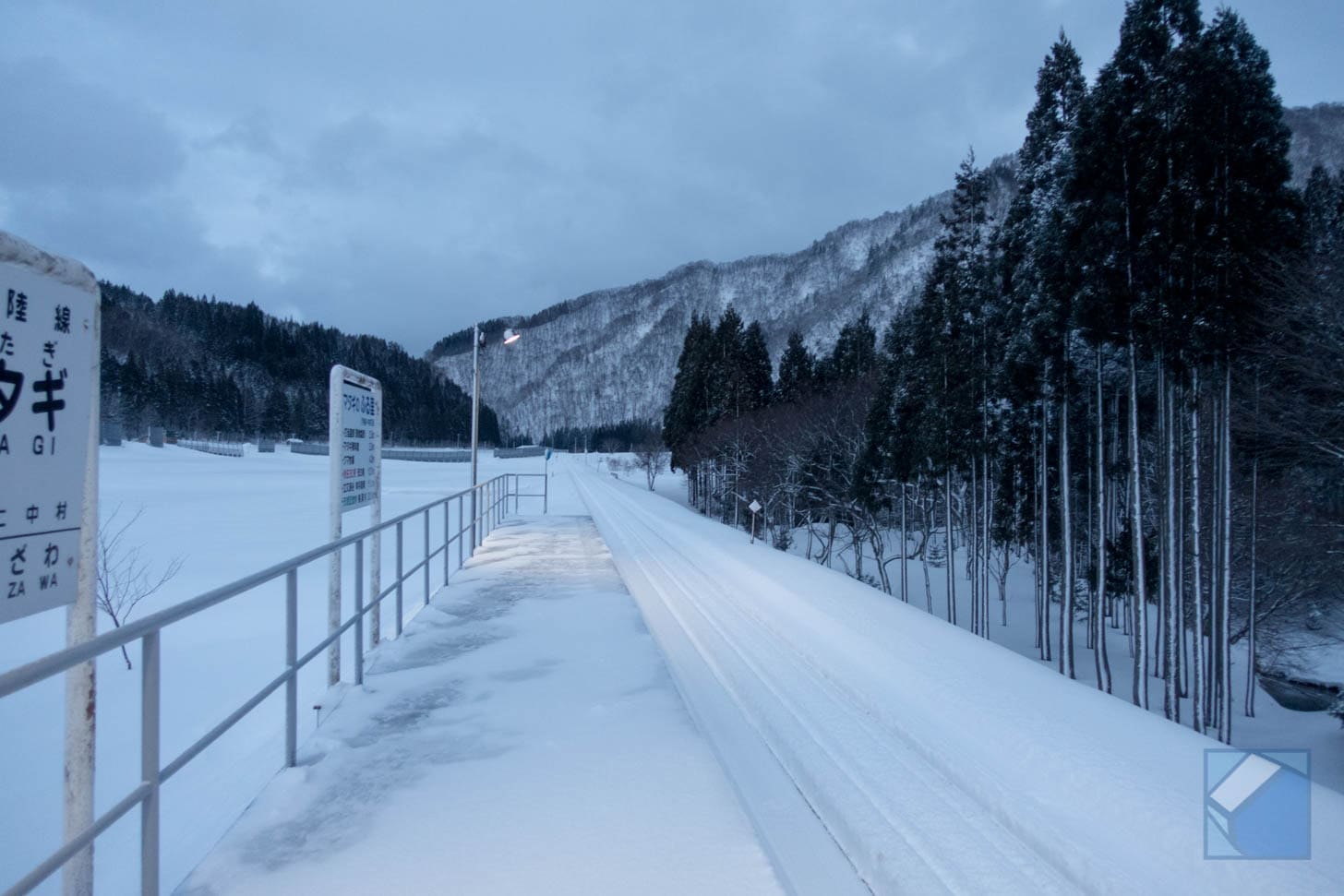
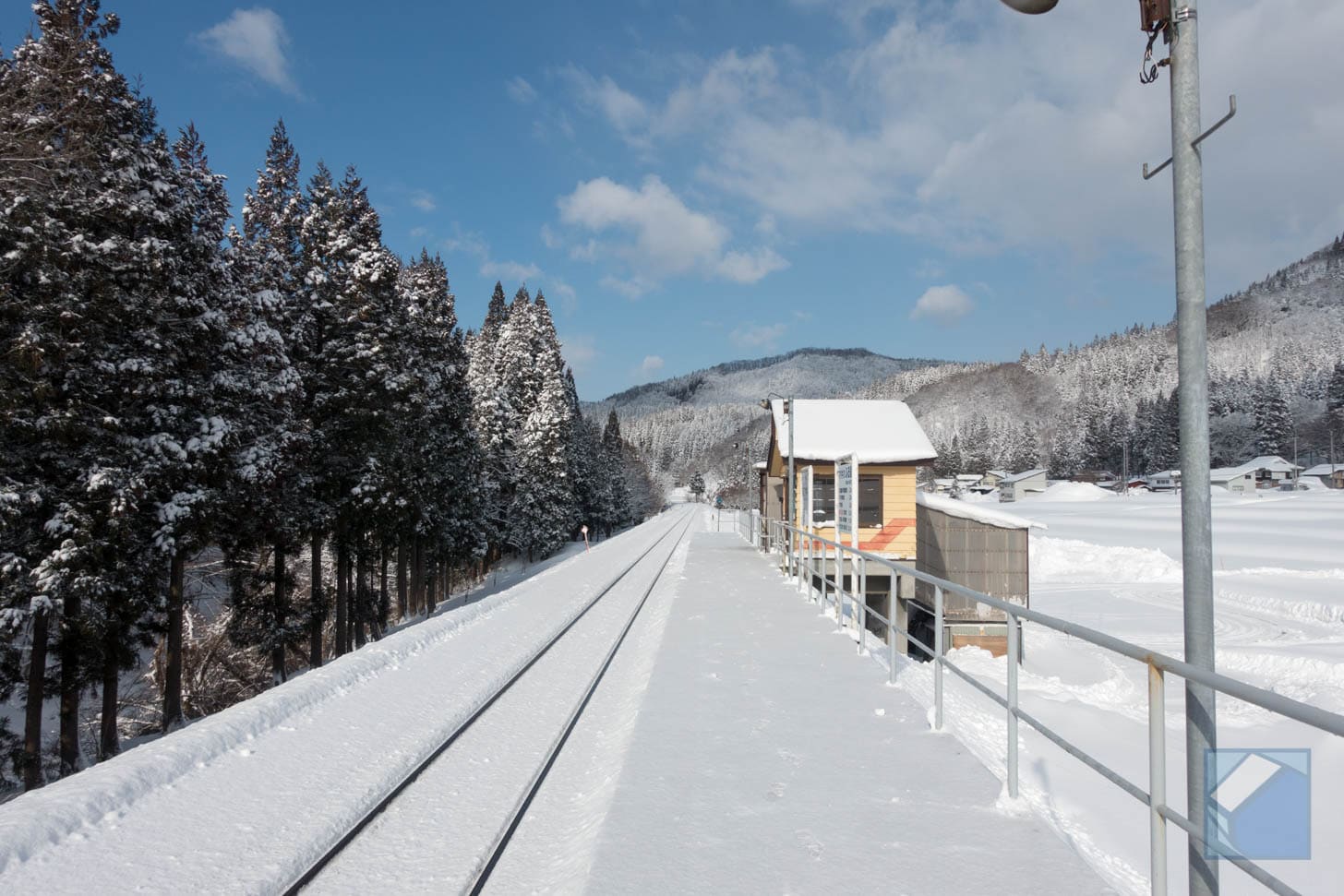
The unmanned Ani Matagi Station standing out in the snowy landscape. The innkeeper said “There’s nothing here, so I’ll take you at the last minute,” but for those of us not from snowy regions, this snowy scenery is great. It’s a tourist resource.
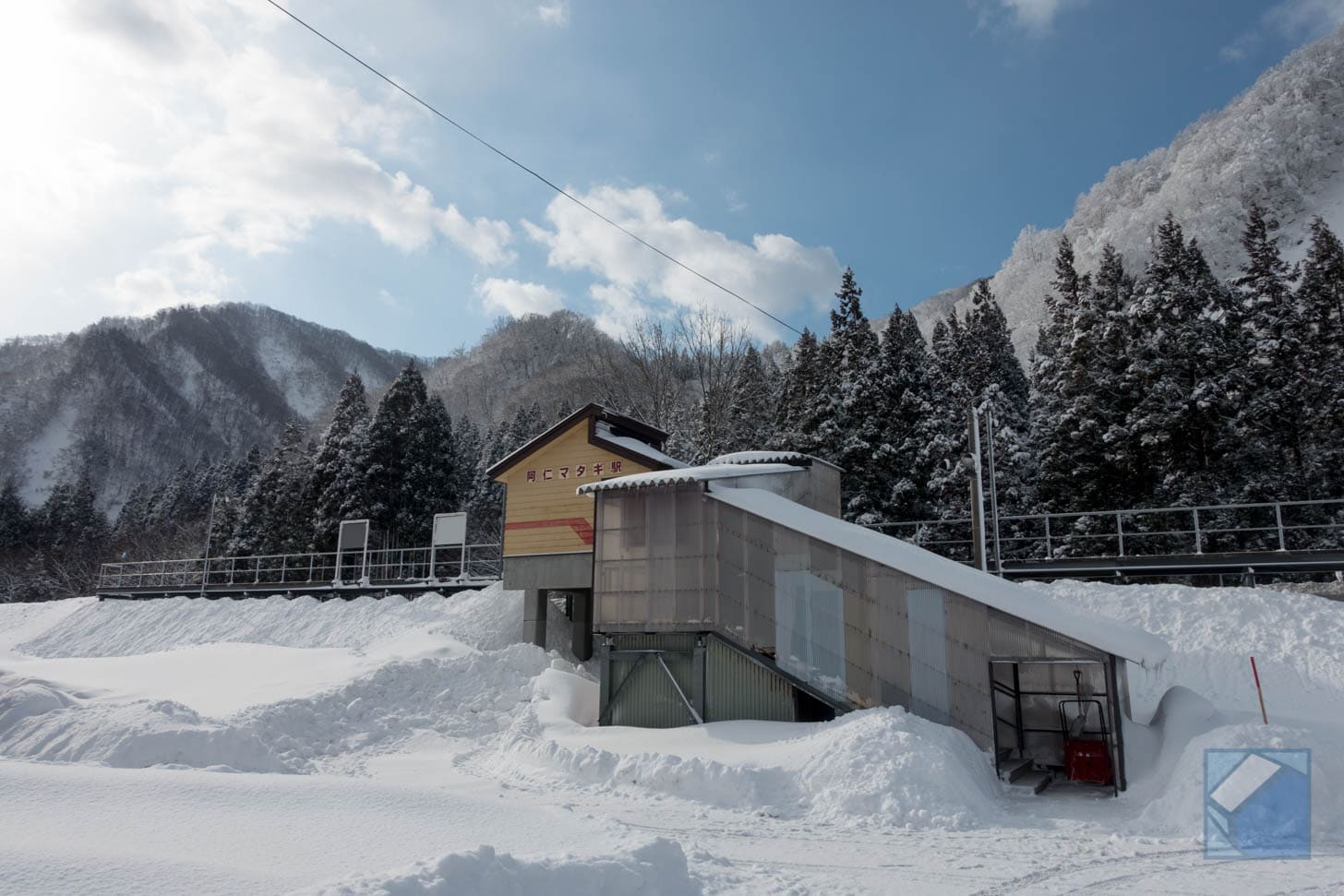
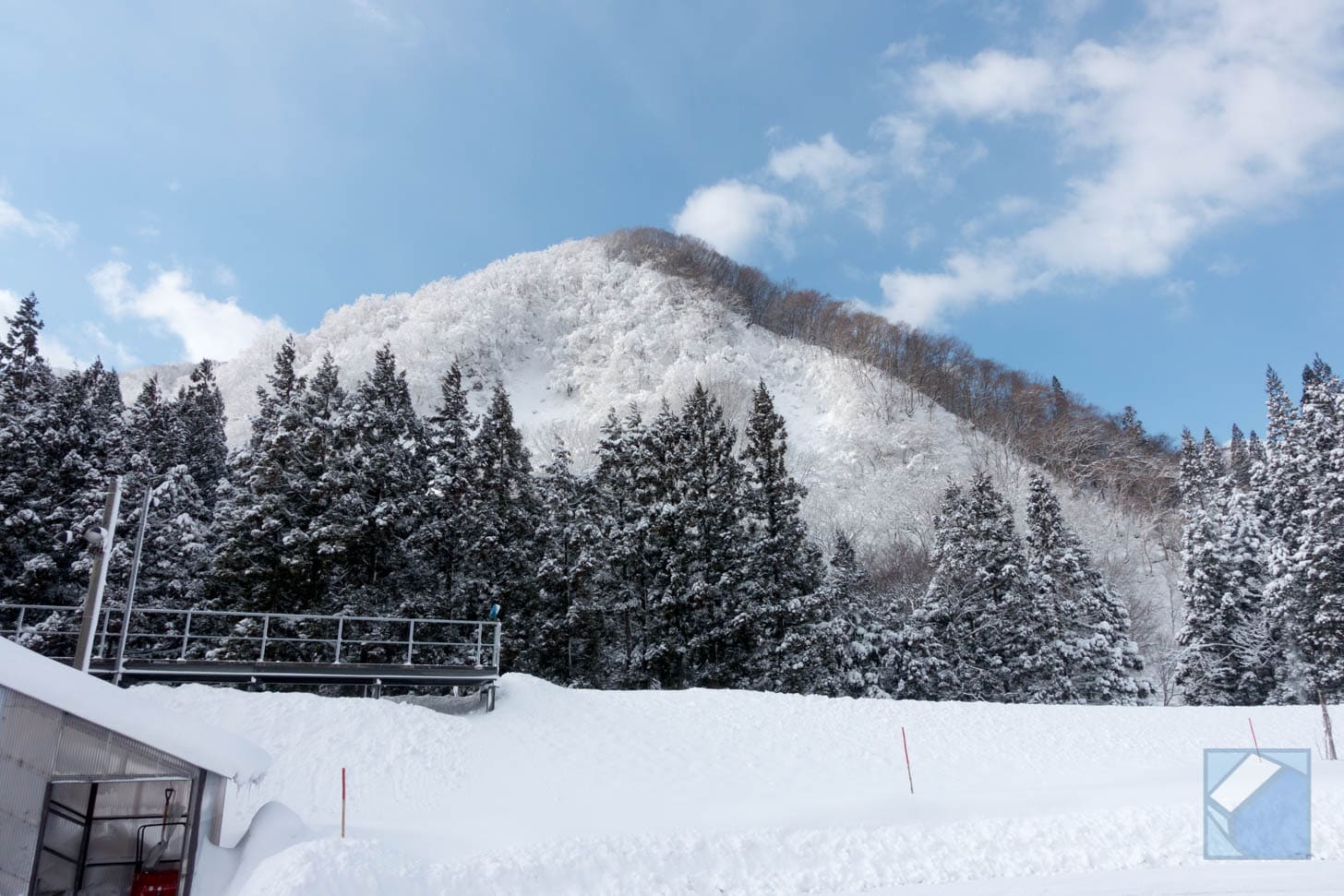
Snowy mountains with a vivid two-color gradation. I wonder if it’s like that due to wind direction.
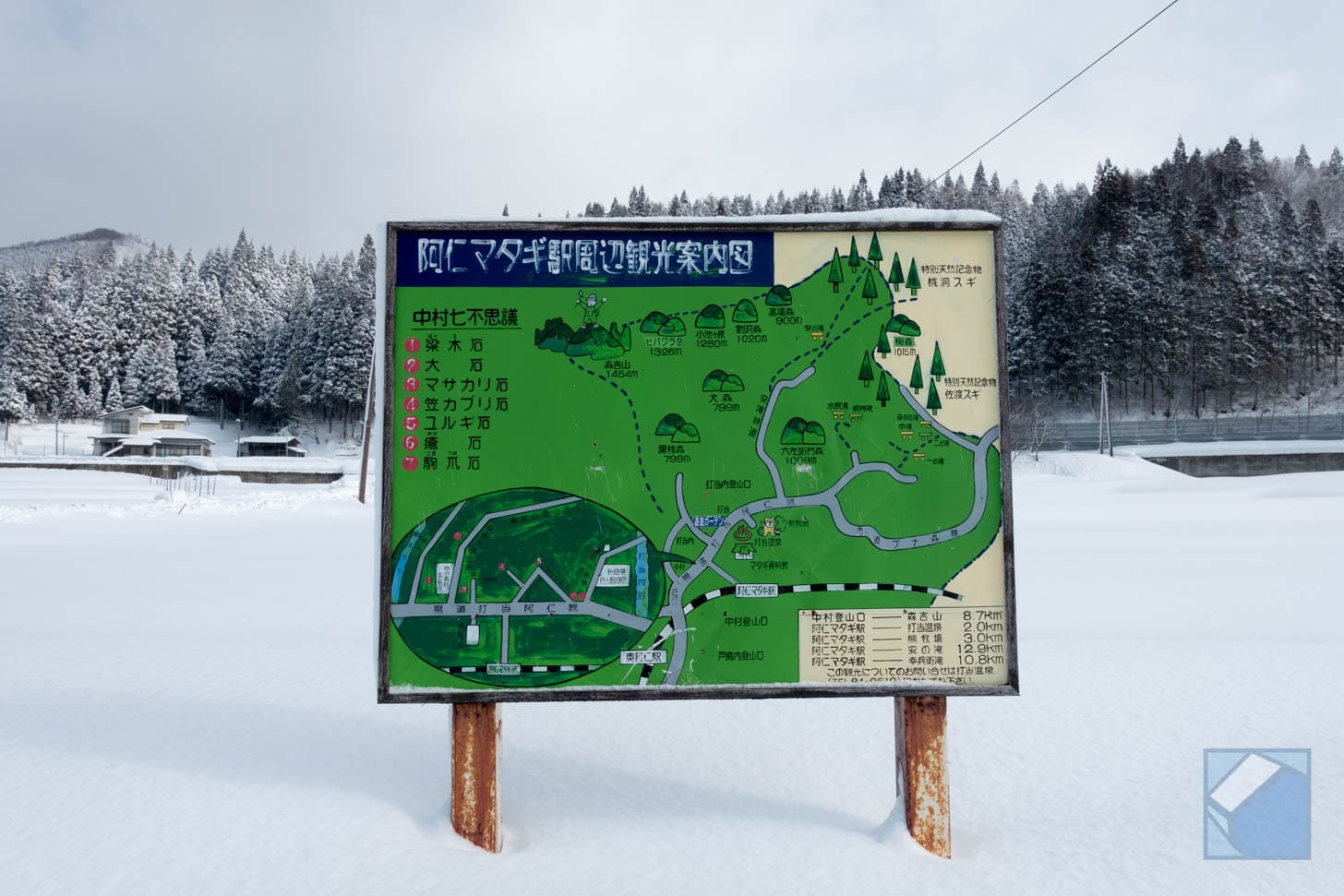
According to the information board, there are stones called the “Seven Mysteries of Nakamura” around here. I didn’t have time this trip, but what’s mysterious about them? Winter seems harsh, but it should be accessible once the snow melts.
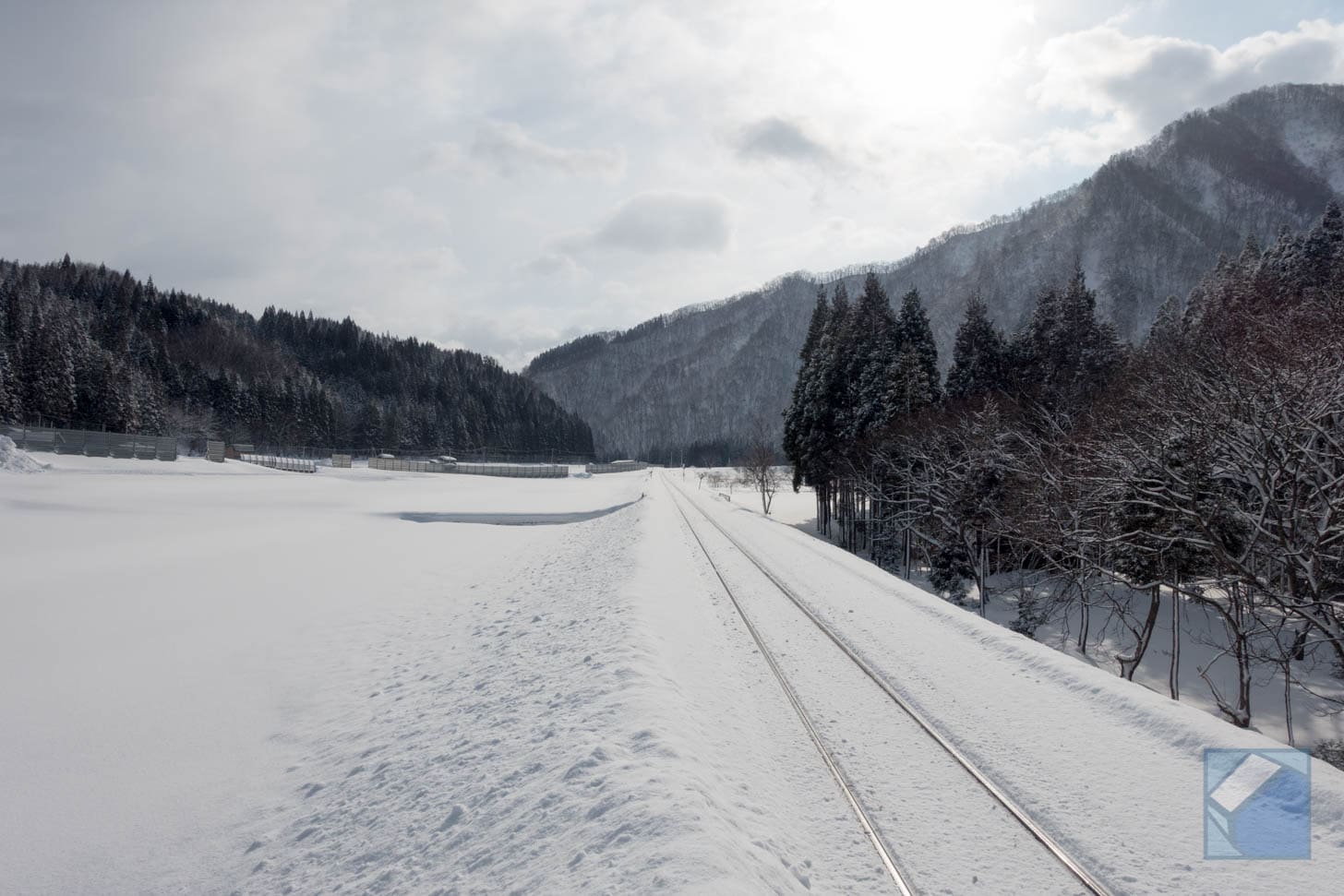
Railway tracks extending straight through the snow. So picturesque.
Boarding this train to return to Kakunodate.
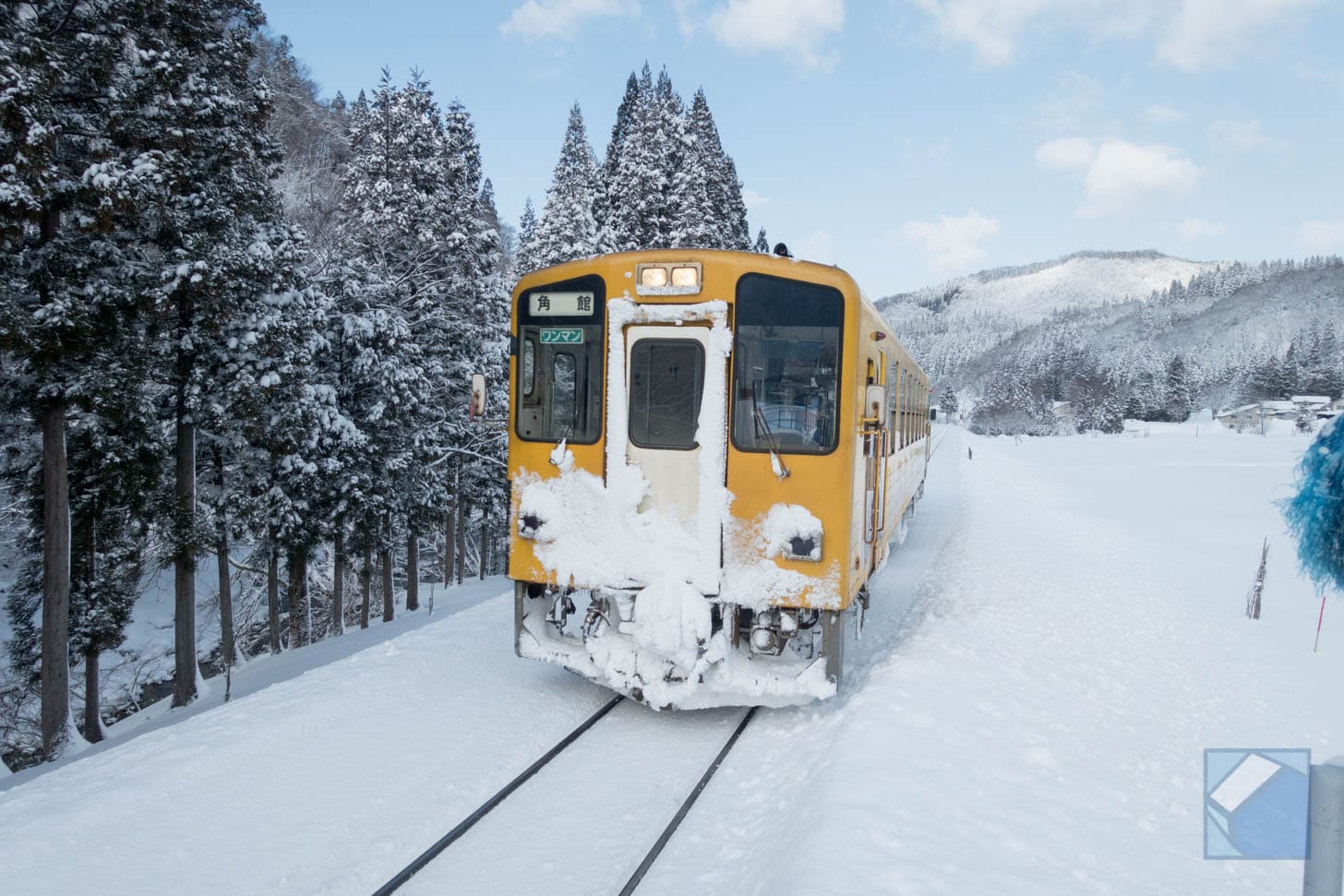
I was alone when boarding, but local ladies got on midway and it gradually became livelier. It was a bit late for school hours, so I didn’t see the students I’d seen on the way here. The line apparently suffers from chronic deficits, but as both transportation for residents and a train that stirs tourists’ wanderlust, I hope it continues to operate.
Once you reach Kakunodate, you can easily take the Komachi shinkansen to Morioka or Sendai.
Final Thoughts
I don’t know what points attract railway fans, but even without any railway affinity, I enjoyed the Akita Nairiku Jukan Railway, so I’m sure they’d like it. Snowy scenery, hot springs, simple cuisine and people. The trip to Akita had a different atmosphere from other regions and was deeply flavorful.

Comments